


Professional Teeth Whitening vs. At-Home Kits: What’s the Real Difference?
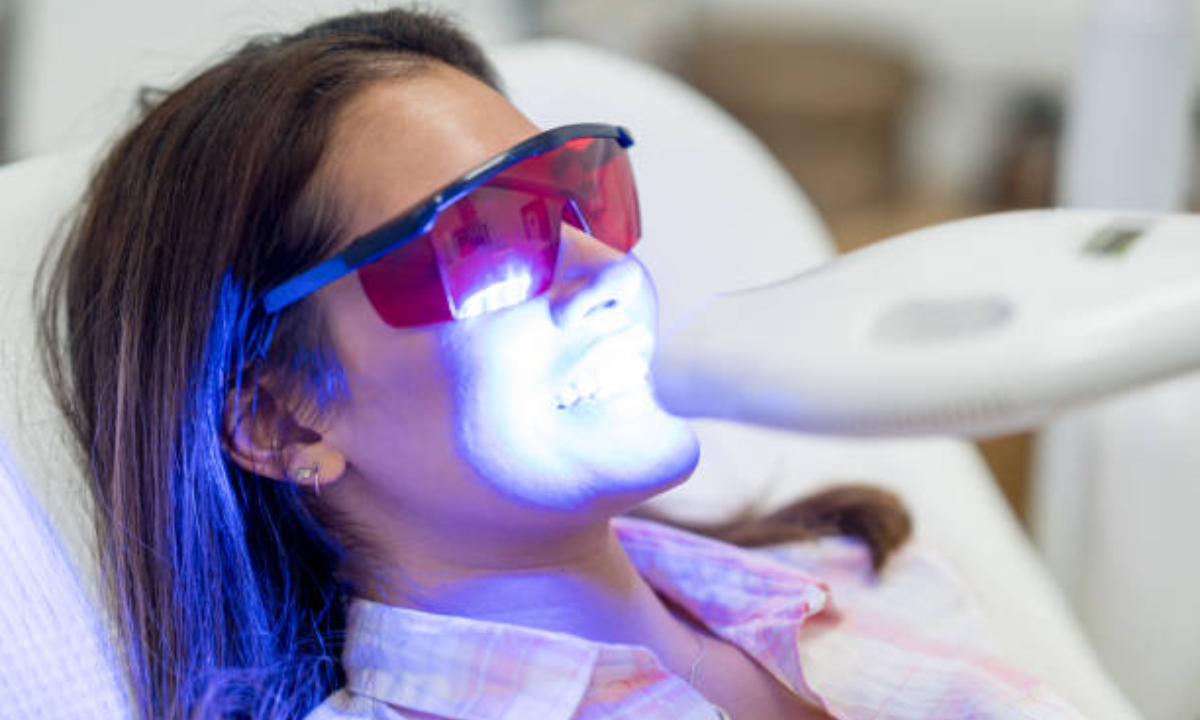
Professional Teeth Whitening vs. At-Home Kits: What’s the Real Difference?

The Whitening Aisle Has Never Been More Crowded — or More Confusing
Walk into any pharmacy in India today and you will find an entire shelf dedicated to whiter teeth. Whitening toothpastes, gel strips, LED kits, charcoal powders, oil-pulling products, and overnight trays — each one promising a noticeably brighter smile, most of them at a fraction of what a dental clinic charges. It is easy to understand why so many people try them first.
And then there is professional teeth whitening — the in-clinic option that costs more, takes longer to book, and requires sitting in a dental chair. The natural question is: is it actually worth it, or are the at-home kits just as effective for less money?
The honest answer is nuanced — which is why it deserves a proper explanation. Not all teeth stain for the same reasons, not all whitening products work the same way, and the gap between what a professional treatment can achieve and what an over-the-counter kit can do is not just a matter of degree. It is, in many cases, a matter of kind.
This blog covers how tooth whitening actually works, what the real differences are between professional and at-home options, which situations each is suited to, and what patients should know before spending money on either.
🔑 Key Takeaways
- Professional teeth whitening uses higher-concentration peroxide gels under clinical supervision — delivering faster, more controlled, and more significant results than any over-the-counter product.
- At-home whitening kits use lower peroxide concentrations permitted without prescription — safe for mild staining, but limited in depth and duration of effect.
- Whitening only works on natural tooth enamel — it has no effect on crowns, veneers, bonding, or fillings.
- The most important step before any whitening — professional or at-home — is a dental check-up to rule out decay, gum disease, or sensitivity that would make whitening uncomfortable or counterproductive.
- Professional teeth whitening is not the same as teeth cleaning — cleaning removes surface deposits and tartar, whitening changes the colour of the enamel itself.
- Results from professional whitening typically last one to three years with reasonable dietary habits; at-home kits may need reapplication every few weeks for maintained effect.
How Tooth Whitening Actually Works
Before comparing professional and at-home options, it helps to understand the science — because many whitening products are marketed in ways that obscure rather than clarify what they are actually doing.
The Two Types of Tooth Discolouration
Tooth discolouration falls into two broad categories, and the distinction matters because whitening treatments only address one of them.
Extrinsic staining occurs on the outer surface of the enamel — the result of pigmented compounds from food, beverages (tea, coffee, red wine), tobacco, and certain medications depositing on or within the superficial enamel layer. This type of staining responds well to whitening treatments, and in some cases to professional teeth cleaning and polishing alone.
Intrinsic staining originates within the dentine — the layer beneath the enamel. It can be caused by fluorosis (excessive fluoride during tooth development), tetracycline antibiotic use during childhood, trauma to a tooth, ageing (as enamel thins and the darker dentine beneath becomes more visible), or certain systemic conditions. Intrinsic staining is significantly harder to whiten and may not respond to conventional peroxide whitening at all.
Understanding which type of staining you have is the first clinical question any whitening consultation should answer. Attempting to whiten teeth with significant intrinsic staining using an over-the-counter kit is unlikely to produce satisfying results — and may cause unnecessary sensitivity in the process.
The Chemistry of Whitening: What Peroxide Actually Does
Whether a product is a dentist-prescribed gel or a pharmacy strip, the active ingredient in virtually all effective tooth whitening systems is a peroxide compound — either hydrogen peroxide or carbamide peroxide (which breaks down into hydrogen peroxide when activated).
The peroxide molecules are small enough to penetrate the enamel surface and reach the organic pigment molecules embedded within the enamel and dentine. Through an oxidation reaction, these pigment molecules are broken down into smaller, less pigmented compounds — producing the lighter tooth colour that whitening achieves.
The key variables in this process are concentration and contact time. Higher peroxide concentrations produce faster, more significant whitening. Longer contact time allows deeper penetration. Professional treatments optimise both variables under clinical supervision; at-home products are legally and safely constrained to lower concentrations.
What Whitening Cannot Do
It is important to be clear about the limits of whitening before any treatment decision is made:
- Crowns, veneers, bridges, and composite fillings do not contain the organic pigment molecules that peroxide acts on — whitening gel has no effect on restorations. If you whiten your natural teeth, any existing restorations may no longer match.
- Tetracycline staining (grey or brown banding within the tooth) responds poorly to conventional peroxide whitening and may require veneers or bonding for meaningful cosmetic improvement.
- Fluorosis (white spots or mottled enamel) is not improved by whitening — the treatment may actually make white spots more visible against a lighter background.
- Decay and gum disease must be treated before whitening — applying peroxide to teeth with active cavities or inflamed gums will cause significant discomfort and potentially worsen the condition.
Professional Teeth Whitening: What Happens in the Clinic
Professional teeth whitening at a dental clinic is a supervised, clinical procedure — not simply a stronger version of an at-home kit. The distinction in approach, not just concentration, is what makes the outcomes meaningfully different.
The Pre-Whitening Assessment
At Nova Dental Hospital, every whitening consultation begins with a dental examination. This is not a formality — it is the step that determines whether whitening is appropriate for your teeth, which type of whitening will deliver the best result, and whether any preparatory treatment is needed first.
If there is surface tartar or staining that professional cleaning can address, this is done before whitening — because whitening gel applied over tartar deposits produces uneven results. If there are cavities or signs of gum disease, these are treated before whitening begins. Attempting to whiten unhealthy teeth is both uncomfortable and clinically counterproductive.
In-Clinic Laser Teeth Whitening
The most effective form of professional whitening is in-clinic laser teeth whitening — a procedure in which a high-concentration whitening gel is applied to the teeth and activated using a light or laser source. The light activation accelerates the peroxide reaction, producing faster and more even whitening than gel alone.
The procedure at Nova Dental Hospital follows this sequence:
- A pre-treatment shade assessment is recorded to document the starting colour and measure the final improvement objectively.
- The gums and soft tissues are protected with a barrier — a light-cured resin or rubber dam — to prevent the high-concentration gel from contacting the gum tissue.
- The whitening gel is applied to the outer surfaces of the teeth in a precisely controlled layer.
- The activating light is directed at the teeth for the specified exposure period, typically in multiple cycles.
- The gel is removed, the protection is cleared, and the final shade is assessed and compared to the baseline.
The entire appointment typically takes 60 to 90 minutes. Most patients achieve a shade improvement of six to ten levels in a single session — results that no at-home product, regardless of claims, can reliably match.
Take-Home Professional Trays
Some patients prefer, or are better suited to, a take-home professional whitening kit — custom-fabricated trays made from a digital or physical impression of your teeth, paired with a prescription-strength whitening gel that is dispensed by the clinic. Unlike over-the-counter trays, these fit precisely to your individual tooth contours — ensuring even gel contact across all surfaces and preventing gel from spreading onto the gums.
Take-home professional kits use lower concentrations than in-clinic treatments, but higher concentrations than anything available over the counter without a prescription. Worn for one to two hours per day (or overnight for lower-concentration gels), they typically produce visible results within two to three weeks.
The take-home option is also commonly used as a maintenance protocol following an in-clinic laser whitening session — extending and reinforcing the initial result.
✅ Quick Tip: Before You Book a Whitening Appointment
- Have a dental check-up first — decay, gum inflammation, or significant tartar buildup should be addressed before whitening begins.
- If you have not had a professional teeth cleaning and scale and polish recently, do this first. It removes surface deposits that whitening gel cannot penetrate, and often improves the evenness of the whitening result.
- Tell your dentist about any existing crowns, veneers, or composite bonding — these will not whiten, and their shade may need to be considered in the treatment plan.
- If you have a history of tooth sensitivity, mention it — your dentist can recommend a desensitising protocol before and during treatment to minimise discomfort.
At-Home Whitening Kits: What They Are and What They Can Realistically Do
The at-home whitening market in India has grown significantly over the past decade — and the variety of products available makes it genuinely difficult for consumers to evaluate what they are buying. Understanding how these products differ from professional treatment helps set realistic expectations.
Over-the-Counter Whitening Strips
Whitening strips are thin, flexible plastic films coated with a peroxide gel — typically at concentrations of 3 to 10% hydrogen peroxide, which is the maximum permitted in products sold without prescription in most markets. They are applied directly to the teeth and worn for 30 minutes to an hour, once or twice daily over a course of two to four weeks.
Strips work — for the right candidate. Patients with mild to moderate extrinsic staining and reasonably even tooth surfaces can achieve a noticeable improvement with consistent use over the full treatment period. The limitations become apparent in patients with crowded or overlapping teeth (where strips cannot conform to the surfaces), significant intrinsic staining, or sensitivity that makes extended wear uncomfortable.
Whitening Toothpastes
Whitening toothpastes work primarily through abrasion, not peroxide chemistry. Most contain mild abrasive particles that physically polish the tooth surface, removing superficial extrinsic staining with repeated brushing. Some also contain low concentrations of peroxide or chemical agents like sodium hexametaphosphate that help prevent new staining from adhering.
The honest assessment: whitening toothpastes can maintain a clean, polished appearance and reduce the recurrence of surface staining after professional whitening. They are not capable of producing the shade change that patients seeking visibly whiter teeth are usually looking for, and excessive use of abrasive whitening pastes carries a risk of enamel wear over time.
LED Whitening Kits
Over-the-counter LED whitening kits — a tray, a gel, and a small blue LED light — have become popular partly because they appear to mirror in-clinic laser whitening technology. The reality is more modest. The LED lights included in consumer kits do not produce the intensity required to meaningfully accelerate the peroxide reaction in the way that professional laser or light systems do. The whitening effect achieved, if any, comes primarily from the gel itself rather than the light activation.
This does not mean LED kits produce no result — but the improvement is generally in the range achievable by strips or gels alone, not the significant shade changes that professional light-activated whitening delivers.
Charcoal and “Natural” Whitening Products
Activated charcoal toothpastes and powders have been heavily marketed as natural alternatives to peroxide-based whitening. The evidence supporting their efficacy for whitening is weak, and several dental associations have raised concerns about their abrasive potential. Activated charcoal has relatively coarse particles that may scratch enamel with repeated use, and there is currently no clinical evidence that charcoal meaningfully whitens teeth beyond superficial surface polishing.
Oil pulling, turmeric, baking soda, and similar home remedies fall into the same category — limited or no evidence of whitening efficacy, and in some cases (particularly baking soda used aggressively) potential for enamel abrasion with prolonged use.
Professional Teeth Whitening vs. At-Home Kits: A Direct Comparison
| Factor | Professional (In-Clinic) | Professional (Take-Home Trays) | OTC Strips / Kits |
| Peroxide concentration | 25–40% hydrogen peroxide | 10–22% carbamide peroxide | 3–10% hydrogen peroxide |
| Activation method | Laser or light-activated | Time / body temperature | Time only |
| Shade improvement | 6–10 shades in one session | 4–6 shades over 2–3 weeks | 1–3 shades over 2–4 weeks |
| Treatment time | 60–90 minutes (single visit) | 1–2 hours/day for 2–3 weeks | 30–60 min/day for 2–4 weeks |
| Custom tray fit | Yes — professionally made | Yes — custom fabricated | No — generic fit |
| Gum protection | Yes — clinical barrier applied | Better than OTC due to tray fit | Minimal — gel can spread |
| Sensitivity management | Clinician-supervised protocol | Dentist-guided protocol | User self-managed |
| Suitable for intrinsic stain | Partially — with clinical assessment | Partially | Generally no |
| Pre-treatment assessment | Yes — mandatory | Yes — mandatory | None |
| Results duration | 1–3 years with maintenance | 1–2 years | Weeks to a few months |
| Supervision | Dentist-supervised throughout | Dentist-prescribed, self-applied | No supervision |
The Safety Question: Is Teeth Whitening Safe?
Used correctly, teeth whitening — whether professional or over-the-counter — is safe for the vast majority of patients. The most common side effect is temporary tooth sensitivity, which typically peaks during or shortly after treatment and resolves within 24 to 72 hours. This occurs because peroxide penetrates the enamel and temporarily dehydrates the dentine, stimulating the nerve endings within.
The key phrase is ‘used correctly’ — which is where professional supervision makes a meaningful difference.
Sensitivity and Gum Irritation
In-clinic professional whitening includes clinical-grade gum protection, which prevents the high-concentration gel from contacting soft tissue. At-home kits rely on the user to apply gel carefully, and generic tray fits mean gel frequently contacts the gums — causing temporary irritation that is uncomfortable but usually resolves quickly.
Patients with pre-existing sensitivity, dentine hypersensitivity, exposed root surfaces, or cracked enamel are at higher risk of significant discomfort from any whitening treatment — and should always consult a dentist before starting. A clinician can prescribe a desensitising protocol (such as fluoride application or potassium nitrate pretreatment) that significantly reduces discomfort.
Enamel Safety
There is a common concern that whitening damages enamel. Research consistently shows that peroxide-based whitening at appropriate concentrations and frequencies does not cause clinically significant enamel demineralisation or surface damage. The temporary dehydration of enamel during treatment is reversible, and remineralisation occurs naturally within days of treatment ending.
The risk to enamel comes not from peroxide itself, but from overuse — using whitening products more frequently or for longer than directed, or using highly abrasive products repeatedly. Following the instructions for any whitening product or professional protocol is the primary safety measure.
Who Should Not Whiten
Certain situations warrant caution or postponement of whitening treatment:
- Active tooth decay or cavities — peroxide reaching the pulp through a cavity can cause significant pain
- Active gum disease or significant gum recession — inflamed gum tissue and exposed root surfaces are far more sensitive to peroxide
- Pregnancy and breastfeeding — whitening is generally deferred as a precaution, though there is no direct evidence of harm
- Children under 16 — enamel and pulp are still developing; whitening is not recommended before permanent teeth are fully matured
- Known allergy to peroxide — rare, but whitening should be avoided
✅ Quick Tip: Managing Sensitivity During Whitening
- Use a sensitivity toothpaste containing potassium nitrate or stannous fluoride for two weeks before beginning any whitening treatment.
- If using strips or trays, reduce the wear time per session rather than stopping entirely — shorter sessions with the same frequency often maintain progress while reducing sensitivity.
- Avoid very cold drinks and foods for 24 to 48 hours after each whitening session — the teeth are temporarily more porous and reactive.
- Ask your dentist about fluoride remineralisation gel applied in the tray after whitening — this significantly reduces sensitivity and helps restore enamel hardness between sessions.
Whitening Is Not the Same as Cleaning — and the Order Matters
This is one of the most important distinctions for patients to understand, and it is frequently blurred by product marketing. Teeth cleaning and teeth whitening are fundamentally different procedures — one removes surface deposits and restores the tooth’s natural surface, the other chemically lightens the colour of the enamel itself.
Professional teeth cleaning, scaling, and polishing removes plaque, tartar (calculus), and superficial staining that has built up on the tooth surface and below the gumline. For many patients, this alone produces a noticeably cleaner, fresher appearance — because much of what looks like yellowing is actually accumulated surface deposit rather than intrinsic tooth colour.
Whitening, by contrast, works on the tooth structure itself — it does not remove deposits but chemically alters the colour of the enamel and dentine. If whitening is performed over a layer of tartar or surface staining, the result will be uneven — the areas where deposits are sitting will not whiten, while the clean areas will.
The correct sequence is always: clean first, then whiten. A professional clean removes the surface layer that would otherwise interfere with even gel contact. It also gives the dentist a clear view of the actual baseline tooth colour — which is often noticeably lighter than the stained surface suggested.
Professional Whitening or At-Home Kit: How to Choose
The right whitening option depends on your teeth, your staining type, your timeline, and your expectations. The following guide covers the most common patient scenarios:
| Your Situation | Recommended Option | Reason |
| Mild extrinsic staining, budget-conscious | OTC strips or take-home kit | Adequate for light staining with consistent use |
| Moderate staining, want results in one visit | In-clinic laser whitening | Fastest and most significant improvement |
| Significant or deep staining, time flexible | In-clinic + take-home maintenance | Maximum initial result, maintained long-term |
| Sensitive teeth | Professional take-home with desensitising protocol | Dentist-managed concentration and schedule reduces risk |
| Intrinsic (internal) staining | Professional assessment first — may need veneers | Peroxide has limited effect on dentine-level staining |
| Upcoming event or wedding | In-clinic laser whitening 1–2 weeks prior | Allows time for sensitivity to resolve before the event |
| Existing crowns or veneers present | Professional assessment mandatory | Restorations won’t whiten — shade matching required |
| Maintenance after professional treatment | OTC strips or low-concentration take-home | Supplements professional result, avoids overtreatment |
| Gum disease or active decay present | Dental treatment first, then whitening | Whitening must wait until oral health is restored |
How Long Does Teeth Whitening Last — and How to Make It Last Longer
One of the most common disappointments with whitening — particularly at-home kits — is that the result fades faster than expected. Understanding what determines longevity helps patients protect their investment in professional teeth whitening and manage realistic expectations for over-the-counter products.
What Affects How Long Whitening Lasts
The duration of whitening results varies considerably based on several factors:
- Diet — tea, coffee, red wine, turmeric, and other deeply pigmented foods and drinks are the primary drivers of re-staining. They do not cause new intrinsic staining, but they redeposit extrinsic colour over time.
- Tobacco use — smoking and tobacco chewing are among the most aggressive sources of tooth staining and significantly shorten the duration of whitening results.
- Oral hygiene — regular brushing and flossing removes surface deposits before they can embed into the enamel, extending the period before re-treatment is needed.
- Whitening method used — in-clinic laser whitening produces deeper enamel penetration and longer-lasting colour change than strips or gels used at home.
- Baseline tooth structure — patients with naturally porous enamel may re-stain faster than those with denser enamel.
Practical Longevity Expectations
In-clinic professional whitening results typically last one to three years with reasonable dietary habits and good oral hygiene. Take-home professional trays maintain results for one to two years. Over-the-counter strips and kits may need reapplication every four to eight weeks to maintain the same level of brightness — which over a year of use can bring their total cost closer to a professional treatment than the initial purchase price suggests.
The 48-Hour Rule After Whitening
Immediately after any whitening treatment — professional or at-home — the enamel is temporarily more porous and susceptible to staining. The 48-hour window following whitening is the period of highest re-staining risk. During this time, patients are advised to avoid strongly pigmented foods and drinks, tobacco, and anything that would stain a white shirt. This simple step preserves the immediate whitening result and is one of the most impactful post-treatment habits.
✅ Quick Tip: Making Professional Whitening Results Last
- Follow the 48-hour post-whitening diet — avoid tea, coffee, red wine, and coloured foods for the first two days after treatment.
- Use a whitening maintenance toothpaste — not as a whitening treatment in itself, but to slow the rate of surface stain redeposition.
- Schedule a professional clean every six months — removing surface deposits regularly extends the period before re-whitening is needed.
- Consider a take-home maintenance kit from your dentist to use once a month — this is more effective and gentler than repeating full at-home kit courses. Ask about this option at your cosmetic dentistry consultation.
Teeth Whitening as Part of a Broader Smile Plan
For many patients, whitening is not a standalone goal — it is one element of a broader smile improvement. Understanding how whitening fits alongside other cosmetic dentistry treatments helps ensure the overall plan is sequenced correctly.
The most important sequencing rule is that whitening should be completed before any restorative or cosmetic work is placed — not after. If you are planning to have composite bonding, veneers, or crowns fabricated, the shade of these restorations should be matched to your whitened teeth — not to your pre-treatment colour. Restorations placed before whitening will not match after whitening and cannot be adjusted without replacement.
Similarly, if you are planning orthodontic treatment to straighten your teeth, whitening is generally done after braces or aligner treatment is complete — both to allow for even gel contact across properly aligned surfaces, and because the final smile is best designed once the teeth are in their correct positions.
For patients whose discolouration is too severe or the wrong type to respond to whitening, veneers or composite bonding may be the more appropriate cosmetic solution — and a professional consultation is the only reliable way to determine which path is right.
Frequently Asked Questions
FAQ 1: How many shades whiter can I expect from professional teeth whitening?
In-clinic laser whitening at Nova Dental Hospital typically achieves six to ten shade improvements in a single 60–90 minute session, measured on the standard dental shade guide. The actual improvement depends on your baseline tooth colour, the type and depth of staining, and your enamel’s permeability. Patients with moderate extrinsic staining generally see the most dramatic results. A professional take-home course typically produces four to six shade improvements over two to three weeks. Over-the-counter products reliably achieve one to three shades with consistent use. These are average outcomes — individual results vary.
FAQ 2: Is professional teeth whitening safe for sensitive teeth?
Yes — with the right preparation. Patients with sensitivity are not automatically excluded from professional whitening, but the approach needs to be adapted. Your dentist will typically recommend a two-week pre-treatment protocol using desensitising toothpaste and possibly in-office fluoride application. The whitening session itself uses clinical gum protection and can be shortened or adapted if sensitivity is significant. The key difference from attempting to whiten sensitive teeth at home is that a clinician can monitor the response in real time and adjust the treatment accordingly — something no at-home kit allows for.
FAQ 3: Will teeth whitening work on my crowns and veneers?
No — whitening gel has no effect on porcelain, ceramic, or composite resin restorations. Only natural tooth structure contains the organic pigments that peroxide acts on. If you have crowns, veneers, or composite bonding on visible teeth, whitening your natural teeth may create a shade mismatch. This is why a dental consultation before any whitening is important — your dentist can assess the implications of whitening for your specific dental situation and advise on whether restoration replacement would be needed to match the new shade.
FAQ 4: How often can I repeat professional teeth whitening?
In-clinic laser whitening is typically recommended no more than once per year for maintenance — repeated high-concentration treatments more frequently than this offer diminishing returns and increase the cumulative risk of sensitivity. Between professional sessions, a dentist-prescribed take-home maintenance kit used monthly is the most effective and responsible approach to sustaining results. Over-the-counter strips used at package-recommended frequencies are generally safe for more regular use, but should not be used more frequently than directed.
FAQ 5: Should I get my teeth cleaned before whitening?
Yes — always. Professional teeth cleaning and polishing removes the plaque, tartar, and surface staining that sits between the whitening gel and the enamel surface. Whitening over surface deposits produces uneven results — clean areas whiten, areas under deposits do not. A professional clean also gives your dentist an accurate view of your actual baseline tooth colour, which is often several shades lighter than the stained surface initially suggests. At Nova Dental Hospital, we always assess the need for a clean as part of the whitening consultation, and recommend completing it first when needed. Patients who have had their treatment with us are also welcome to share their experience on our Google Business Profile.
🔑 Key Takeaways
- Professional teeth whitening uses clinically supervised, higher-concentration peroxide — delivering significantly faster and more noticeable results than over-the-counter products.
- At-home kits are appropriate for mild extrinsic staining and maintenance — but cannot replicate the shade improvement of in-clinic treatment for moderate to significant discolouration.
- Whitening only works on natural tooth enamel — crowns, veneers, and fillings are unaffected, and shade matching must be planned accordingly.
- Professional teeth cleaning should always precede whitening — clean enamel produces more even, more effective results.
- Sensitivity is manageable with professional supervision — it is not a reason to avoid whitening, but a reason to discuss it with a dentist first.
- Whitening results last longest with the 48-hour post-treatment diet, regular professional cleans, and sensible dietary habits.
- For staining that does not respond to whitening, veneers or composite bonding may be the appropriate cosmetic alternative — a consultation determines the right path.
Conclusion: The Right Whitening Choice Starts With the Right Information
The whitening market is designed to sell convenience and promise transformation. The clinical reality is more measured — and more honest. At-home whitening products have a genuine role to play for the right patient with the right type of staining and realistic expectations. Professional teeth whitening has a different role: it delivers results that over-the-counter products cannot achieve, under supervision that protects your dental health in the process.
The single most important step before any whitening decision is a conversation with a dentist. Not to be sold a treatment — but to find out what type of staining you have, whether your teeth are in a condition to be whitened safely, and which option will actually produce the result you are looking for. Sometimes the answer is a simple professional clean. Sometimes it is in-clinic laser whitening. Sometimes it is strips for maintenance after treatment. And occasionally, for staining that whitening cannot address, the answer is a cosmetic dentistry solution that goes beyond peroxide entirely.
At Nova Dental Hospital in Gandhinagar, whitening consultations begin with an honest assessment of your teeth — and end with a plan that is right for your specific situation, not a one-size-fits-all recommendation.

Related posts
Write a Comment
Recent Posts

Dry Socket After Tooth Extraction: Symptoms, Prevention & Treatment


