Is Invisalign Right for Me? A Dentist’s Guide to Who It Works For — and Who It Does Not
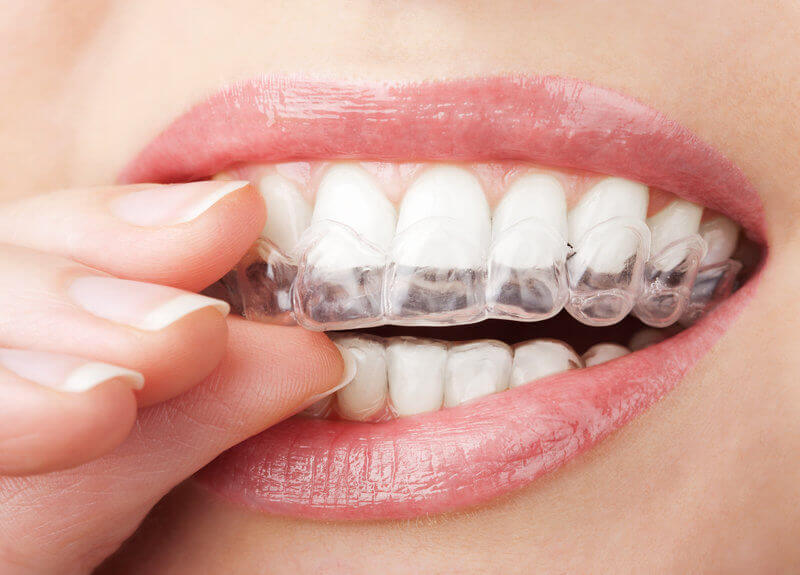
Is Invisalign Right for Me? A Dentist’s Guide to Who It Works For — and Who It Does Not

The Question Behind the Question
Most people who ask whether Invisalign is right for them are not really asking about Invisalign specifically. They are asking whether they can straighten their teeth without metal brackets and wires — whether there is an option that fits around their professional life, their social confidence, and their reluctance to sit through eighteen months of visible orthodontic treatment. Invisalign represents that possibility, and the question of candidacy is essentially the question of whether that possibility is open to them.
The honest answer is that Invisalign — and clear aligners more broadly — works extremely well for a substantial proportion of orthodontic cases. It also has genuine clinical limitations that mean it is not the right choice for every patient, and patients who are not good candidates for clear aligners and proceed anyway tend to get slower, less complete results than they would have achieved with braces. The goal of this guide is to give you the clinical picture clearly enough that you can walk into an orthodontic consultation knowing the right questions to ask — and understanding the answer when you get it.
This is not a guide about how Invisalign works mechanically — that is covered in our earlier blog on how Invisalign aligners move teeth. This guide is specifically about candidacy — who is a good fit, who is not, what the boundary cases look like, and what to do if you fall into the grey zone between clear aligners and braces.
🔑 Key Takeaways
- Invisalign is clinically effective for a wide range of orthodontic problems — mild to moderate crowding, spacing, overbite, underbite, crossbite, and open bite. It is not limited to minor cosmetic cases.
- There are cases where braces consistently outperform clear aligners — severe skeletal discrepancies, significant rotations of round-rooted teeth, large vertical movements, and cases requiring precise torque control. These are not failures of Invisalign as a system; they are clinical realities of aligner mechanics.
- Compliance is the most important non-clinical factor in Invisalign success. Aligners must be worn 20 to 22 hours per day, every day, for the full treatment duration. Patients who cannot commit to this consistently get worse results than patients with the same case complexity wearing braces.
- A CBCT 3D scan and digital records taken at consultation allow the clinician to assess not just the visible crowding but the bone support, root positions, and jaw relationship that determine whether clear aligners or braces are more appropriate.
- The candidacy question is always answered case-specifically — a case that is borderline for one clinician may be well within their experience range for another. The most important thing is an honest consultation with a clinician who offers both options and has no financial incentive to recommend one over the other.
What Invisalign Can and Cannot Do — The Clinical Mechanics
To understand candidacy, it helps to understand what clear aligners are mechanically capable of and where their limitations arise. Invisalign aligners move teeth through a series of precisely programmed incremental steps — each aligner tray moves the teeth a fraction of a millimetre from the previous position, and the sequence of trays progressively brings the teeth to the planned final position.
This mechanism works very well for certain types of tooth movement and less well for others. The key variable is the type of force being applied and how predictably the aligner can deliver it to the specific tooth.
Movements Aligners Handle Well
- Tipping movements: Tilting a tooth in or out, forwards or backwards — aligners produce tipping forces efficiently and predictably.
- Mild to moderate crowding: Creating space and aligning crowded teeth is one of the most common and most successfully treated presentations with clear aligners.
- Spacing: Closing gaps between teeth — aligners are highly effective for spacing cases, often more predictably than for complex crowding.
- Overbite reduction: With the help of bite ramps built into the aligner, Invisalign can effectively reduce deep overbites — an area where earlier generations of aligners were less capable but where the system has improved significantly.
- Mild crossbite correction: Crossbites involving individual teeth can be corrected with clear aligners, particularly when the crossbite is dental (tooth position) rather than skeletal (jaw position).
Movements Where Aligners Face Limitations
- Significant rotations of round-rooted teeth: Upper lateral incisors and lower premolars have round root cross-sections, which means they do not have clear surfaces for the aligner to grip and rotate efficiently. Significant rotations of these teeth are one of the more reliably difficult movements for clear aligners.
- Large vertical movements (extrusion): Pulling a tooth down — extruding it — is mechanically difficult with aligners because the aligner tends to flex away from the tooth rather than gripping and pulling it into position. Intrusion (pushing a tooth up) is more reliably achieved.
- Precise torque control: Controlling the angle of the root relative to the crown — torque — is important in certain cases, particularly for upper front teeth in severe cases. Aligners can deliver torque with the help of attachments, but to a more limited degree than fixed appliances in the most demanding cases.
- Severe skeletal discrepancies: Cases where the jaw relationship itself needs correction — significant Class II or Class III skeletal patterns — may require a combination of orthodontics and jaw surgery. Clear aligners can manage the dental component but do not address the underlying jaw relationship any better than braces.
- Very impacted or ectopic teeth: Teeth that are severely out of position, impacted within the bone, or erupting in an unusual path generally require surgical exposure and fixed appliance traction to bring into alignment before clear aligner finishing is possible.
It is worth noting that the clinical capability of clear aligner systems — Invisalign in particular — has expanded significantly over the past decade. Cases that were considered outside the scope of clear aligners ten years ago are now routinely treated with them, particularly with the use of attachments (small tooth-coloured buttons bonded to specific teeth that give the aligner a better grip for specific movements). The boundary is not fixed, and an experienced clinician will have a more nuanced view of what is achievable than a generic summary can convey.
Who Is a Good Candidate for Invisalign?
The following characteristics, individually and in combination, describe the patient profile for whom Invisalign is likely to deliver excellent results:
Clinically: The Right Case Type
- Mild to moderate crowding: Teeth that overlap or are rotated but where the crowding is not so severe that significant space creation is needed. Most adults who feel their teeth have shifted over time fall into this category.
- Spacing issues: Gaps between teeth — whether a single central diastema or generalised spacing — are reliably well-treated with clear aligners.
- Overbite: A deep bite where the upper front teeth overlap the lower front teeth excessively. Modern Invisalign with precision bite ramps is highly effective for this.
- Mild crossbite: One or a few teeth in crossbite (biting on the wrong side of the opposing teeth) where the cause is tooth position rather than jaw position.
- Previously treated cases with relapse: Adults who had braces in their teens and have experienced some relapse are often excellent Invisalign candidates — the movements required are typically limited and the result can be achieved quickly.
Personally: The Right Patient Profile
- High compliance: The single most important personal factor. Aligners must be worn 20 to 22 hours per day — removed only for eating, drinking (anything other than plain water), and brushing. A patient who removes them for convenience, social situations, or because they are uncomfortable will not achieve the planned result on schedule, if at all.
- Good oral hygiene: Aligners trap saliva and food debris against the teeth if worn over poor hygiene. Patients who brush and floss after every meal before reinserting the aligner maintain their dental health during treatment; patients who do not are at elevated risk of decay and gum inflammation.
- Adequate bone support: Orthodontic tooth movement through bone requires healthy bone support. Patients with significant bone loss from gum disease need to have the gum disease treated and stabilised before orthodontic treatment begins — clear aligners and braces are equally contraindicated in the presence of active periodontal disease.
- No significant untreated dental work needed: Active decay, failing restorations, or teeth that need extraction for reasons other than orthodontics should ideally be addressed before aligner treatment begins.
Situationally: Who Invisalign Suits Particularly Well
- Working professionals: The aesthetic invisibility of clear aligners is most valued by adults in client-facing, professional, or public-speaking roles where the appearance of fixed braces would be a personal or professional concern.
- Adults with mild to moderate spacing or crowding: The largest single group of Invisalign patients — adults whose teeth have shifted gradually over years and who want correction without the visibility of braces.
- Patients with existing restorations on some teeth: Brackets for braces do not bond reliably to ceramic or heavily restored tooth surfaces. Aligners, being removable, are not affected by the material of the tooth surface and are often the more practical option for patients with crowns, veneers, or multiple large restorations.
- Patients with active lifestyles or contact sports: Fixed braces carry a risk of soft tissue laceration in contact sports — the brackets can cut the inside of the lips and cheeks in a collision. Aligners can be removed for sport and an athletic mouthguard worn instead.
Who Is Not a Good Candidate — and Why
The following situations represent either clinical limitations of clear aligner mechanics or personal factors that significantly reduce the likelihood of a successful outcome:
Clinical Contraindications
- Severe crowding requiring significant extraction: Cases where teeth need to be extracted to create sufficient space — significant arch length discrepancy — are more predictably managed with fixed appliances that can control root position more precisely during the space closure movements.
- Significant skeletal discrepancy: If the underlying jaw relationship is the primary problem — a significantly receding lower jaw, a prominent lower jaw, or a significant vertical discrepancy — orthodontic treatment alone (whether braces or aligners) manages only the dental component. Surgery or a combination approach is required for the jaw. In these cases, the choice between braces and aligners is secondary to the question of whether orthodontics alone is sufficient.
- Severe rotations of round-rooted teeth: As described above, significant rotations of upper lateral incisors and lower premolars are reliably challenging for clear aligners and may result in incomplete correction or the need for fixed appliance finishing.
- Active, uncontrolled gum disease: Orthodontic treatment of any kind in the presence of active periodontitis accelerates bone loss. Gum disease must be treated and the patient must be in a maintenance phase with stable bone levels before any orthodontic treatment begins.
- Teeth with very short roots: Patients who have very short roots — whether from root resorption, genetics, or previous trauma — are at higher risk of further root resorption during orthodontic treatment. This is a consideration for both braces and aligners, but is worth specific assessment in cases where root shortening is already present.
Personal Factors That Reduce Suitability
- Inability or unwillingness to commit to 22-hour wear: This is the most common reason clear aligner treatment underperforms expectations. Patients who know in advance that they will remove aligners frequently — at work, in social situations, when they are uncomfortable — are better served by fixed appliances that do not depend on patient compliance for their action.
- Children and young adolescents with mixed dentition: Clear aligners in their standard form are designed for fully erupted permanent teeth. Children who still have baby teeth or whose permanent teeth are actively erupting are generally not suitable candidates — paediatric orthodontic appliances or phased treatment is more appropriate.
- Patients with severe dental anxiety about impressions: The digital scanning process for Invisalign (using an intraoral scanner) is less invasive than traditional impressions, but some patients still find the process challenging. This is rarely a decisive factor but worth raising with the clinician.
⚠️ Honest Self-Assessment: Compliance Questions to Ask Yourself
- Will I put the aligners back in immediately after every meal — including at restaurants, at work, and in social situations?
- Will I brush my teeth before reinserting the aligners every single time, without exception?
- Will I resist the temptation to remove the aligners when they feel tight after a new tray change — the tightness is the aligner working?
- Am I able to carry a travel toothbrush and a case for the aligners with me at all times?
- If the honest answer to any of the above is ‘probably not consistently’, fixed braces will give you better results for the same clinical case — because they are working 24 hours a day regardless of patient behaviour.
Invisalign vs. Braces: Which Is Better for Which Case?
| Clinical Situation | Invisalign | Fixed Braces | Recommended |
| Mild to moderate crowding | Excellent — predictable and efficient | Excellent — well established | Either — patient preference and compliance drive the choice |
| Generalised spacing / diastema | Excellent — often faster than braces for spacing cases | Good | Invisalign preferred |
| Deep overbite | Very good with modern bite ramps | Very good with fixed bite planes | Either — clinician and patient choice |
| Mild to moderate crossbite (dental) | Good | Good | Either |
| Severe crowding requiring extractions | Possible but technically demanding | Consistently more precise for space closure | Braces preferred |
| Significant rotations of round-rooted teeth | Challenging — may be incomplete | More precise control | Braces preferred |
| Skeletal jaw discrepancy | Dental compensation only | Dental compensation only (surgery needed for skeletal) | Surgery + either |
| Impacted or severely ectopic teeth | Not appropriate as primary treatment | Fixed traction after surgical exposure | Braces required |
| Patients with crowns or veneers on multiple teeth | Preferred — not affected by restoration material | Bonding reliability varies on ceramics | Invisalign preferred |
| Contact sports players | Aligner removed; mouthguard worn | Laceration risk in contact; orthodontic mouthguard required | Invisalign preferred |
| Low compliance patient | Results compromised significantly | Works independently of patient compliance | Braces preferred |
| Previously treated relapse (mild) | Excellent — often short treatment duration | Effective but more than needed for minor relapse | Invisalign preferred |
Attachments: What They Are and Why They Matter for Candidacy
One of the most significant developments in Invisalign treatment over the past decade is the routine use of attachments — small, tooth-coloured composite resin buttons bonded to specific teeth at precise locations and angles. Attachments give the aligner surface features to push against, enabling movements that would otherwise be difficult or impossible with a smooth aligner surface alone.
Most Invisalign treatment plans include attachments for at least some teeth. Patients are often surprised by them at the bonding appointment — they are not described at the consultation stage as often as they should be. Attachments are not visible at conversational distance but can be felt with the tongue and may be visible on very close inspection. They are removed at the end of treatment and the tooth surface restored to its original appearance.
The practical significance of attachments for candidacy is that they extend the range of cases treatable with clear aligners. A case that would have been outside Invisalign’s capability in 2015 may be well within it in 2025, partly because of improved aligner material and partly because attachment design has become more sophisticated. An updated clinical assessment from an experienced Invisalign provider gives the most accurate picture of whether your case falls within what current technology can achieve.
What to Expect at an Invisalign Consultation
A proper Invisalign candidacy assessment is not a five-minute conversation. It involves enough clinical information to actually determine whether your specific teeth and jaw are suitable for clear aligners — and what the treatment plan would involve if they are. At Nova Dental Hospital, an orthodontic consultation for clear aligners typically includes the following:
- Clinical examination: Assessment of the teeth, bite, gum health, and jaw joint. The clinician evaluates crowding severity, bite class, and the presence of any issues that need to be addressed before orthodontic treatment begins.
- Digital photographs and X-rays: Standard orthodontic records include full-face and profile photographs, intraoral photographs, and at minimum an OPG panoramic X-ray to assess root lengths, bone levels, and the position of unerupted or impacted teeth.
- CBCT 3D scan where indicated: For cases with impacted teeth, skeletal concerns, or complex root anatomy, a CBCT scan provides the three-dimensional bone and root information that two-dimensional X-rays cannot. This is particularly important for assessing whether there is adequate bone for the planned tooth movements.
- Digital scan (iTero or equivalent): An intraoral scan creates a precise 3D digital model of the teeth that is used to generate the ClinCheck — Invisalign’s treatment simulation software — and to fabricate the aligners. No physical impressions are needed.
- ClinCheck review: The planned tooth movement sequence is generated and reviewed with the patient, showing the expected tooth positions at each stage and the projected final result. This is the stage at which the treatment plan is confirmed, modified, or reconsidered.
If the consultation results in a recommendation for dental braces rather than clear aligners — either because the case complexity is better suited to fixed appliances or because compliance concerns make aligners a poor fit — this recommendation should be accompanied by a clear explanation of why. A clinician who offers both options and recommends braces when they are genuinely more appropriate is giving you better advice than one who defaults to Invisalign for every patient.
A Note on Teens and Adolescents
Invisalign offers a specific product line — Invisalign Teen — designed to account for the practicalities of treating adolescent patients. It includes compliance indicators (small blue dots on the aligner that fade with wear, allowing parents and clinicians to assess whether the aligner is being worn consistently), provision for erupting teeth (space is built into the aligner for teeth that are still coming through), and replacement aligners for a certain number of lost trays.
The clinical candidacy criteria are the same for teenagers as for adults — the case complexity must be within the range that aligners can reliably achieve. The additional variable for teenagers is compliance, which is harder to predict and harder to enforce than in adults. Parents considering Invisalign for a teenager should have a direct conversation with the clinician about what happens to the treatment outcome if the aligners are not worn consistently — and whether the family dynamic and the teenager’s own motivation make that a realistic concern.
For younger adolescents still in mixed dentition — where some baby teeth remain and permanent teeth are actively erupting — Invisalign First is a phased aligner system designed for this age group, though it is more commonly used for arch development and minor early correction than for full orthodontic treatment. A general dentistry or orthodontic assessment can determine whether early interceptive treatment is appropriate or whether waiting for full permanent dentition is the better approach.
The Grey Zone: What to Do If You Are a Borderline Candidate
The candidacy question is not always a clean yes or no. There is a substantial middle ground — cases where clear aligners can achieve a result, but where the result might be slightly less complete than braces, or where the treatment duration might be longer, or where the plan requires careful monitoring and possible adjuncts.
For patients in this grey zone, the most useful approach is:
- Get a consultation with a clinician who offers both options: A clinician who provides only clear aligners has a financial and professional incentive to recommend them regardless of fit. One who offers both braces and Invisalign can give you an honest comparative recommendation.
- Ask specifically about the limitations for your case: Which movements in your treatment plan are the most challenging for aligners? What happens if those movements do not fully achieve the planned position — is there a contingency plan involving fixed appliances for finishing?
- Review the ClinCheck critically: The digital simulation of your treatment is a plan, not a guarantee. Ask the clinician what percentage of cases achieve the full ClinCheck result versus require refinements, and what refinements involve.
- Consider hybrid treatment: Some complex cases are best treated with fixed braces for the first phase — the complex movements — and aligners for the finishing phase. This is not a compromise; it is a clinical strategy that uses each system where it performs best.
✅ Questions to Ask at Your Invisalign Consultation
- Is my case straightforward, moderate, or complex for clear aligners — and what makes it so?
- Are there any specific tooth movements in my treatment plan that are challenging for aligners?
- How many attachments will I need, and where will they be placed?
- What is the contingency if some teeth do not fully reach the planned position?
- Would you recommend the same treatment if I told you I could not guarantee 22-hour wear every day?
- Is there any aspect of my case where braces would give a more predictable result?
Frequently Asked Questions
FAQ 1: Can Invisalign fix severe crowding?
It depends on the degree and the nature of the crowding. Mild to moderate crowding — where the teeth overlap slightly and arch expansion or interproximal reduction (gentle reshaping between teeth) can create adequate space — is very well treated with Invisalign. Severe crowding that requires tooth extraction to create enough space is more complex: the space closure movements after extraction are technically demanding for aligners and are more precisely controlled with fixed appliances. For severe cases, a hybrid approach — or braces for the full treatment — often gives a more predictable outcome. The only way to know with certainty is a clinical assessment with records. Book a consultation at Nova Dental Hospital to have your specific case evaluated.
FAQ 2: I was told by one dentist that I need braces. Can I get a second opinion for Invisalign?
Absolutely — and it is worth doing. Orthodontic treatment recommendations can vary between clinicians based on their training, their experience with complex aligner cases, and the systems they are most familiar with. A case that one clinician considers outside the scope of clear aligners may be well within the capability of a more experienced Invisalign provider. At the same time, if the second opinion also recommends braces for clearly stated clinical reasons — complexity, specific movements required, compliance concerns — that convergence of opinion is meaningful. At Nova Dental Hospital, both Invisalign and dental braces are available, so the recommendation is based on what is clinically better for the case — not what is available.
FAQ 3: How long does Invisalign treatment take compared to braces?
Treatment duration depends on the complexity of the case, not primarily on the appliance type. For mild cases, Invisalign treatment can be completed in as few as six to twelve months. Moderate cases typically run twelve to eighteen months. Complex cases can run twenty-four months or more. Braces for the same case complexity are broadly comparable in duration, though in very complex cases fixed appliances may achieve the planned result faster because of their superior control over certain movements. Compliance with aligner wear also directly affects duration — patients who wear aligners inconsistently take longer than the planned timeline.
FAQ 4: Will Invisalign work if I have had braces before and my teeth have shifted?
Post-orthodontic relapse is one of the most common and most successfully treated presentations for Invisalign. Adults whose teeth shifted after braces — typically because retainer wear was not maintained — usually require only limited correction, because the teeth have returned to a position close to where they were before braces rather than developing entirely new malocclusion. Limited or comprehensive Invisalign treatment for relapse cases is often faster than the original braces treatment, and the result is well within the reliable range of clear aligner mechanics for most patients.
FAQ 5: Does Invisalign affect speech?
Most patients experience a brief adjustment period of a few days where the aligners affect speech — a slight lisp is the most common finding, caused by the tongue adapting to the presence of the aligner surface. For the majority of patients this resolves within a week as the tongue adapts. A small number of patients find the adjustment takes longer, particularly if they are in a role where precise speech is important (public speaking, broadcasting, teaching). If you have concerns about this, it is worth raising at consultation. Patients are welcome to read reviews of their experience with Invisalign at Nova Dental Hospital on our Google Business Profile.
🔑 Key Takeaways
- Invisalign is a clinically proven orthodontic system that works very well for a broad range of cases — it is not limited to simple or cosmetic corrections. The candidacy question is about specific clinical factors, not about whether the system itself is capable.
- The cases where braces consistently outperform clear aligners are specific and well-defined: severe crowding with extractions, significant skeletal discrepancies, severe rotations of round-rooted teeth, and impacted teeth. For most of the orthodontic cases presenting in general dental practice, clear aligners are a viable and effective option.
- Compliance is the decisive non-clinical variable. A motivated, consistent aligner wearer with a moderate case will get excellent results. An inconsistent wearer with a mild case will get a disappointing result. Be honest with yourself about which category you fall into.
- Attachments have significantly extended the range of cases treatable with clear aligners. A case assessment from a current, experienced provider reflects what the technology can do now — not what it could do five years ago.
- The best consultation is one with a clinician who offers both options and explains — with reference to your specific records — why one is more appropriate than the other. That is the conversation to seek out.
Conclusion: The Answer Is in Your Records, Not in a Generic Guide
No blog — including this one — can tell you definitively whether Invisalign is right for you. That answer requires looking at your teeth, your bite, your bone, and your roots — and matching what is there against what clear aligner mechanics can reliably achieve.
What this guide can do is prepare you for that conversation. You now know the clinical factors that favour Invisalign, the cases where braces are the more predictable choice, the role of compliance, and the questions worth asking at a consultation. You are in a much better position to evaluate the recommendation you receive — and to push back with the right questions if something does not seem to add up.
At Nova Dental Hospital, Invisalign consultations include digital records, intraoral scanning, and a ClinCheck review so you can see the proposed treatment before committing to it. If dental braces are more appropriate for your case, that recommendation is made on clinical grounds and explained clearly. If you are ready to find out which option is right for your teeth, a consultation is the right first step.

Related posts

Write a Comment
Recent Posts