


Is Wisdom Tooth Extraction Necessary?
Is Wisdom Tooth Extraction Necessary?

The arrival of the third molars, commonly known as wisdom teeth, often brings with it more confusion and concern than wisdom. For many, the question isn’t if they’ll cause trouble, but when. Whether you’re experiencing a dull ache, swelling, or simply want a proactive check, understanding whether your wisdom teeth need to come out and what the recovery process entails is the first step toward peace of mind.
At our leading dental clinic in Gandhinagar, we specialize in comprehensive evaluations and performing comfortable, efficient wisdom tooth extraction. This guide will demystify the entire process, from diagnosis to full recovery, empowering you with knowledge before your consultation.
Part 1: Does My Wisdom Tooth Really Need to Come Out?
It’s a common misconception that all four wisdom teeth must be removed. In fact, if your wisdom teeth emerge fully, are positioned correctly, and can be cleaned easily, they may never require removal. However, in the vast majority of cases, they become problematic, necessitating prompt intervention.
1. The Critical Condition: Impaction
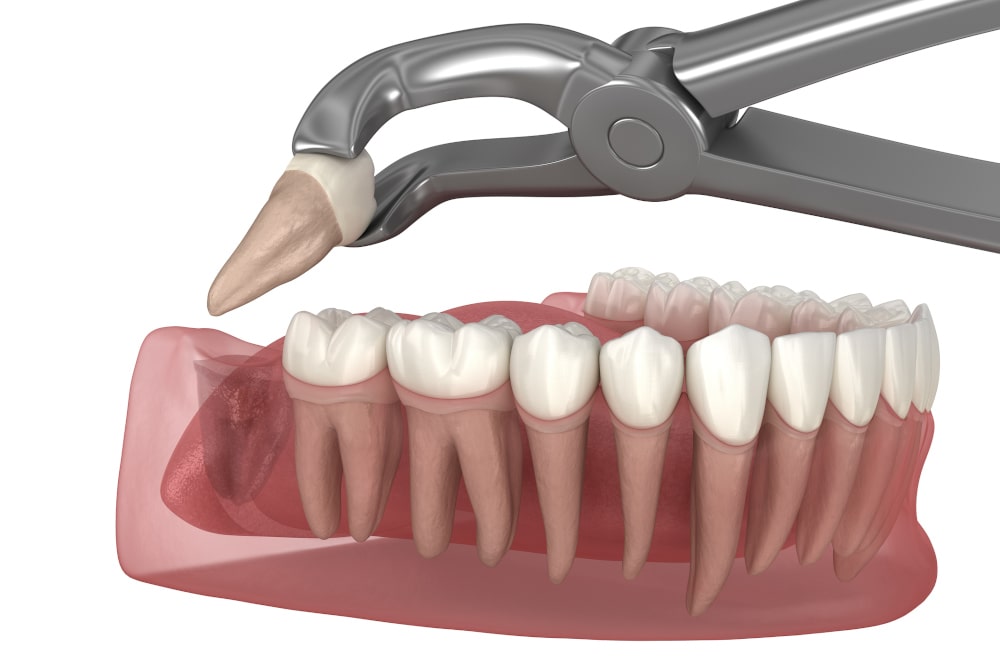
The primary reason for removal is impaction. This occurs when the jawbone does not have enough space for the third molars to erupt fully, causing them to become stuck partially beneath the gum line or against the adjacent second molar.
Types of Impaction:
- Vertical Impaction: The tooth is oriented correctly but trapped beneath the gum tissue or bone, unable to erupt.
- Angular (Mesial/Distal) Impaction: The tooth is angled forward or backward, pushing against the roots of the second molar. This is one of the most destructive types.
- Horizontal Impaction: The tooth is lying completely on its side, parallel to the jawbone, pushing aggressively into the root system of the neighboring tooth.
Impaction is a silent threat. It can damage surrounding teeth, lead to dangerous infections, and cause painful cysts or tumors.
2. Critical Warning Signs: Signs Wisdom Teeth Need Removal
If you are experiencing any of the following symptoms, it is a strong sign wisdom teeth need removal and you should schedule an urgent consultation immediately:
| Symptom | Why It Happens |
|---|---|
| Pain or Tenderness | Aching or throbbing pain in the back of the jaw, often radiating to the ear or temple. This is usually caused by the tooth pushing against bone or nerves. |
| Swelling | Swelling of the gum flap surrounding a partially erupted tooth (Pericoronitis) or swelling in the jaw and lymph nodes. |
| Infection (Pericoronitis) | A pocket forms around the tooth crown, trapping bacteria, food particles, and plaque, leading to a nasty, often recurring infection. |
| Bad Breath or Unpleasant Taste | Due to chronic infection or the inability to clean the area effectively, leading to significant bacterial accumulation. |
| Damage to Adjacent Teeth | The pressure from the wisdom tooth can cause bone loss or cavities (decay) in the neighboring second molar. |
| Cyst or Tumor Formation | In rare but severe cases, the sack that forms the wisdom tooth can fill with fluid, creating a cyst that destroys the surrounding jawbone. |
If a thorough examination, which always includes a panoramic X-ray, confirms any of these issues, your specialist will recommend wisdom tooth extraction Gandhinagar to prevent future, more complex complications.
Part 2: The Procedure – Addressing the Pain Myth
One of the biggest obstacles people face when considering surgery is the fear of pain. It is essential to debunk the myth that wisdom tooth removal is an excruciating experience.
Is Wisdom Tooth Removal Painful?
The short answer is no, wisdom tooth removal is not painful during the procedure itself. Modern dentistry and surgical techniques ensure that the entire process is managed efficiently and comfortably.
- During the Procedure: You will be given appropriate anesthesia. For simple extractions, local anesthesia (a numbing injection) is sufficient, and you will only feel pressure, not pain. For more complex, impacted cases, or for patients with high anxiety, we offer conscious sedation (laughing gas) or deep sedation, which allows you to be completely relaxed or even asleep during the procedure. Our goal is always a painless wisdom tooth extraction.
- Post-Procedure: Pain is completely manageable. Discomfort typically peaks in the first 12–24 hours, but this is controlled effectively with prescription and over-the-counter pain medications recommended by your oral surgeon. Following the post-operative instructions precisely is the key to minimizing any pain or discomfort.
Part 3: The Financial Transparency: Cost of Wisdom Tooth Extraction
Understanding the cost of wisdom tooth extraction is a vital part of planning your treatment. It is crucial to remember that this is a surgical procedure, and the price varies significantly based on complexity.
Factors Influencing the Wisdom Tooth Removal Cost
The fee is not arbitrary; it directly reflects the time, complexity, level of skill required, and the type of sedation used.
- Complexity of the Extraction:
- Simple Eruption: If the tooth is fully visible and healthy, it is a straightforward extraction, which is less expensive and takes less time.
- Surgical/Impaction: If the tooth is impacted (partially or fully hidden beneath the gum and bone), it requires a surgical procedure—cutting the gum tissue and sometimes removing surrounding bone to access the tooth. This is naturally the higher wisdom tooth removal cost segment.
- Type of Anesthesia/Sedation:
- Local Anesthesia: Least expensive option.
- Conscious Sedation (Nitrous Oxide): Adds an intermediate cost, ideal for moderate anxiety.
- Intravenous (IV) Sedation/General Anesthesia: The highest cost option, as it requires the presence of a trained anesthetist and monitoring equipment, but provides the greatest comfort for complex cases or high-anxiety patients.
- Number of Teeth: The cost will obviously multiply if you are removing two, three, or all four teeth at once. Often, removing all four impacted wisdom teeth in a single visit under sedation is recommended to consolidate recovery time.
- Diagnostic Imaging: The mandatory panoramic X-ray or, in complex cases, a 3D Cone Beam CT (CBCT) scan adds a minor cost, but is non-negotiable for safe planning.
Getting an Accurate Estimate:
It is impossible to provide a definitive price without a clinical examination and X-ray review. We encourage patients to schedule a consultation at our dental clinic Gandhinagar where we can provide a detailed breakdown of the required procedure and a transparent, upfront quote covering all expected cost of wisdom tooth extraction and follow-up visits.
Part 4: The Recovery Roadmap – What to Expect
The most common question following “Does it need to come out?” is “What is the recovery like?” Recovery is highly predictable, but it requires patient compliance. The typical recovery time is 3 to 7 days for the initial discomfort, with full healing taking several weeks.
Immediate Post-Operative Care (The First 24 Hours)
The key to a successful recovery is the formation and protection of the blood clot in the extraction site. This clot is nature’s bandage.
| Instruction | Why It’s Critical |
|---|---|
| Gauze | Change the gauze every 30–45 minutes for the first few hours until bleeding subsides. Maintain firm, steady pressure. |
| Ice Pack | Apply ice packs to the cheeks, cycling 20 minutes on, 20 minutes off, for the first day. This is the single most effective way to prevent severe swelling. |
| Rest | Elevate your head with pillows while sleeping or resting. Avoid strenuous activity. The more you rest, the faster you heal. |
| Medication | Start your pain medication before the local anesthesia wears off—usually 4–6 hours post-surgery. Stick to the prescribed schedule. |
| Soft Diet | Stick to cold liquids and very soft foods like smoothies, yogurt, and ice cream (without nuts or seeds). DO NOT chew near the surgical site. |
The “Must-Avoid” List (Critical for 48–72 Hours)
- DO NOT SMOKE: Smoking is the number one cause of dry socket and significantly delays healing.
- DO NOT USE STRAWS: The sucking motion can dislodge the blood clot, leading to dry socket.
- DO NOT SPIT VIGOROUSLY OR RINSE HARSHLY: Gentle rinsing is okay after 24 hours, but aggressive spitting can ruin the clot.
- DO NOT EAT HARD, CRUNCHY, OR HOT FOODS: These can irritate the wound or get stuck in the socket.
Managing Discomfort: Swelling and Bruising
- Swelling (Edema): Swelling is a normal part of the healing process. It usually peaks 48 to 72 hours after surgery and then slowly recedes. Consistent icing in the first 24 hours is your best defense.
- Bruising: Bruising on the face or neck is possible, especially in more complex extractions. This will fade within a week and is not a cause for concern.
The Major Risk: Dry Socket
Dry socket (Alveolar Osteitis) is the most common complication and occurs when the protective blood clot is lost or fails to form, exposing the bone and nerves underneath.
- Symptoms: Intense, throbbing pain that usually begins 3–4 days after surgery, often radiating to the ear. The pain is not managed by medication. You may also see an empty socket or grayish-white bone.
- Action: If you suspect dry socket, call your dentist in Gandhinagar immediately. We can treat it by cleaning the socket and applying a medicated dressing to soothe the area and promote healing.
Recovery Timeline
| Days Post-Extraction | Focus | What to Expect |
|---|---|---|
| Day 1 | Clot Formation & Rest | Peak swelling and bleeding. Strict adherence to soft/liquid diet and ice. |
| Days 2–3 | Swelling Management | Swelling is at its maximum. Pain should be controlled by prescribed medication. Begin gentle salt water rinses (after 24 hours). |
| Days 4–7 | Diet Progression | Swelling begins to noticeably decrease. You can start introducing semi-soft foods (pasta, mashed vegetables). Pain medication may be reduced or stopped. |
| Week 2 | Return to Normalcy | Most physical symptoms are gone. You can typically return to a normal diet. The gum tissue continues to heal. |
| Weeks 6–8 | Full Tissue Healing | The extraction site is fully covered by gum tissue, though the bone may take several months to fully regenerate. |
Your Expert Partner for Wisdom Tooth Extraction Gandhinagar
Choosing where to have your procedure is the most important decision you will make. Our oral surgery team is committed to making your wisdom tooth extraction experience as comfortable and worry-free as possible.
We combine precision surgical techniques with advanced pain management protocols, ensuring that your journey—from the initial X-ray to the final follow-up—is safe, transparent, and focused entirely on your health.
If you are concerned about your wisdom teeth, or if you need a clear, upfront assessment of the cost of wisdom tooth extraction, don’t delay. Early detection and planned removal are always easier and less expensive than emergency surgery.
Contact us today to schedule your consultation and take the first step toward a healthy, pain-free smile. We are proud to be the best trusted dentist near you for all your complex dental needs in the Gandhinagar area.

Related posts

Write a Comment
Recent Posts

X-rays Before Dental Implants: Using 3D Tech for Success


