


Gum Disease and Diabetes: The Two-Way Link You Need to Know About
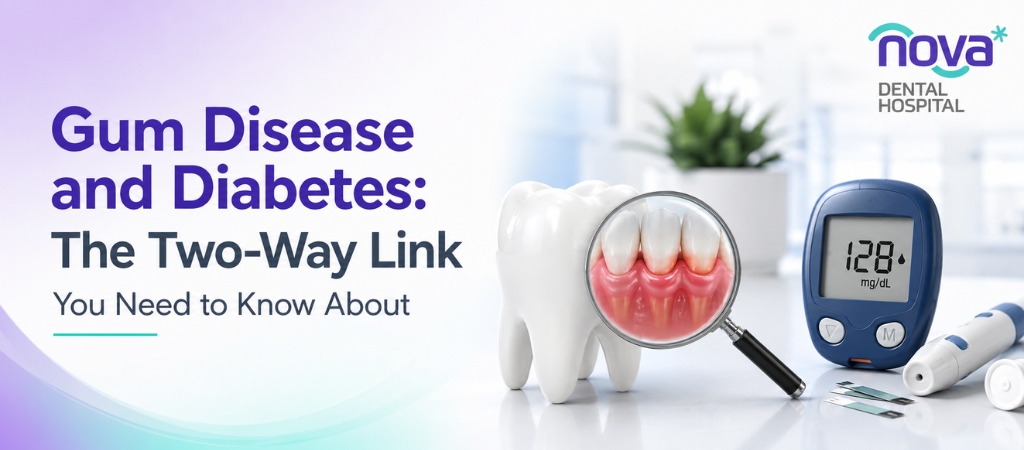
Gum Disease and Diabetes: The Two-Way Link You Need to Know About

Quick Answer
Gum disease and diabetes share a two-way relationship: uncontrolled diabetes raises blood sugar, which weakens the gums’ ability to fight infection and makes gum disease more likely and more severe. In turn, untreated gum disease causes chronic inflammation that makes blood sugar harder to control. Managing one condition well genuinely helps manage the other, which is why dental checkups are an essential — not optional — part of diabetes care.
Quick Summary
Key Facts at a Glance
- Diabetics are significantly more likely to develop gum disease than non-diabetics
- High blood sugar reduces the mouth’s ability to fight bacterial infection
- Gum inflammation can raise blood sugar levels, creating a harmful cycle
- Warning signs include bleeding gums, persistent bad breath, and loose teeth
- Treating gum disease can modestly improve blood sugar (HbA1c) readings
- Twice-yearly dental checkups are recommended for most diabetic patients
- Good oral hygiene and glycemic control together give the best outcomes
Introduction
Many patients are surprised to learn that a dental problem can influence a condition as serious as diabetes. At Nova Dental Hospital, we regularly meet patients and parents who ask why gum health matters so much when managing blood sugar. The answer lies in a well-documented, two-way relationship between periodontal (gum) disease and diabetes — each condition can make the other worse, and each can be improved by managing the other well.
This guide explains the science in plain language, highlights warning signs, and offers a practical action plan for anyone living with diabetes or caring for a family member who is.
How Diabetes Affects Gum Health
When blood sugar levels stay elevated over time, several changes occur in the body that directly affect the gums:
- Reduced infection resistance: High glucose levels weaken white blood cell function, making it harder for the body to fight the bacteria that cause gum infections.
- Slower healing: Diabetes can reduce blood flow to the gums, slowing tissue repair after everyday irritation or dental treatment.
- Dry mouth: Diabetes often reduces saliva flow, and saliva is one of the mouth’s natural defenses against plaque bacteria.
- Higher glucose in saliva: This can encourage the growth of bacteria that trigger gum inflammation.
Expert Insight
- In our clinical experience, patients with poorly controlled diabetes (HbA1c above 8%) tend to show noticeably more gum inflammation than patients with well-controlled diabetes, even with similar brushing habits.
Practical takeaway: If you have diabetes, your gums are more vulnerable by default — this makes daily oral hygiene and regular dental visits genuinely protective, not just routine.
How Gum Disease Affects Diabetes
The relationship also runs the other way. Gum disease is a chronic bacterial infection, and the body responds to any infection with inflammation. This inflammation releases chemical messengers that can interfere with how the body uses insulin, making blood sugar harder to control.
A patient scenario we often see: a person with reasonably stable Type 2 diabetes develops untreated gum disease over several months. Their doctor notices their HbA1c has crept upward despite no change in diet or medication. Once the gum disease is treated, blood sugar control frequently becomes easier to manage again — though dental treatment is a support to medical care, not a replacement for it.
Expert Insight
- Treating moderate-to-severe gum disease has been shown in clinical studies to modestly lower HbA1c levels, typically in a similar range to adding a second diabetes medication — though results vary by individual.
Warning Signs Diabetics Should Never Ignore
- Gums that bleed during brushing or flossing
- Red, swollen, or tender gums
- Persistent bad breath or a bad taste in the mouth
- Gums pulling away from teeth (teeth appearing longer)
- Loose or shifting permanent teeth
- Pus between teeth and gums
Common Mistake
- Assuming bleeding gums are normal or caused only by “brushing too hard.” Bleeding is almost always a sign of inflammation that needs attention.
Gingivitis vs Periodontitis in Diabetic Patients
| Factor | Gingivitis | Periodontitis |
| Stage | Early, reversible | Advanced, causes lasting damage |
| Symptoms | Mild redness, occasional bleeding | Bleeding, gum recession, loose teeth |
| Bone/Tissue Damage | None | Possible bone and tissue loss |
| Diabetes Risk Impact | Mild inflammatory effect | Significant impact on blood sugar control |
| Treatment | Improved brushing, flossing, cleaning | Deep cleaning, root planing, ongoing monitoring |
Prevention: Protecting Your Gums When You Have Diabetes
- Keep blood sugar levels as close to target range as your doctor recommends.
- Brush twice daily with fluoride toothpaste and a soft-bristled brush.
- Floss once daily to remove plaque between teeth.
- Visit your dentist every six months, or more often if advised.
- Tell your dentist you have diabetes and share your recent HbA1c reading.
- Avoid smoking, which compounds gum disease risk in diabetics.
- Stay hydrated to counter diabetes-related dry mouth.
Expert Insight
- We recommend diabetic patients treat dental visits with the same priority as eye exams or kidney function checks — all are standard parts of comprehensive diabetes care.
Myths vs Facts
| Myth | Fact |
| Gum disease is just a dental issue with no link to overall health. | Gum disease is a chronic infection that can directly affect blood sugar control. |
| Only people with poor hygiene get gum disease. | Diabetes itself increases gum disease risk, even with good hygiene habits. |
| If my gums don’t hurt, they’re healthy. | Gum disease is often painless in early stages; bleeding, not pain, is the key warning sign. |
| Treating gum disease won’t affect my diabetes. | Studies show treating gum disease can modestly improve blood sugar readings. |
Common Mistakes Patients Make
- Skipping dental visits because diabetes management feels like the priority — both need attention together.
- Ignoring mild gum bleeding as “normal.”
- Not informing the dentist about diabetes or recent blood sugar readings.
- Assuming denture or implant options are automatically off-limits due to diabetes, without consulting a dentist.
Questions Patients Forget to Ask
- “Does my current blood sugar control affect what dental treatment I can safely have today?”
- “How often should I really be getting dental cleanings given my diabetes?”
- “Are there specific mouthwashes or toothpaste better suited for diabetic patients?”
- “Could my gum symptoms be an early sign that my diabetes management needs review?”
Practical Action Plan
- Book a dental checkup and mention your diabetes diagnosis and HbA1c level.
- Ask for a full periodontal (gum) assessment, not just a routine check.
- Set a daily oral hygiene routine: brush, floss, and rinse as advised.
- Share updates between your dentist and your diabetes doctor if gum disease is found.
- Schedule follow-up cleanings as recommended — often every 3–4 months for gum disease patients.
Nova Dental Expert Summary Box
Nova Dental Hospital’s Guidance
- Diabetes and gum disease influence each other in both directions, so managing them together produces the best results for patients.
- Regular dental visits, honest communication about your diabetes status, and consistent daily oral hygiene are the three pillars of prevention.
- Early gum disease is manageable and often reversible with prompt care — waiting rarely helps and can allow the condition to progress.
How Nova Dental Hospital Can Help
Nova Dental Hospital in Gandhinagar and Ahmedabad supports patients with diabetes through personalized treatment planning that accounts for their overall health, not just their teeth. Our approach includes early diagnosis of gum changes, preventive dentistry tailored to higher-risk patients, and family-focused care that helps every household member — from children building good habits early to seniors managing long-term conditions — maintain healthy gums. As a family dentist in Gandhinagar, we also emphasize growth monitoring and preventive guidance for younger patients whose family history includes diabetes.
Key Takeaways
- Diabetes and gum disease affect each other in both directions.
- High blood sugar weakens the mouth’s natural defenses against infection.
- Gum disease inflammation can make blood sugar harder to control.
- Bleeding gums, bad breath, and loose teeth are warning signs, not normal occurrences.
- Treating gum disease can modestly support better blood sugar readings.
- Twice-yearly dental visits (or more) are recommended for diabetic patients.
- Always share your diabetes status and HbA1c level with your dentist.
- Prevention combines good oral hygiene with consistent glycemic control.
Frequently Asked Questions
1. Can diabetes actually cause gum disease?
Diabetes doesn’t directly cause gum disease, but it significantly raises the risk by weakening the body’s ability to fight the bacterial infection that leads to gum disease.
2. Can gum disease make diabetes worse?
Gum disease can make diabetes harder to manage, because the chronic inflammation it causes can interfere with insulin function and raise blood sugar levels.
3. What are the earliest signs of gum disease in diabetics?
Mild redness, gum swelling, and bleeding during brushing or flossing are usually the earliest signs.
4. How often should diabetics see a dentist?
Most diabetic patients benefit from checkups every six months, though your dentist may recommend more frequent visits if gum disease is present.
5. Does treating gum disease improve blood sugar levels?
Treating moderate-to-severe gum disease can modestly improve HbA1c levels in diabetic patients, though it works alongside — not instead of — medical diabetes management.
6. Are Type 1 and Type 2 diabetics equally at risk?
Type 1 and Type 2 diabetics both carry increased gum disease risk when blood sugar is poorly controlled; the level of glycemic control matters more than the type of diabetes.
7. Can children with diabetes get gum disease too?
Children with diabetes can develop gum disease just as adults can, which is why establishing good oral hygiene habits early is especially important for them.
8. Is bad breath always related to gum disease in diabetics?
Persistent bad breath in a diabetic patient is not always caused by gum disease, but it should be evaluated, since it can signal both gum disease and, in some cases, blood sugar imbalance.
9. What dental treatments are used for gum disease?
Gum disease treatment typically includes professional cleaning, scaling and root planing, and in advanced cases, periodontal therapy, with the dentist’s recommendation based on severity.
10. Should I tell my dentist I have diabetes even if my gums feel fine?
Sharing a diabetes diagnosis with the dentist is recommended even when gums feel fine, since it helps the dentist monitor for early changes and plan safe, appropriate treatment.
11. Can poor gum health affect diabetes medication effectiveness?
Untreated gum inflammation can make blood sugar harder to control, which in turn may affect how well diabetes medications keep glucose within the target range.
12. Where can I get a periodontal evaluation near Gandhinagar?
Nova Dental Hospital in Gandhinagar offers periodontal evaluations as part of routine and diabetic-focused dental checkups.
Disclaimer: This article is for general patient education and does not replace personalized advice from your dentist or physician. Diabetes management decisions should always be made with your treating doctor.

Related posts

Write a Comment
Recent Posts


