


Orthodontics for Children in Gandhinagar: When Is the Right Age to Start?
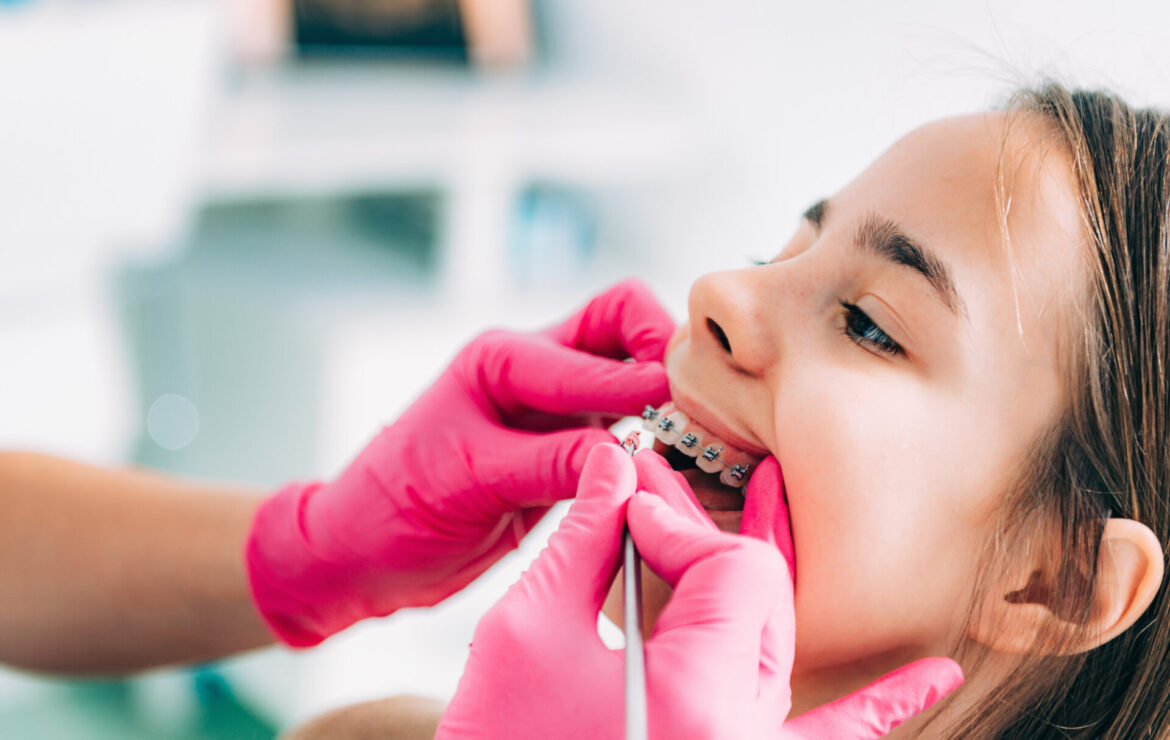
Orthodontics for Children in Gandhinagar: When Is the Right Age to Start?

The Question Every Parent Asks — and the Answer That Surprises Them
When parents notice that their child’s teeth are coming in crooked, crowded, or in unusual positions, the standard reaction is to wait. Wait until all the permanent teeth have erupted. Wait until the child is a teenager. Wait until the problem is fully formed before addressing it. This instinct is understandable — orthodontic treatment is a significant investment of time and money, and it seems rational to wait until the picture is complete before starting.
In many cases, this instinct is partially correct. Many orthodontic problems are best addressed once the permanent dentition is established, when the full extent of the issue is visible and fixed appliances or clear aligners can work on all the permanent teeth simultaneously. But there is a subset of conditions — specific skeletal and dental problems that present in childhood — where early intervention is not just helpful but significantly more effective than waiting. These are problems where the growing jaw provides a therapeutic window that closes at puberty, and where acting during growth can achieve outcomes that are impossible or substantially more difficult to achieve with braces alone in a fully grown patient.
This guide explains the two-phase model of orthodontic treatment, identifies the specific conditions that warrant early assessment at age 7 to 8, describes what early treatment involves (and what it does not), explains when waiting is the appropriate approach, and covers the full range of orthodontic options available for children and adolescents at Nova Dental Hospital in Gandhinagar.
🔑 Key Takeaways
- The American Association of Orthodontists — and its international equivalents — recommends that every child have an orthodontic assessment by age 7. This does not mean every child needs treatment at 7; it means the assessment identifies problems early enough that the decision to treat or monitor can be made with full information.
- Most children do not need early treatment. The majority are monitored through the mixed dentition (the stage when baby and permanent teeth coexist) and treated with comprehensive orthodontics from age 11 to 14 when the permanent dentition is established.
- The subset of children who benefit from early treatment have specific conditions — significant crossbites, severe underbites, habits causing jaw deformity, severe crowding requiring space creation, and impacted teeth — where intervention during active jaw growth produces better outcomes than waiting.
- Early treatment is not about finishing orthodontic treatment early. It is about using the growing jaw to correct a structural problem that is easier to fix now than in two years. Many children who have Phase 1 treatment still need Phase 2 braces or aligners in adolescence.
- The age at which comprehensive orthodontic treatment (Phase 2) is most effective is when the permanent teeth are largely erupted — typically 11 to 14 years. This is when fixed braces or clear aligners deliver the most efficient correction.
- Clear aligners designed specifically for children and adolescents — Invisalign Teen — are a viable alternative to braces for many cases, with compliance indicators and provisions for still-erupting teeth.
Understanding Jaw Development: Why Timing Matters
The Growing Jaw as a Therapeutic Window
A child’s jaw is not a miniature adult jaw. It is an actively growing structure — the bones of the face and jaw grow in response to functional forces, muscle activity, and genetic programming throughout childhood and into early adolescence. This growth is both the cause of many orthodontic problems and the key to solving them.
Orthodontic appliances — expanders, functional appliances, headgear — work by harnessing this growth and directing it. An upper jaw expander placed in a child aged 8 can widen the upper arch by stimulating the sutural growth at the midpalatal suture — a seam of connective tissue that runs down the centre of the palate and remains responsive to expansion forces until it fuses at approximately age 14 to 16. The same expansion in a 20-year-old requires a surgical procedure. The growing jaw makes what would otherwise be surgery a simple appliance therapy — but only if the intervention is made while the suture is still open.
This is the fundamental principle behind early orthodontic treatment: using the child’s own growth as the treatment mechanism. It is not possible to replicate this in a fully grown patient, which is why the growing years represent a unique therapeutic window for certain skeletal problems.
The Mixed Dentition Phase — Ages 6 to 12
The mixed dentition phase — when baby teeth and permanent teeth coexist — is the developmental window when the paediatric orthodontic assessment is most productive. During this phase, the dentist can assess: the eruption sequence and timing of permanent teeth, the relationship between the upper and lower jaws, the width of the arches, the presence of habits affecting jaw development (thumb-sucking, mouth-breathing), early crowding or spacing patterns, and any developing bite problems.
Monitoring a child through the mixed dentition — with check-ups every six to twelve months — gives the clinician the information needed to decide when (and whether) to intervene. The goal is not to treat everything early; it is to ensure that problems that benefit from early treatment are not missed while they are still amenable to growth-based correction.
The Age-7 Assessment: Why It Is Recommended
The recommendation for an orthodontic assessment at age 7 is not arbitrary. By age 7, the first permanent molars have typically erupted (establishing the back bite relationship) and the permanent upper and lower incisors are beginning to erupt (allowing assessment of the front bite). The clinician can evaluate the jaw relationship, arch widths, crowding patterns, and eruption sequence with enough information to identify problems that warrant early intervention — and equally, to reassure parents of children whose development is normal and who simply need monitoring.
The assessment at age 7 does not result in a treatment recommendation for most children. It results in one of three outcomes: no treatment needed, continue monitoring; early treatment recommended now; or monitor closely and reassess in 6 to 12 months. The majority fall into the first or third category. The minority whose problems are identified as warranting early treatment are the ones who benefit most from the assessment.
💡 Signs That Warrant an Orthodontic Assessment Before Age 7
- The child’s upper and lower teeth do not meet correctly when biting — the lower jaw appears to protrude, or the back teeth meet on the wrong side (crossbite)
- A thumb-sucking or dummy habit that has continued past age 4 and is visibly affecting the bite — open bite, narrow arch, or protruding front teeth
- The child frequently breathes through the mouth rather than the nose — mouth breathing affects jaw development significantly and may require assessment by both a dentist and an ENT
- Permanent teeth erupting in very unusual positions — to the side of the expected position, behind existing teeth, or very high in the gum
- Baby teeth that were shed very early (before age 4 or 5) in positions other than the lower incisors
- The child’s face appears asymmetrical when viewed from the front — one side of the jaw appears more developed than the other
Phase 1 Early Treatment: What It Is and What It Achieves
Phase 1 orthodontic treatment — also called interceptive orthodontics — refers to treatment carried out during the mixed dentition, typically between ages 7 and 10, targeting specific problems that benefit from intervention during the growth phase. It is not comprehensive orthodontic treatment. It does not aim to align all the permanent teeth perfectly. It aims to correct the skeletal or dental problem that will be significantly harder or impossible to correct once growth has stopped.
Palatal Expansion — Correcting a Narrow Upper Arch
A narrow upper jaw that is too narrow to accommodate all the permanent teeth, or that is producing a posterior crossbite (where the upper back teeth bite inside the lower back teeth), can be widened with a palatal expander. The appliance sits across the palate and applies lateral forces to the upper jaw, stimulating new bone formation at the midpalatal suture. Treatment typically takes 4 to 6 months of active expansion, followed by a retention period to allow the new bone to mature.
Palatal expansion in a growing child is highly effective and non-surgical. The same result in an adult requires surgically assisted rapid palatal expansion (SARPE) — a procedure involving surgical cuts to the palate to allow the fused suture to be separated. The difference in treatment complexity between addressing a narrow arch at age 8 and addressing it at age 20 is substantial.
Functional Appliances — Correcting Jaw Relationship
A significant skeletal Class II discrepancy — where the lower jaw is noticeably behind the upper jaw, producing protruding upper front teeth and a receded chin profile — can sometimes be improved with functional appliances during the growth phase. Appliances such as the Twin Block or Herbst appliance reposition the lower jaw forward and stimulate condylar (jaw joint) growth, encouraging the lower jaw to grow more in response to the forward positioning.
The evidence for the long-term effectiveness of functional appliance treatment is nuanced — the skeletal changes achievable are real but modest, and the correction requires retention and may still need comprehensive orthodontics in Phase 2. However, in patients with a significant Class II discrepancy where the lower jaw has growth potential, functional appliance treatment during the growth phase can improve the jaw relationship and reduce the extent of compensation required in Phase 2 — sometimes avoiding the need for extractions or orthognathic surgery.
Space Maintenance and Management
As covered in our blog on space maintainers for children, premature loss of primary teeth can result in space loss that complicates the eruption of permanent teeth. Early orthodontic intervention may include space maintenance after early tooth loss, or in some cases, serial extraction — a planned sequence of extractions designed to guide the permanent dentition into a better position by managing the arch length sequentially.
Crossbite Correction
A posterior crossbite — where one or more upper back teeth bite inside the lower back teeth — is one of the clearest indications for early treatment. If left uncorrected, a crossbite causes the lower jaw to shift to one side on closing, which over time can produce facial asymmetry and jaw joint problems. Correcting a crossbite with a palatal expander or removable appliance during the mixed dentition is straightforward. Correcting the same crossbite in an adult is more complex and may involve surgical intervention.
Anterior Crossbite — Correcting the Front Bite
An anterior crossbite — where one or more upper front teeth bite behind the lower front teeth — also warrants early correction. If the permanent upper incisors are erupting into crossbite, the abnormal biting forces can cause wear on the back of the affected upper teeth and damage the enamel of the lower teeth. A simple removable appliance or a fixed partial appliance can tip the upper incisors forward into the correct position quickly in a young child.
When Waiting Is the Right Approach
Early treatment is not appropriate for every child, and a responsible orthodontist will recommend monitoring rather than treatment in the majority of cases. The conditions that are best managed by waiting include:
- Mild to moderate crowding: Crowding that is present in the mixed dentition often appears more severe than it will be in the permanent dentition. As the permanent teeth are larger than the baby teeth they replace, and as the jaw continues to grow, some apparent crowding resolves naturally. Treating mild crowding early with a removable appliance may simply postpone the comprehensive treatment without reducing its extent.
- Spacing: Generalised spacing in the mixed dentition is normal and typically closes as the permanent teeth erupt. Spacing in the permanent dentition is best addressed with comprehensive orthodontic treatment once all the permanent teeth are present.
- Overbite: A deep bite (where the upper front teeth significantly overlap the lower front teeth) is often best addressed in Phase 2 comprehensive orthodontics, particularly with modern clear aligner systems that have precision bite ramp features designed for overbite correction.
- Mild Class II (overjet): A modest overjet where the upper teeth protrude slightly may not warrant functional appliance treatment — comprehensive orthodontics in the permanent dentition is often sufficient and avoids the risk of relapse from very early treatment.
Phase 2 Comprehensive Treatment: The Main Orthodontic Phase
For most children, the primary orthodontic treatment happens in Phase 2 — comprehensive fixed appliance or clear aligner therapy carried out once most of the permanent teeth have erupted, typically from age 11 to 14. This is the phase that most people are familiar with as ‘braces’ and that most orthodontic treatment consists of.
The Right Age for Phase 2
The optimal timing for Phase 2 treatment is when enough permanent teeth have erupted to allow comprehensive treatment — typically after the upper and lower second premolars and second molars have erupted or are close to erupting, leaving only the wisdom teeth to come. This is usually around age 11 to 13 for girls (who mature slightly earlier) and 12 to 14 for boys. Starting too early — before enough permanent teeth are present — limits what can be achieved. Starting too late is not a problem clinically, as adults can also be effectively treated with orthodontics.
Fixed Braces for Children and Adolescents
Fixed braces — brackets bonded to the teeth and connected by an archwire — remain the most versatile and clinically precise orthodontic appliance for comprehensive treatment. They work 24 hours a day independently of patient compliance, can be precisely controlled for all types of tooth movement, and are suitable for the full range of orthodontic complexity from mild to severe.
For children and adolescents who are self-conscious about their appearance, ceramic (tooth-coloured) brackets reduce the visibility of the appliance without any compromise to clinical effectiveness. Nova Dental Hospital offers both metal and ceramic dental braces for children and adolescents in Gandhinagar, with the appliance choice guided by the clinical requirements of the case and the patient’s preference.
Invisalign Teen — Clear Aligners for Adolescents
Invisalign Teen is the clear aligner system designed specifically for adolescent patients. It differs from standard Invisalign in three ways: compliance indicators (small blue dots on the aligner that fade with wear, allowing monitoring of how consistently the aligner is being worn), eruption compensation (space built into the aligner for teeth that are still emerging), and replacement aligners for a set number of lost trays.
Clear aligners are a viable alternative to fixed braces for many adolescent cases — particularly mild to moderate crowding, spacing, and overbite correction — and are increasingly the treatment of choice for adolescents who are highly motivated and reliable with compliance. The critical caveat is compliance: aligners must be worn 20 to 22 hours per day. Adolescents who are not consistently compliant get slower and less complete results than with fixed braces, which work regardless of patient behaviour.
At Nova Dental Hospital, both Invisalign and fixed dental braces are available for adolescent patients. The recommendation is based on the clinical complexity of the case and an honest assessment of the patient’s likely compliance — not on which system is more convenient to recommend.
| Phase | Age Range | What It Addresses | Typical Duration | Appliances |
| Orthodontic Assessment | Age 7 (recommended) | Identifies problems; determines whether early treatment or monitoring is appropriate | Single appointment + monitoring visits | Clinical examination, X-rays, photographs |
| Phase 1 — Early / Interceptive | Ages 7–10 (mixed dentition) | Skeletal correction during growth: crossbites, narrow arch, jaw discrepancy, habits | 6–18 months active treatment | Palatal expander, functional appliance, partial braces, removable appliance |
| Rest / Monitoring Period | Ages 10–12 | Allow remaining permanent teeth to erupt; monitor development | 12–24 months | Retainer; monitoring visits every 6–12 months |
| Phase 2 — Comprehensive | Ages 11–14 (permanent dentition) | Full alignment of all permanent teeth; bite correction; space closure | 18–24 months typically | Fixed braces (metal or ceramic) or clear aligners (Invisalign Teen) |
| Retention | Post-treatment (lifelong) | Maintain the corrected position | Lifelong — removable retainers nightly | Fixed retainer (bonded wire) and/or removable Essix retainer |
The Role of Retainers — Why Treatment Does Not End With Braces Off
One of the most important and most underestimated components of orthodontic treatment is retention — the phase that begins when the braces come off and lasts indefinitely. Teeth that have been moved orthodontically have a tendency to relapse toward their original positions, driven by the elastic fibres in the periodontal ligament and by the continued growth and change of the jaw over time. Without retention, relapse is predictable.
Fixed retainers — thin wires bonded to the back surfaces of the upper and lower front teeth — provide permanent passive retention without any compliance requirement. Removable Essix retainers — clear plastic trays worn nightly — are the standard adjunct, allowing the patient to remove them for eating and oral hygiene while maintaining the corrected position during sleep.
Adults who had braces as teenagers and find their teeth have shifted significantly in adulthood almost universally report that they stopped wearing their retainer within a year or two of treatment completing. This is the single most common cause of relapse in orthodontic patients — and it is entirely preventable. The instruction to wear the retainer ‘for life’ is not an exaggeration; it is clinically accurate.
Choosing an Orthodontic Provider in Gandhinagar for Your Child
The orthodontic treatment provider a family chooses matters — not all orthodontic treatment is equivalent, and the quality of the outcome depends significantly on the experience of the clinician, the accuracy of the treatment planning, and the quality of the appliances and materials used. When evaluating an orthodontic provider in Gandhinagar for a child or adolescent, the following questions are worth asking:
- Does the clinician offer both braces and clear aligners? A provider who offers only one option has a financial incentive to recommend it regardless of fit. A provider who offers both can make a clinically neutral recommendation based on the individual case.
- Is a proper records appointment done before treatment is recommended? Orthodontic treatment should be based on clinical examination, X-rays (including a lateral cephalometric X-ray for growth cases), photographs, and study models or digital scans. A treatment recommendation made without these records is not adequately based.
- Is the clinician experienced specifically with children and adolescents? Paediatric orthodontics — particularly Phase 1 interceptive treatment — requires experience with growing patients, the mixed dentition, and growth-modifying appliances. A clinician who works primarily with adults may not have the same breadth of experience with early intervention.
At Nova Dental Hospital in Gandhinagar, orthodontic treatment for children and adolescents is offered across the full range — from Phase 1 interceptive treatment to comprehensive Phase 2 braces and Invisalign Teen. The paediatric and orthodontic team is experienced with misaligned teeth treatment across all ages, from mixed dentition assessment through to retention management. A general dentistry or orthodontic consultation is the appropriate starting point for any family with questions about their child’s dental development.
Frequently Asked Questions
FAQ 1: My child is 8 and has very crooked teeth. Should they start braces now?
An assessment now is appropriate — and will tell you whether early treatment is warranted or whether monitoring until the permanent dentition is established is the right approach. At age 8, many children are in the mixed dentition and comprehensive braces are not yet appropriate. However, if the assessment identifies a specific problem — a crossbite, a narrow arch, a developing skeletal discrepancy — that benefits from early intervention, starting treatment now can simplify or reduce the extent of the later comprehensive phase. Book a paediatric assessment at Nova Dental Hospital to find out where your child stands.
FAQ 2: At what age can my child start Invisalign?
Invisalign Teen is appropriate from approximately age 12 to 13, when enough permanent teeth have erupted to support a full aligner sequence. The compliance requirement — 20 to 22 hours of wear per day — means the decision depends as much on the adolescent’s motivation and reliability as on their age. A younger child who is highly motivated and cooperative may be suitable; an older teenager who is unlikely to wear the aligners consistently may be better served by fixed braces. The Invisalign team at Nova Dental Hospital assesses candidacy at the consultation appointment, including an honest conversation with the family about compliance.
FAQ 3: Will my child definitely need a second phase of braces after early treatment?
In many cases, yes — Phase 1 treatment corrects the skeletal or specific problem that warranted early intervention, but comprehensive alignment of all the permanent teeth is still needed once they have fully erupted. This is expected and is not a sign that Phase 1 treatment failed. What Phase 1 treatment achieves is a better starting point for Phase 2 — a corrected jaw relationship, adequate arch width, resolved crossbites — that makes Phase 2 faster, simpler, and may avoid the need for extractions or surgery. Phase 1 treatment does not replace Phase 2; it prepares for it.
FAQ 4: My child sucks their thumb. Will this affect their teeth?
It depends on the age and the intensity of the habit. Thumb-sucking in infancy and early toddlerhood is normal and does not cause permanent dental harm if it stops before the permanent teeth begin to erupt. Persistent thumb-sucking beyond age 4 to 5 — particularly if vigorous — can produce an open bite (where the front teeth do not meet when the back teeth close), a narrow upper arch, and forward positioning of the upper front teeth. These changes can become permanent if the habit continues into the mixed dentition. If your child is still sucking their thumb at age 4 to 5 and you are noticing bite changes, an orthodontic assessment is appropriate. Most cases can be managed with habit-breaking appliances and behavioural strategies without needing to wait until the problem is fully established.
FAQ 5: How long does orthodontic treatment take for children?
Phase 1 early treatment typically takes 6 to 18 months of active appliance wear, followed by a rest period of 12 to 24 months while the remaining permanent teeth erupt. Phase 2 comprehensive treatment — the full braces or aligner phase — typically takes 18 to 24 months for most cases, though simple cases may be shorter and complex cases longer. The total timeline from Phase 1 start to Phase 2 completion can be 3 to 5 years, with monitoring visits in between. For children who go directly to Phase 2 without early treatment, the timeline is the Phase 2 duration alone. You are welcome to read about orthodontic experiences at Nova Dental Hospital on our Google Business Profile.
🔑 Key Takeaways
- An orthodontic assessment at age 7 is recommended for every child — not because treatment is needed at that age, but because problems that benefit from early intervention can be identified before they become harder to treat.
- Phase 1 early treatment is appropriate for a minority of children with specific conditions: significant crossbites, narrow arches, developing skeletal discrepancies, and persistent habits affecting jaw development. Most children do not need Phase 1 treatment.
- The growing jaw provides a unique therapeutic window for skeletal correction that closes at puberty. Problems that can be corrected with simple appliances at age 8 may require surgery at age 20.
- Phase 2 comprehensive treatment — braces or clear aligners — is most effective when the permanent dentition is established, typically from age 11 to 14.
- Clear aligners (Invisalign Teen) are a viable alternative to fixed braces for many adolescent cases — but compliance with 20 to 22 hours of daily wear is the critical variable. Patients who cannot reliably comply get better results with fixed braces.
- Retention is lifelong — not optional. Most post-orthodontic relapse is caused by retainer abandonment within the first few years after treatment.
Conclusion: The Right Time to Start Is Sooner Than Most Parents Think
The most common orthodontic mistake in childhood is not treating too early — it is missing the window for early intervention that, once closed, results in more complex and more expensive treatment later. The first step is not commitment to a treatment plan; it is an assessment that tells you and your dentist exactly where your child’s development stands and what, if anything, needs to be done right now.
For parents in Gandhinagar who are wondering whether their child’s teeth are developing normally, whether early treatment is warranted, or simply what age to start thinking about orthodontics — a paediatric dental assessment at Nova Dental Hospital is the right starting point. The team will evaluate your child’s dental development, explain what is within normal range and what warrants attention, and give you a clear picture of whether treatment is needed now, in two years, or simply monitoring at this stage.

Related posts
Write a Comment
Recent Posts


