


How to Choose the Right Dentist in Gandhinagar: What Patients Should Actually Look For
How to Choose the Right Dentist in Gandhinagar: What Patients Should Actually Look For

Why Choosing the Right Dentist Is Worth More Than Five Minutes of Research
Most people choose a dentist the same way they choose a petrol station — whichever is nearest and open at a convenient time. For a routine check-up, this approach is rarely catastrophic. Over a lifetime of dental care, it can be.
The dentist you choose has more influence over your long-term oral health than almost any other single factor. They are the person who will identify a hairline crack before it splits, notice the early signs of gum disease before bone loss becomes irreversible, plan a restoration that lasts twenty years rather than five, and tell you — honestly — when a tooth can be saved and when it cannot. The difference between a dentist who does this well and one who does not is significant, measurable, and entirely invisible to the patient until something goes wrong.
This guide is for anyone searching for a dentist in Gandhinagar — whether you have just moved to the area, are unhappy with your current clinic, or have simply never thought carefully about what you are actually looking for. It covers credentials, equipment, sterilisation, communication, online research, and the specific questions worth asking before you commit to a practice.
🔑 Key Takeaways
- Proximity and price are the two most common criteria patients use to choose a dentist. Neither is a reliable indicator of clinical quality, and optimising for them alone often leads to more expensive and more complex problems later.
- The equipment a clinic uses reflects both its clinical capabilities and its investment in patient outcomes. A clinic with in-house 3D imaging, digital records, and modern sterilisation infrastructure is not simply more expensive — it is clinically better equipped to diagnose accurately and treat safely.
- Credentials matter — but so does communication. The best dentist for a patient is the one whose clinical skill is matched by their willingness to explain what they are doing, why, and what the alternatives are.
- Online reviews, when read critically and in volume, give a reliable picture of the patient experience. A pattern of specific, detailed reviews is more informative than star ratings alone.
- The first appointment is an evaluation that runs in both directions. You are assessing the clinic as much as the clinician is assessing your teeth. Use it accordingly.
Credentials and Training: What to Look For
Dentistry in India is regulated by the Dental Council of India (DCI). Every practising dentist must hold a BDS (Bachelor of Dental Surgery) degree from a DCI-recognised institution and must be registered with the State Dental Council. This is the baseline — the minimum legal requirement for practice. It tells you that a dentist has completed their undergraduate training and is legally permitted to practise. It does not tell you very much about the quality of that training, their clinical experience, or whether they have continued to develop their skills since graduation.
Postgraduate Qualifications
A MDS (Master of Dental Surgery) is a postgraduate qualification in a specific clinical discipline — orthodontics, endodontics (root canals), oral surgery, periodontics (gum treatment), prosthodontics (crowns, bridges, implants), or oral medicine, among others. A dentist with an MDS in a relevant specialty brings a significantly higher depth of training to that specific area of treatment. When you need complex orthodontic treatment, a root canal on a difficult molar, or implant placement in a challenging site, a clinician with specialty training in that area has a meaningfully different level of expertise from a general dentist performing the same procedure.
Not every dental procedure requires a specialist, and not every dental clinic needs to have specialists on staff for every discipline. What matters is that the clinic recognises when a case is within their competence and when it should be referred — and that they have a referral pathway for cases that exceed their clinical scope.
Continuing Professional Development
Dentistry changes. Materials improve, techniques evolve, and clinical standards advance. A dentist who qualified fifteen years ago and has not engaged in formal continuing education since then is practising with a clinical toolkit that is fifteen years old. The best clinicians attend courses, read current literature, and update their techniques as evidence and materials evolve. This is not always visible from a clinic’s website, but it is worth asking about — particularly if you are considering a complex treatment like implants, full-mouth rehabilitation, or advanced orthodontics.
At Nova Dental Hospital
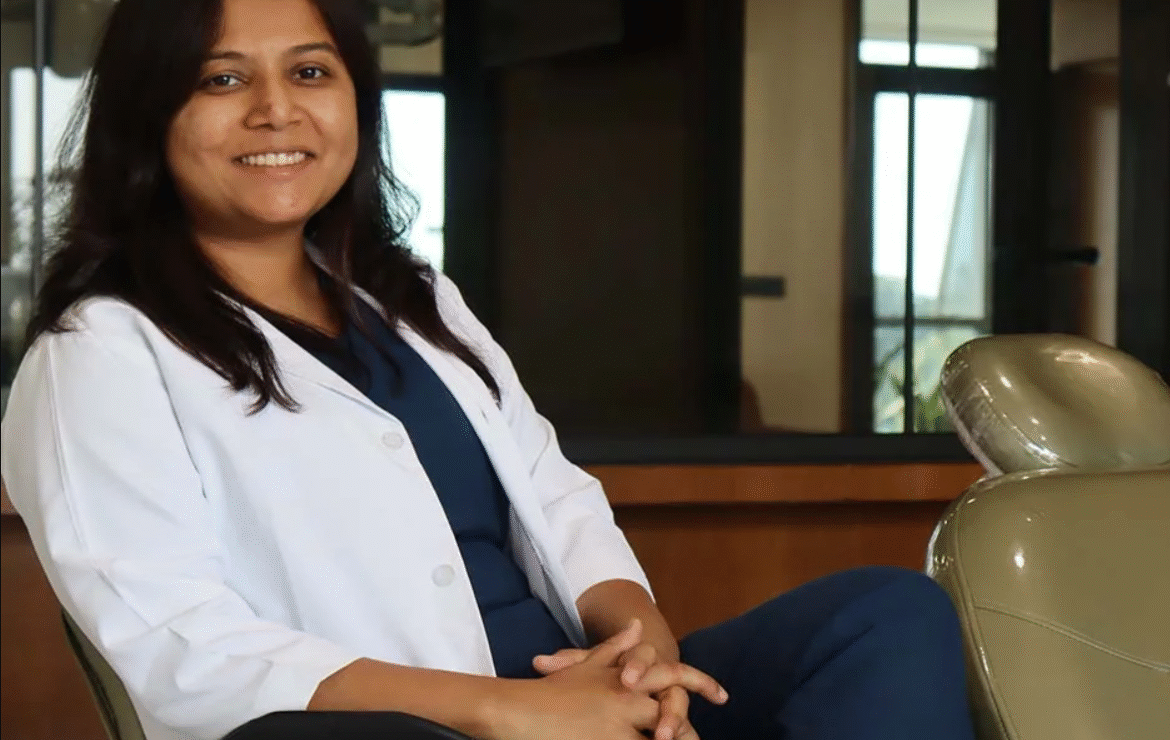
Nova Dental Hospital is led by Dr. Happy Patel, whose clinical training and commitment to ongoing professional development underpin the standard of care at the clinic. The team covers a broad range of treatments in-house — from general dentistry and preventive care through to implants, orthodontics, cosmetic dentistry, and advanced imaging — with specialist referral pathways for cases that benefit from subspecialty input.
Equipment and Technology: Why It Matters Clinically
Dental equipment is not cosmetic infrastructure. The diagnostic and treatment tools available at a clinic directly determine the accuracy of diagnosis and the quality of outcomes for a wide range of procedures. A clinic that has invested in current technology is not simply more impressive to look at — it is clinically better placed to identify problems earlier, plan treatment more precisely, and deliver restorations that last longer.
Digital X-rays
Digital radiography has replaced conventional film X-rays in modern dental practice. Digital X-rays use significantly less radiation than film, produce images instantly, can be enhanced and zoomed digitally for better diagnostic detail, and are stored in the patient’s digital record for easy comparison over time. If a clinic is still using conventional film X-rays, it is operating with technology that the profession moved away from over a decade ago.
OPG (Orthopantomogram) — Full Jaw Panoramic X-ray
An OPG provides a single, wide-field X-ray image of the entire dentition, jaw, and surrounding structures. It is the standard diagnostic tool for assessing wisdom teeth, planning orthodontic treatment, evaluating bone levels across the full arch, and identifying pathology that would not be visible on individual periapical X-rays. A clinic without an OPG machine either refers patients elsewhere for this investigation — adding cost and inconvenience — or, more concerningly, makes treatment decisions without it.
CBCT 3D Imaging — The Diagnostic Gold Standard for Complex Cases
A CBCT (Cone Beam Computed Tomography) scanner produces a three-dimensional image of the teeth, roots, bone, and surrounding anatomy. It is the standard of care for implant planning, complex root canal assessment, impacted wisdom tooth evaluation, orthodontic planning for difficult cases, and the investigation of jaw pathology. A clinic with an in-house CBCT machine can plan implant placement with surgical accuracy, identify hidden root canals, and assess bone volume before treatment begins — rather than discovering problems mid-procedure.
The distinction between a clinic with in-house CBCT and one that refers for it externally is meaningful for two reasons: first, having the scan available at the same clinic that is planning and delivering the treatment allows the clinician to integrate the imaging into their planning in real time; second, it reflects the level of clinical investment the practice has made in diagnostic accuracy. Nova Dental Hospital has an in-house CBCT and OPG facility — one of the relatively few dental clinics in Gandhinagar to offer both under one roof.
Digital Impressions and CAD/CAM
Intraoral scanners capture a precise digital 3D model of the teeth without the need for physical impression materials — eliminating the discomfort and distortion risk of traditional impressions. Digital records can be sent electronically to dental laboratories for crown, bridge, aligner, and other restoration fabrication, improving accuracy and reducing turnaround time. CAD/CAM technology in some clinics allows same-day crown fabrication from in-house milling units, though laboratory-fabricated restorations remain the standard for optimal aesthetic quality.
Laser Dentistry
Dental lasers are used in gum treatment, cavity preparation, and soft tissue procedures. They offer advantages in terms of precision, reduced bleeding, and faster healing in certain applications. Their presence in a clinic is not an essential criterion for evaluating a dentist, but it is an indicator of a practice that is investing in advanced treatment modalities.
| Equipment | Why It Matters | What Its Absence Means |
| Digital X-rays | Lower radiation, instant results, better diagnostic detail | Film X-rays still in use — decade-old technology |
| OPG Panoramic X-ray | Full jaw view for implants, orthodontics, wisdom teeth | External referral needed; treatment decisions may be made without full picture |
| In-house CBCT 3D Scanner | Surgical accuracy for implants; hidden canal detection; bone volume assessment | Referral to external imaging centre; integration gap between scan and treatment |
| Intraoral Scanner | Precise digital impressions; no distortion; better fitting restorations | Physical impressions — higher discomfort and distortion risk |
| Sterilisation unit (autoclave) | Eliminates infection risk from instruments | Non-negotiable — absence is a patient safety issue |
Sterilisation and Infection Control: The Non-Negotiable
Of all the criteria in this guide, sterilisation and infection control is the one where there is no acceptable compromise. Cross-infection through inadequately sterilised dental instruments — while rare in properly equipped clinics — is a documented risk in settings where sterilisation protocols are not followed correctly. Patients have every right to ask about this, and a clinician who is practising to a proper standard will have no discomfort in answering.
What Proper Sterilisation Involves
- Pre-sterilisation cleaning: Instruments are cleaned — either manually or in an ultrasonic bath — before sterilisation to remove organic debris. Sterilisation is ineffective on visibly contaminated instruments.
- Autoclave sterilisation: An autoclave uses pressurised steam at high temperature to destroy all microbial life, including bacterial spores. It is the gold standard for dental instrument sterilisation. The autoclave must be validated — tested regularly to confirm it is reaching the required temperature and pressure.
- Instrument packaging: Sterilised instruments should be individually packaged in pouches that maintain sterility until opening. Pouches have indicator strips that change colour when sterilisation conditions have been met.
- Single-use items: Needles, suction tips, gloves, and a range of other consumables should be single-use — opened fresh for each patient and disposed of after use.
- Surface decontamination: Clinical surfaces — the dental chair, the bracket table, the light handle — should be wiped down with appropriate disinfectant between patients.
What to Look For as a Patient
You will not see the autoclave, but you will see the pouched instruments being opened in front of you. In a properly run clinic, instruments are opened from sterilisation pouches at the start of your treatment. If instruments appear unwrapped on a tray before you sit down — with no indication of when or how they were sterilised — it is reasonable to ask. A well-run clinic will not be offended by the question.
🚩 Sterilisation Red Flags — Ask or Leave
- Instruments laid out on an open tray with no packaging visible
- Gloves reused between patients or between procedures within the same appointment
- Suction tips, needles, or burs that appear to have been used previously
- The dentist or nurse unable to explain their sterilisation protocol when asked
- No visible autoclave or sterilisation room in the clinic
Communication and Patient Experience: What Good Dentistry Feels Like
Clinical skill is necessary but not sufficient. A technically excellent dentist who does not explain what they are doing, dismisses patient concerns, pressures patients into treatment decisions, or makes patients feel judged for the state of their teeth is not providing good dental care — whatever the quality of their restorations. The patient experience matters, and it is measurable.
The Consultation — What It Should Feel Like
A good dental consultation is a conversation, not a monologue. The dentist examines your teeth, explains what they find, describes what it means clinically, and outlines your options — including the option of doing nothing and monitoring, where that is clinically appropriate. They tell you what treatment they recommend, why, and what the alternatives are. They give you time to ask questions and answer those questions without making you feel rushed or uninformed.
A consultation where the dentist examines your teeth, announces a treatment plan, and moves straight to scheduling the first procedure — without explaining the findings, discussing alternatives, or inviting questions — is not a consultation. It is a sales transaction. These two experiences feel very different, and patients generally know which one they are having.
Treatment Planning Transparency
Before any significant treatment begins, you should receive a written treatment plan — a clear description of what is recommended, why, what it involves, and what it costs. This is not a legal formality; it is the basis of informed consent. A clinic that cannot or will not provide a written treatment plan before proceeding is not meeting a basic standard of patient care.
Treatment plans for complex cases — implants, full-mouth rehabilitation, orthodontics — should be accompanied by diagnostic records (X-rays, photographs, sometimes 3D scans) and should explain the sequence of treatment, the expected timeline, and what happens if things do not go to plan.
How the Clinic Handles Dental Anxiety
Dental anxiety affects a significant proportion of adults in India and is one of the primary drivers of delayed treatment and worsening dental health. A clinic that takes anxiety seriously — that has a protocol for anxious patients, that offers clear explanations before procedures, that works at the patient’s pace, and that offers pain management options appropriate to the level of anxiety — is one that understands that getting patients through the door and keeping them comfortable is as important a clinical skill as the treatment itself. If you are an anxious patient, it is worth asking specifically how the clinic manages dental fear before booking a procedure.
Evaluating a Dentist Online Before Your First Visit
Online research is a legitimate and useful part of choosing a dental clinic, but the signals worth paying attention to are not always the ones that are most prominent. Here is how to read what you find.
Google Reviews — Reading Between the Lines
Star ratings are a blunt instrument. A clinic with a 4.8-star average on 600 reviews tells you something different from a clinic with the same rating on 12 reviews. Volume matters — a pattern across hundreds of reviews is a more reliable indicator than a handful of curated testimonials.
When reading reviews, look for specificity. Reviews that describe a particular procedure, a specific aspect of the patient experience, or a detail about how a concern was handled are more informative than generic praise. Reviews that mention the clinic’s equipment, the thoroughness of the examination, the clarity of the treatment plan, or the management of pain and anxiety are directly relevant to the criteria in this guide.
Negative reviews are also informative — not in isolation, but in pattern. A single one-star review from an unhappy patient tells you little. A pattern of negative reviews citing the same issue (rushed appointments, unexpected charges, poor communication after treatment) tells you something real. Equally, how a clinic responds to negative reviews publicly says something about its professionalism and its willingness to take patient feedback seriously.
The Clinic Website — What to Look For
A clinic’s website reflects what it considers important enough to communicate. A website that describes the qualifications of the clinical team, explains the equipment available, shows the clinic environment, and describes the range of treatments offered is one that is making an effort to give patients the information they need to make an informed decision. A website that focuses primarily on promotional offers and generic language without clinical substance tells you less about the clinical environment.
Look specifically for: named clinicians with their qualifications listed, photographs of the actual clinic (not stock photography), a clear description of diagnostic technology available, and a contact route that allows you to ask questions before booking.
Before and After Treatment Documentation
Clinics that share before-and-after photographs of their own cases — implants, orthodontic treatment, smile makeovers, complex restorations — are demonstrating clinical confidence in their outcomes. These photographs, when they show real patients from the clinic rather than generic stock images, give you a genuine reference point for the quality of the work.
Asking Around
Word-of-mouth recommendations from people whose opinion you trust remain one of the most reliable sources of information about a dental clinic. A recommendation from a neighbour, colleague, or friend who has had complex treatment done — not just a check-up — at a clinic and speaks well of both the outcome and the experience is worth more than any volume of online reviews. In a city the size of Gandhinagar, with a growing professional community around PDPU, GIFT City, and Sargasan, personal networks are a practical research tool.
What to Evaluate at Your First Appointment
The first appointment is an assessment that runs in both directions. The dentist is examining your teeth; you are evaluating whether this is a practice you want to entrust with your long-term dental health. Both are legitimate activities, and you should feel entitled to conduct yours.
The Physical Environment
- Is the clinic clean and well-maintained — surfaces wiped down, instruments packaged, equipment in good order?
- Is the reception professional and organised — appointments managed on time, records handled properly?
- Are instruments opened from sterilisation pouches in front of you?
- Is there adequate privacy for the clinical conversation — can you ask questions without being overheard?
The Clinical Examination
- Does the dentist examine your teeth thoroughly — using a probe, mirror, and adequate lighting — or does the examination feel cursory?
- Are X-rays taken and shown to you, with an explanation of what they show?
- Does the dentist explain their findings clearly — what is present, what it means, and what options exist?
- Is there an opportunity to ask questions, and are they answered without you feeling rushed?
The Treatment Plan
- Is a written treatment plan provided before any treatment is scheduled?
- Does the plan explain why each treatment is recommended, not just what it involves?
- Are costs stated clearly and in advance?
- Is monitoring or phased treatment offered where appropriate, rather than everything scheduled at once?
✅ Ten Questions Worth Asking Before Choosing a Dentist in Gandhinagar
- What qualifications do you hold, and do you have postgraduate training in the area I need treatment for?
- What diagnostic equipment is available at the clinic — specifically, do you have OPG and CBCT imaging in-house?
- Can you walk me through your sterilisation protocol?
- Will I receive a written treatment plan with costs before any treatment begins?
- How do you manage patients who are anxious about dental treatment?
- Are you able to offer evening or Sunday appointments? (For working patients, availability matters.)
- What happens if I need specialist treatment — do you refer, and to whom?
- How do you handle complications or problems that arise after treatment?
- Do you use digital records and digital X-rays?
- What is your approach to preventive care — are routine check-ups structured to identify problems early?
Nova Dental Hospital, Gandhinagar: What We Offer
For patients looking for the best dentist in Gandhinagar — whether for a first check-up, a specific treatment, or a long-term dental home — Nova Dental Hospital is built around the criteria this guide describes.
The dental clinic in Gandhinagar offers in-house CBCT and OPG imaging, digital records and intraoral scanning, a full range of general and specialist treatments, and a clinical team led by Dr. Happy Patel whose training and clinical approach are reflected in the outcomes the clinic delivers. Appointments are available Monday to Saturday from 9 AM to 9 PM and on Sundays from 9:30 AM to 1:30 PM — extended hours that acknowledge the reality of patients’ working schedules.
Every patient receives a thorough clinical examination, clear explanation of findings, a written treatment plan before any work is scheduled, and the time to ask questions and make an informed decision. These are not optional extras — they are how the clinic operates.
Frequently Asked Questions
FAQ 1: How do I know if a dental clinic in Gandhinagar is using proper sterilisation?
The most direct indicator is whether instruments are opened from sealed sterilisation pouches in front of you at the start of your appointment. In a properly run clinic this is standard practice. You are also entitled to ask the dentist or nurse to explain their sterilisation protocol — a well-run clinic will answer without hesitation. Autoclaved and packaged instruments, single-use disposables opened fresh for each patient, and decontaminated clinical surfaces are the three pillars of infection control. If any of these are visibly absent, it is worth raising the concern or seeking a second opinion from another clinic.
FAQ 2: Is it worth paying more for a dental clinic with advanced equipment like CBCT?
For routine dental care — check-ups, fillings, simple extractions — the diagnostic benefit of CBCT over conventional X-rays is limited and the additional cost is not warranted. For implant placement, complex root canals, impacted wisdom teeth, orthodontic planning, and any case where bone volume or root anatomy is clinically relevant, the diagnostic accuracy of a CBCT 3D scan directly affects the quality of the treatment plan and the outcome. A clinic that has this technology in-house is also demonstrating a level of investment in diagnostic infrastructure that tends to correlate with broader clinical quality. The cost of a CBCT scan is modest relative to the cost of any significant dental procedure — it is not an expensive upgrade; it is standard care for the cases that require it.
FAQ 3: What should I do if I am unhappy with treatment I have already received at a dental clinic?
First, raise the concern directly with the clinic — describe the problem clearly and give them the opportunity to address it. Most clinical concerns can be resolved through open communication, and most clinics will make genuine efforts to address a patient’s concern about their treatment. If the issue is not resolved satisfactorily through the clinic, you can contact the State Dental Council of Gujarat, which is the regulatory body for dental practitioners in the state and handles complaints about registered dentists. If you are seeking a second opinion on a treatment outcome, any reputable dental clinic will provide one — bring your X-rays and any documentation from the original treatment.
FAQ 4: How often should I see a dentist if nothing is bothering me?
The standard recommendation is a check-up every six months for patients with no active dental problems and good oral hygiene. Patients with a history of gum disease, frequent cavities, orthodontic appliances, or other risk factors may benefit from more frequent visits — typically every three to four months. Patients with excellent oral health and very low risk profiles can sometimes extend to annual check-ups, but this should be a decision made with the dentist based on the patient’s specific history, not a default assumption. The value of regular check-ups is early detection — catching a small problem before it becomes a large one consistently produces better outcomes and lower costs over time.
FAQ 5: I have not been to the dentist in several years and am embarrassed about the state of my teeth. Will I be judged?
No — and this concern, while very common, should never be the reason someone delays dental care further. Every dentist sees patients who have not attended for many years, often because anxiety, embarrassment, or previous negative experiences have kept them away. The clinical response to finding multiple problems is not judgement — it is a treatment plan. A dentist who makes a patient feel judged for the state of their teeth is not practising good patient care. If you have had this experience, it is worth finding a different clinic. At Nova Dental Hospital, patients who have not attended for years are received without judgement — the appointment is about understanding where things are now and planning what to do next. You are welcome to read about other patients’ experiences on our Google Business Profile.
🔑 Key Takeaways
- The right dentist in Gandhinagar is not necessarily the nearest one or the cheapest one — it is the one whose clinical skill, diagnostic capability, sterilisation standards, and communication approach give you confidence that your dental health is being managed properly.
- Credentials, equipment, and sterilisation are the three objective criteria. They are assessable before you commit to treatment, and the right clinic will be transparent about all three.
- Communication quality is as important as clinical skill. A dentist who explains findings, provides written treatment plans, invites questions, and treats patients as informed adults is providing a meaningfully different experience from one who does not.
- Online reviews, read in volume and with attention to specific detail, give a reliable picture of the patient experience. Look for patterns rather than individual star ratings.
- The first appointment is your evaluation as much as theirs. Use it to assess the clinic against the criteria in this guide — and ask the questions that matter before you agree to a treatment plan.
Conclusion: Take the Choice Seriously — Your Long-Term Dental Health Depends on It
Dental health compounds over time in both directions. A good dentist who identifies problems early, plans treatment conservatively, and maintains your oral health over years saves you a significant amount of discomfort, complexity, and cost relative to one who misses early signs, over-treats, or under-invests in diagnosis.
The decision of which dentist to see is worth more than a quick Google search for the nearest clinic. It is worth asking the right questions, reading reviews carefully, and using the first appointment as the evaluation it should be. If you are looking for a dentist in Gandhinagar who meets the criteria in this guide — qualified team, advanced in-house imaging, rigorous sterilisation, clear communication, and extended hours — Nova Dental Hospital is the right starting point. Book a consultation and use it to ask the questions that matter.

Related posts
Write a Comment
Recent Posts


