


Teeth Cleaning in Gandhinagar: What a Professional Clean Actually Does That Brushing Cannot
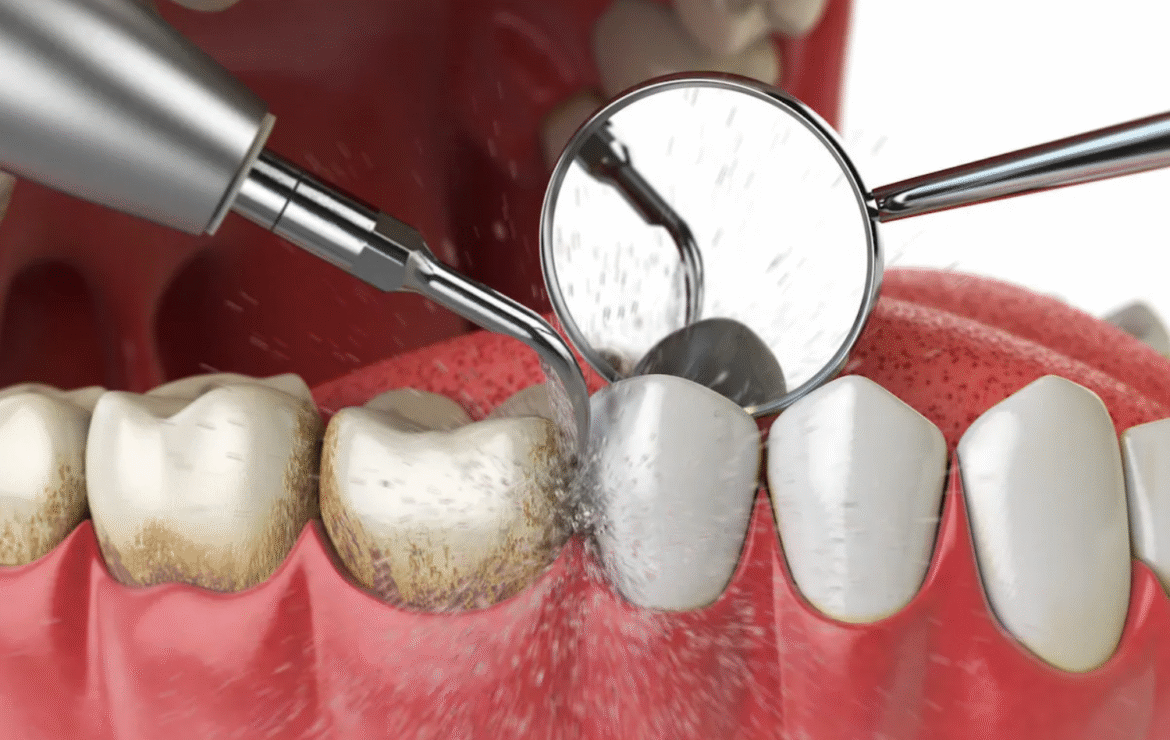
Teeth Cleaning in Gandhinagar: What a Professional Clean Actually Does That Brushing Cannot

Brushing maintains what is above the gum line. Professional cleaning addresses what is below it, between the teeth, and hardened onto the surfaces that a toothbrush never reaches.
The Gap Between What Brushing Does and What It Cannot
Most adults who brush their teeth twice a day believe they are doing the most important thing for their dental health. They are doing the most accessible thing — but not the most complete thing.
Toothbrushing removes the soft plaque film from the surfaces of the teeth that the bristles can physically reach. It does not remove the deposits that have already hardened into calculus. It does not clean the contact areas between teeth. And it does not address the bacteria accumulating in the shallow groove around the base of each tooth, just below the gum line.
These are not minor omissions.
The calculus that builds up on tooth surfaces — particularly on the inside of the lower front teeth and on the back surfaces of the upper back teeth — is the primary scaffold on which further plaque accumulates and from which gum disease progresses.
The interproximal surfaces between teeth that flossing addresses but brushing misses are the most common site for early decay. And the shallow subgingival deposits just below the gum line are the starting point for the pocket deepening that characterises early periodontal disease.
Professional teeth cleaning — a scale and polish at a dental clinic in Gandhinagar — addresses precisely these limitations.
It removes what brushing cannot, cleans where brushing does not reach, and provides the clinician with clear visibility of the tooth surfaces that is necessary for accurate examination.
This guide explains:
- What professional cleaning involves
- Why it matters clinically beyond the cosmetic result
- How often it is appropriate
- What to expect at a cleaning appointment at Nova Dental Hospital
Key Takeaways
- Professional teeth cleaning removes calculus (tartar) — the hardened mineral deposit on tooth surfaces that brushing cannot remove and that is the primary substrate for gum disease progression.
- Calculus forms within 24 to 72 hours of plaque not being removed. Once mineralised, it can only be removed by professional instrumentation.
- Professional cleaning is not a substitute for daily brushing and flossing — it is a complement that addresses the deposits those measures leave behind.
- Most adults benefit from professional cleaning every six months.
- At Nova Dental Hospital, professional teeth cleaning in Gandhinagar is combined with a complete clinical examination and periodontal assessment.
What Calculus Is and Why It Cannot Be Removed at Home
From Plaque to Calculus
Dental plaque is a biofilm — a bacterial layer that forms continuously on tooth surfaces.
When plaque is not removed effectively, calcium and phosphate ions from saliva begin mineralising the plaque within 24 to 72 hours.
The result is calculus (tartar), a hardened mineral deposit firmly attached to the tooth surface.
Once calculus forms:
- Brushing cannot remove it
- Toothpaste cannot dissolve it
- Home remedies cannot eliminate it
It requires professional instrumentation.
Where Calculus Builds Up Most
Calculus commonly accumulates:
- Behind the lower front teeth
- On the outer surfaces of upper molars
- Just below the gum line
- Between teeth
Subgingival calculus — calculus below the gumline — is especially important because patients cannot see it themselves.
Why Calculus Is Harmful
Calculus itself is not biologically active.
The problem is that its rough surface traps bacterial plaque extremely effectively.
The bacteria living around calculus produce inflammatory toxins that drive:
- Gingivitis
- Bleeding gums
- Gum recession
- Periodontal bone loss
Removing calculus removes the bacterial scaffold that sustains chronic gum inflammation.
What Professional Teeth Cleaning Involves
1. Initial Assessment
At Nova Dental Hospital, professional cleaning begins with examination rather than immediate scaling.
The dentist evaluates:
- Calculus accumulation
- Gum health
- Pocket depth
- Bleeding areas
- Existing restorations
- Sensitive teeth
This determines the type and intensity of cleaning required.
2. Ultrasonic Scaling
The primary instrument used is the ultrasonic scaler.
This device vibrates at extremely high frequency while delivering a cooling water spray.
The vibration fractures calculus deposits from the tooth surface while simultaneously disrupting bacterial biofilm.
Ultrasonic scaling is:
- Efficient
- Precise
- Conservative
- Highly effective for heavy deposits
3. Hand Scaling
After ultrasonic cleaning, hand instruments are used to refine difficult areas.
This allows:
- Fine deposit removal
- Root surface smoothing
- Precise subgingival cleaning
- Better access in tight anatomical areas
4. Interproximal Cleaning
Professional cleaning also addresses the contact areas between teeth.
This is especially important because:
- Brushing cannot clean these surfaces
- Flossing is often inconsistent in many patients
- Early decay commonly begins here
5. Polishing
After scaling, polishing removes:
- Surface stains
- Residual plaque
- Fine debris
The result is a smooth surface that:
- Feels cleaner
- Reduces rapid plaque re-accumulation
- Improves visibility for examination
6. Clinical Examination
Professional cleaning is not just cosmetic.
At Nova Dental Hospital, the cleaning is followed by a detailed examination.
Clean tooth surfaces allow:
- Earlier cavity detection
- Better gum evaluation
- More accurate diagnosis
- Improved treatment planning
What Professional Cleaning Achieves That Brushing Cannot
| What It Addresses | Brushing | Professional Cleaning |
|---|---|---|
| Soft plaque | Removes partially | Removes thoroughly |
| Calculus (tartar) | Cannot remove | Removes completely |
| Interproximal deposits | Limited | Thorough cleaning |
| Subgingival deposits | Cannot access | Cleans below gum line |
| Surface staining | Minimal improvement | Removes effectively |
| Gum inflammation reduction | Partial | Significant improvement |
Why Better Brushing Still Does Not Replace Professional Cleaning
Even perfect brushing cannot:
- Remove mineralised calculus
- Clean beneath the gumline
- Access all interproximal anatomy
- Remove hardened deposits
This is why professional cleaning complements home care rather than replacing it.
Who Benefits From Professional Teeth Cleaning?
Most Adults
Most adults benefit from professional cleaning every six months.
Higher-Risk Patients May Need More Frequent Cleaning
- Gum disease patients
- Smokers
- Orthodontic patients
- Patients with dry mouth
- Diabetic patients
- Heavy calculus formers
What to Expect After Cleaning
Patients commonly notice:
- Smoother teeth
- Fresher mouthfeel
- Reduced staining
- Less gum bleeding over time
Some temporary cold sensitivity may occur after calculus removal, particularly if deposits were covering exposed root surfaces.
Signs You May Be Overdue for Professional Cleaning
- Rough deposits behind lower front teeth
- Persistent bleeding gums
- Bad breath
- Visible staining or tartar
- More than 12 months since the last cleaning
Professional Teeth Cleaning at Nova Dental Hospital
Patients looking for professional teeth cleaning in Gandhinagar receive:
- Ultrasonic scaling
- Hand scaling
- Polishing
- Gum assessment
- Clinical examination
- Personalised hygiene guidance
Where needed, advanced gum treatment protocols are also available.
Frequently Asked Questions
How often should I get my teeth cleaned?
Most adults benefit from every six months. Higher-risk patients may require every three to four months.
Does professional teeth cleaning hurt?
For most patients, cleaning is comfortable. Areas with gum inflammation or sensitivity may feel temporarily tender during scaling.
Is teeth cleaning the same as whitening?
No.
Teeth cleaning removes plaque, calculus, and surface stains mechanically.
Whitening chemically lightens tooth colour.
Why do my gums bleed after cleaning?
Bleeding reflects pre-existing gum inflammation rather than damage caused by the cleaning itself.
Conclusion: Professional Cleaning Is Maintenance, Not a Luxury
Professional teeth cleaning is not cosmetic indulgence.
It is preventive maintenance.
It removes the hardened deposits that sustain bacterial inflammation and gum disease progression.
The combination of:
- Daily brushing
- Flossing
- Regular professional cleaning
provides the comprehensive plaque control necessary for long-term oral health.
If you are looking for teeth cleaning in Gandhinagar, Nova Dental Hospital provides professional scale and polish appointments combined with complete oral health assessment and personalised care.

Related posts


Write a Comment
Recent Posts


