


Treating Dental Anxiety: A Step-by-Step Approach for Severely Phobic Patients
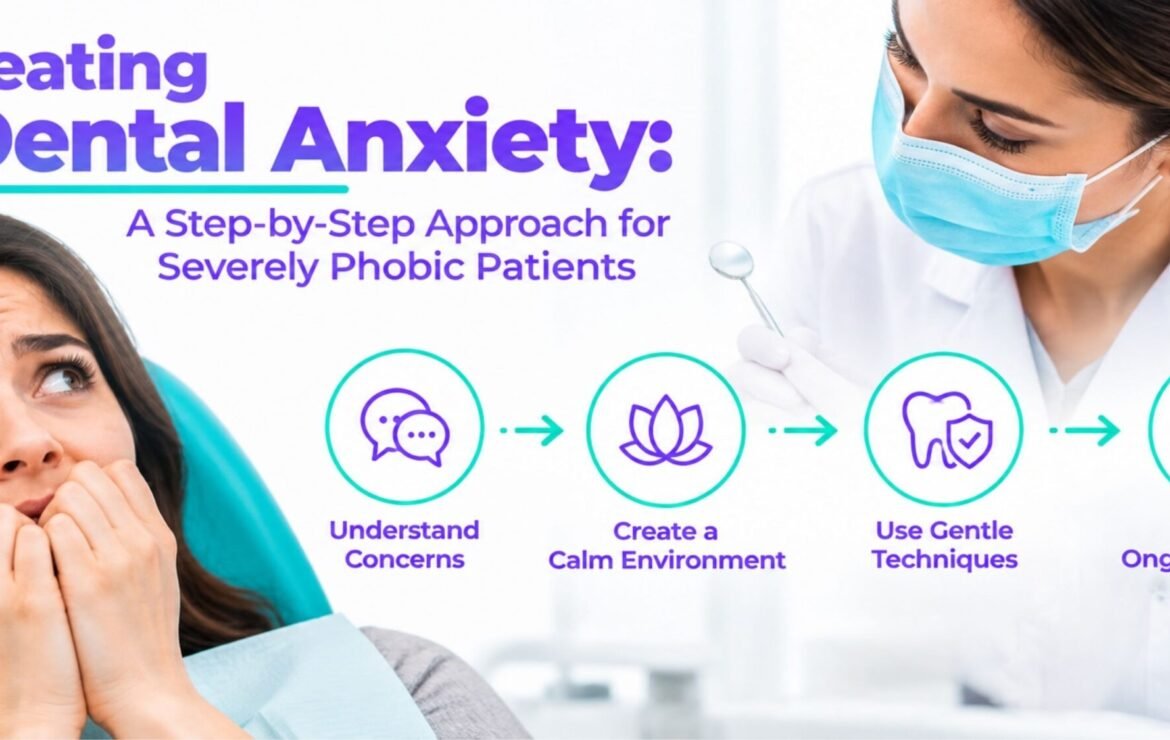
Treating Dental Anxiety: A Step-by-Step Approach for Severely Phobic Patients

Quick Answer
Severe dental phobia is usually treated in stages, not in one appointment. A typical pathway: identify what triggers the fear, have a no-treatment first conversation with a dentist, agree a stop signal, climb a graded “fear ladder”, add psychological support such as cognitive behavioural therapy (CBT), and use sedation as a bridge when needed. Research suggests extremely anxious patients often need a combination of approaches, which your dentist can tailor to you.
Quick Summary
- Dental anxiety and dental phobia sit on a spectrum; phobia means intense fear and avoidance of care.
- Severe dental fear affects roughly 3 in 100 adults in pooled worldwide estimates, so you are not alone.
- CBT has the best-supported psychological evidence, though study quality is low to moderate.
- Sedation can make treatment possible but does not by itself remove the fear.
- Avoidance is risky: dental phobia is associated with more decay and gum disease.
Introduction
If the thought of a dental chair makes your heart race or has kept you away from the clinic for years, you are dealing with more than ordinary nervousness. This guide explains how severe fear is assessed and what each treatment step looks like. It is general education, not a diagnosis; your dentist can personalise the plan.
Dental Anxiety or Dental Phobia? Understanding Severity
Dental anxiety is feeling uneasy before or during treatment. Dental phobia is a more intense, persistent fear that can trigger panic symptoms and lead people to avoid care altogether. Dentists often use short questionnaires such as the Modified Dental Anxiety Scale (MDAS), which scores from 5 to 25. A score of 19 or above is commonly used to flag high anxiety or possible phobia, although cut-offs differ between studies.
How common is it? A 2021 systematic review of adult studies estimated high dental fear at about 12.4% and severe fear at about 3.3%, with higher rates in women and younger adults. A study of 1,032 patients at a dental institute in Faridabad, India, found severe anxiety in 4.38%. That was a single-centre study, so it may not apply everywhere.
Why Severe Phobia Needs More Than “Just Relax”
Avoidance often feeds a cycle: fear leads to postponing, problems progress, a painful emergency visit follows, and the fear feels justified. In a German study, 61 phobic patients scheduled for treatment under general anaesthesia had more decay and more gum disease than 69 non-anxious patients. This shows an association, not proof of cause. Past painful experiences are also linked to later anxiety, so care addresses both the fear and the tooth.
A Step-by-Step Approach to Treating Severe Dental Phobia
The sequence below reflects approaches described in clinical reviews: a hierarchy of feared situations approached gradually, supported by communication, psychological therapy and, where needed, medication.
Step 1: Identify What Exactly You Fear
Common triggers include needles, the sound of the drill, gagging, lying back, fear of pain, loss of control, embarrassment about your teeth, or a past bad experience. Write them down and rate each from 0 to 10; clinical reviews recommend identifying the source of fear and using a self-report scale. You need not share trauma details, but you can ask for care sensitive to that history.
Step 2: Make a Conversation-Only First Visit
When you call, say plainly: “I have severe dental fear and am not ready for a full examination.” Visit to meet the team and see the room, ideally with a trusted family member. No treatment is needed on day one.
Step 3: Agree on Control Tools
Agree on a stop signal, such as raising your hand, so you can pause, rinse or breathe. Ask the dentist to explain each stage before it happens. Better Health Victoria lists a stop signal among its core coping tools.
Step 4: Build and Climb a Fear Ladder
You and your dentist list feared situations from least to most distressing, then approach them gradually, starting with the easiest. Stay on each rung until it feels manageable; repeating a rung is progress, and stepping back is allowed. If direct exposure is too hard, practising the visit in imagination first can help.
| Rung | Example step (illustrative only) | What it builds |
| 1 | Visit the clinic and look around; no treatment | Familiarity with the setting |
| 2 | Sit in the chair, then recline slightly | Comfort with position |
| 3 | Mouth mirror and a gentle look | Tolerating closeness |
| 4 | Brief examination, X-ray if needed | Acceptance of routine checks |
| 5 | Cleaning in short stages | Tolerating sounds and sensations |
| 6 | Numbing: topical gel first, then injection | Needle confidence |
| 7 | A simple filling or other first procedure | First real treatment |
Step 5: Add Psychological Support (CBT and Relaxation)
CBT helps you test the frightening predictions your mind makes and is usually combined with exposure. A 2024 meta-analysis of randomised trials found moderate-certainty evidence that CBT reduces long-standing dental anxiety, and smaller, lower-certainty benefit for dental phobia. An older review found reductions persisted at one to two years. Most trials are small, so benefit is not guaranteed.
The same review did not support virtual reality exposure therapy and found weak evidence for music, aromatherapy or acupuncture. They are harmless for most people but should not replace the steps above. Breathing, guided imagery and progressive muscle relaxation are widely recommended; a clinical review suggests practising 15 to 20 minutes per session beforehand. If your dentist does not offer CBT, a clinical psychologist can work alongside the dental team.
Step 6: Use Sedation as a Bridge When Needed
Reviews note that sedation or general anaesthesia may be considered when someone cannot cooperate with psychological approaches. Think of sedation as a bridge that lets necessary care happen while the slower work on fear continues.
| Option | What it is | Points to know |
| Nitrous oxide (“laughing gas”) | Inhaled through a mask; you stay awake | Mild relaxation; your dentist confirms suitability. |
| Oral sedation | A prescribed anti-anxiety tablet before the visit | Only after a dentist or doctor’s assessment; arrange an escort; do not drive afterwards. |
| IV sedation | Medication through a vein; deeper relaxation | Needs a trained team and monitoring; not offered everywhere. |
| General anaesthesia | Fully asleep, in a hospital setting with an anaesthetist | Reserved for the most severe cases or extensive treatment; carries more risk than lighter options. |
Not every dentist offers sedation, and some conditions or medicines limit your options, so share your full medical history. Sedation does not by itself teach the brain that dentistry is safe; narrative reviews favour psychological therapy for lasting change, though long-term head-to-head trials are lacking. Ask for a written cost estimate before each stage.
Step 7: Treat, Then Maintain
Once urgent problems are treated, short, regular visits at an interval your dentist recommends keep exposure positive and prevent big problems.
Common Mistakes
- Waiting for pain to force a visit.
- Starting with the hardest treatment.
- Hiding the fear. Your dentist cannot adjust the plan if they do not know.
- Relying on sedation alone. Without a plan for the fear, every visit may need it.
- Taking leftover or borrowed anti-anxiety tablets, or alcohol. Medication should only be taken after discussion with your dentist or doctor.
Myths vs Facts
| Myth | Fact |
| “Dental phobia is just being dramatic.” | It is a recognised, measurable condition that affects whether people seek care. |
| “Sedation means I will be unconscious.” | Options range from awake (nitrous oxide) to general anaesthesia, matched to you and the treatment. |
| “After years of avoiding, it is too late.” | Dentists often see long-avoidant patients; a staged plan can start with what is most urgent. |
Questions Patients Forget to Ask Their Dentist
- Have you treated patients with severe dental fear?
- Which sedation options are available here, and what happens if I need one you do not offer?
- Who monitors me during sedation, and what must I arrange?
- Can a family member sit with me, and will you give written estimates?
When Not to Wait
Fear should never delay care for facial swelling, fever with dental pain, severe or persistent pain, or difficulty swallowing or breathing. Seek prompt care and tell the team about your fear on arrival. If you also have panic attacks, distressing memories or low mood, a mental health professional can help.
If the Patient Is Your Child
Pooled estimates suggest about 24% of children and adolescents have dental anxiety, though the studies were of limited quality, and some link parents’ anxiety with their child’s. A paediatric dentist can advise on child-appropriate approaches, including whether any sedation is suitable.
Practical Action Plan
- Write your triggers and rate each from 0 to 10.
- Shortlist two or three clinics and call, stating your fear.
- Book a conversation-only visit and bring a trusted person.
- Practise slow breathing daily; consider a referral for CBT.
- Agree a staged plan with a stop signal, sedation if needed, and cost estimates in writing.
How Nova Dental Hospital Can Help
At Nova Dental Hospital, patients and families can ask for an unhurried first conversation before any treatment, step-by-step explanations, and a treatment plan broken into manageable stages. Our family-focused approach means patients of all ages can bring a trusted person. If you are in Gandhinagar or Ahmedabad and have been avoiding care because of fear, mention it when booking. Options such as sedation depend on your health assessment, so please ask the team what can be arranged.
Nova Dental Expert Summary
Most people with severe dental phobia can learn to receive care, but progress is individual and rarely instant. Tell the team, start small, use proven tools, and add psychological or sedation support when it fits.
FAQ
What is the best treatment for severe dental phobia?
No single option fits everyone. Reviews suggest extreme phobia often needs a combination: gradual exposure, CBT, good communication and, when needed, sedation.
Can dental phobia be cured?
Many people reduce their fear enough to attend regularly, but results vary and relapse can happen. Your dentist can help you plan for that.
How long does it take to overcome dental fear?
It depends on severity, history and the support used. Some people progress within a few visits; others need months.
Is sedation safe for dental phobia?
Safety depends on your health, the sedation type and the team’s training and monitoring. Share your full medical history.
What if I have not seen a dentist in many years?
Say so when you book. The first visit can simply be a conversation, and the plan can begin with what is most urgent.
Can dental anxiety harm my oral health?
Avoidance is associated with more decay and gum disease, which is why early, gentle care matters.

Write a Comment
Recent Posts


