IV Sedation vs Nitrous Oxide: Which Sedation Option Is Right for Your Procedure?
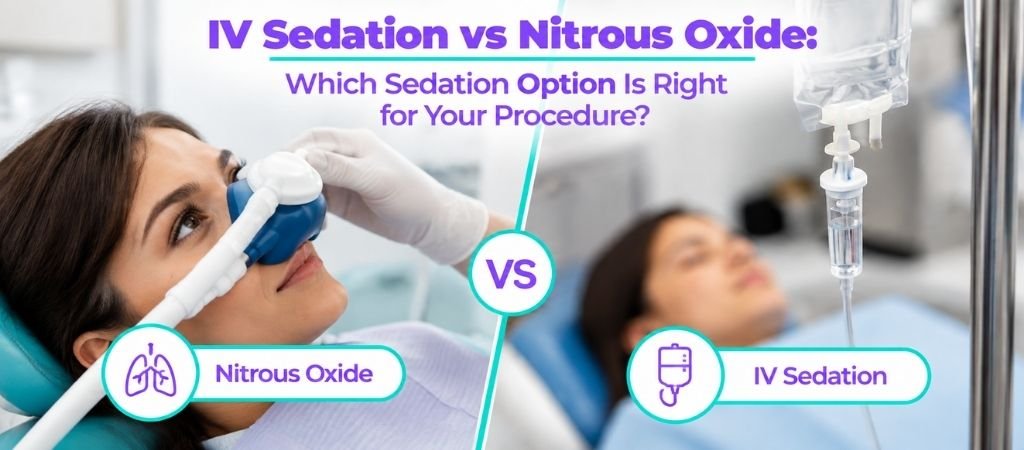
IV Sedation vs Nitrous Oxide: Which Sedation Option Is Right for Your Procedure?

Quick Answer
Nitrous oxide (“laughing gas”) is a light, short-acting inhaled sedative: you stay awake, and it wears off within minutes. IV sedation gives medication through a vein for a deeper level of relaxation, often with little or no memory of treatment, but it needs more monitoring and a longer recovery. Nitrous oxide often suits mild-to-moderate anxiety and shorter visits; IV sedation is usually considered for severe fear or longer, more involved procedures. Your dentist decides after reviewing your health.
Quick Summary
- Nitrous oxide is mild and fades quickly; IV sedation is deeper and takes longer to wear off.
- Neither replaces local anaesthetic for numbing the treatment area.
- Sedation is a spectrum. The depth depends on the drugs and dose, so the team’s training and monitoring matter as much as the type you choose.
- Deeper is not automatically “better”, and IV is not automatically “safer”. The right option depends on your anxiety, health, and the procedure.
- Tell your dentist about medicines, pregnancy, breathing problems, and sleep apnoea before any sedation.
Introduction
Many people delay dental care because of fear, not the problem itself. Sedation can make treatment possible for them. This guide explains how nitrous oxide and IV sedation differ, who each usually suits, and what to ask before you say yes. It is general education, not a personal recommendation.
How Nitrous Oxide and IV Sedation Work
Nitrous oxide
You breathe a mix of nitrous oxide and oxygen through a small nosepiece. Within about three to five minutes you may feel calm, light-headed, tingly, or a little heavy. You stay awake and can answer questions. When treatment ends, you breathe pure oxygen, and the effect clears within minutes. Nitrous oxide dulls pain but does not remove it, so a local anaesthetic is usually still given.
IV sedation
A small line is placed in a vein, usually in the arm, and sedative medicine goes straight into the bloodstream. The clinician adjusts the dose in small steps while watching your heart rate, blood pressure and oxygen level. You may drift off, and many people remember little or nothing afterwards. Local anaesthetic is still used to numb the area.
“Conscious Sedation” Is a Spectrum, Not Two Boxes
Clinic websites often call both options “conscious sedation”. That is a simplification. The American Dental Association describes sedation and general anaesthesia as a continuum, from minimal sedation (you respond normally) through moderate and deep sedation to general anaesthesia (you cannot be woken). Importantly, the ADA says the level depends on the drugs and doses used, not on the route.
In practice: nitrous oxide alone is generally a light option, but combined with other sedatives it can go deeper. IV sedation is usually aimed at moderate sedation, yet individuals respond differently, and the team must be prepared to manage a deeper level than intended. This is why who gives the sedation, and how closely you are monitored, matters more than the label.
Side-by-Side Comparison
| Feature | Nitrous oxide | IV sedation |
| How it is given | Inhaled through a nosepiece with oxygen | Medicine through a vein, usually in the arm |
| Typical depth | Light; awake and responsive | Deeper; may sleep, often little or no memory |
| Onset | About 3–5 minutes | Quick; dose adjusted step by step |
| Pain control | Dulls pain; local anaesthetic usually still needed | Local anaesthetic still needed |
| Recovery | Minutes after switching to oxygen | Can take up to 24 hours; plan a restful day |
| Driving and escort | Many people can drive afterwards if their dentist agrees | Arrange an escort; avoid driving for 24 hours |
| Before the visit | Often a light meal an hour or two earlier | Fasting and medicine instructions from the clinic |
| Common side effects | Headache, nausea, vomiting, agitation; settle once the gas stops | Bruise at the IV site, dry mouth, lingering drowsiness, headache, nausea; mostly settle within a day |
| Often considered for | Mild-to-moderate anxiety, strong gag reflex, shorter visits | Severe fear, long or surgical procedures, difficulty staying still |
When Nitrous Oxide Usually Fits Best
- Mild-to-moderate nervousness, including worry about injections.
- A sensitive gag reflex during routine work such as fillings or cleanings.
- Shorter appointments where you need to return to work or school.
- Cooperative but anxious children (see below).
It may not suit people with nasal congestion, certain lung conditions such as COPD, vitamin B12 deficiency, or severe psychiatric conditions, and it may not be right for children under two. Because repeated exposure can affect vitamin B12, ask whether you need a supplement if you are planning many sessions.
When IV Sedation Is Usually Considered
- Severe dental fear or past bad experiences that have led you to avoid care.
- Long or surgical procedures, such as multiple wisdom teeth, several implants or bone grafting.
- Difficulty staying still, or physical, behavioural or cognitive needs that make relaxing hard.
- Wanting to complete more work in fewer visits.
The trade-offs are real: an IV line, fasting, an escort, a longer recovery, and a greater need for trained monitoring. A complex procedure does not always need IV sedation either; your dentist weighs the procedure and your health together.
Safety: What Matters More Than the Sedation Type
Both options are widely used and considered safe when delivered by trained professionals after a proper health check. The ADA’s US guidelines give useful benchmarks. For moderate sedation they include continuous oxygen-level monitoring, blood pressure, heart rate and ECG checks, supplemental oxygen, emergency airway equipment, a dentist trained in advanced life support, and regular emergency drills. Nitrous oxide equipment must prevent very low oxygen delivery and safely remove the gas from the room. Indian clinics follow local rules, so treat these as questions to ask, not assumptions.
Tell your team beforehand about: all medicines (including weight-loss injections such as GLP-1 drugs, which can change fasting advice), allergies, pregnancy, breathing problems or sleep apnoea, and heart, kidney or other long-term conditions. Higher body weight combined with sleep apnoea can increase airway risk with deeper sedation, and people with significant health conditions may need their physician’s input first.
Sedation for Children
Nitrous oxide is commonly used for anxious children who can cooperate; small studies report encouraging results, though these do not apply to every child. Deeper sedation calls for careful paediatric monitoring before, during and after treatment. Afterwards, children may have fever, irritability, nausea or snoring that usually settles within about 48 hours. Very young children, or those needing extensive treatment, are sometimes treated under general anaesthesia in hospital. A paediatric dentist can explain what fits your child.
Common Mistakes
- Choosing by fear or a friend’s story. Your health and the procedure matter more.
- Assuming deeper is better. Unneeded depth adds recovery time and risk.
- Holding back health details. Medicines and recent meals change how sedation behaves.
- Skipping logistics. No escort or ignored fasting advice can force a postponement.
Questions to Ask Before You Agree
- Which level of sedation is planned, and why that one for my procedure?
- Who will give the sedation, and what training do they have? Is someone other than the treating dentist watching me?
- How will my breathing, heart rate and oxygen be monitored?
- What emergency equipment is on site, and what happens if I become sleepier than planned?
- What are the fasting and medicine instructions? Do I need an escort?
- What will it cost in total, including sedation and monitoring fees?
Practical Action Plan
- Book a consultation and describe your anxiety honestly, including needle or gag-reflex worries.
- Share your full medical and medicine history in writing.
- Ask which sedation depth your procedure needs, and whether a lighter option could work.
- Plan logistics: an escort, time off, and the clinic’s fasting instructions.
- After treatment, rest as advised. Call your dentist if you are still groggy after 24 hours, have persistent vomiting, or are worried about your child’s recovery.
How Nova Dental Hospital Can Help
Nova Dental Hospital offers nitrous oxide sedation for suitable patients, and your dentist reviews your history, anxiety level and planned treatment before recommending it. If your plan may need deeper sedation than nitrous oxide can safely provide, the team will explain the options and the setting where they should be delivered, before recommending any level. Families searching for dental sedation in Gandhinagar can also ask about the clinic’s child-friendly approach in pediatric dentistry.
Nova Dental Expert Summary
Choose the lightest sedation that lets you be treated comfortably and safely. For many people that is local anaesthetic with or without nitrous oxide; for others, deeper sedation is the right call. A clear assessment, trained monitoring and honest answers matter more than the name of the technique.
Key Takeaways
- Nitrous oxide: light, fast, short-lived; IV sedation: deeper, longer recovery.
- Neither is automatically safer; training, monitoring and health screening decide that.
- Local anaesthetic is still used with both.
- Plan an escort and fasting for IV sedation.
- Disclose medicines, pregnancy, breathing and sleep problems, and ask how you will be monitored.
FAQs
Is IV sedation stronger than nitrous oxide?
Generally yes. IV sedation can reach a deeper level, though the actual depth depends on the drugs and dose used.
Will I be asleep or remember anything under IV sedation?
You may fall asleep and often remember little or nothing, but the team can wake you when needed. Experience varies between people.
Is nitrous oxide enough for wisdom tooth removal or implants?
It depends on the complexity, your anxiety and your health. Simpler cases may manage with local anaesthetic, with or without nitrous oxide; multiple or complex cases are more often considered for deeper sedation. Your dentist or oral surgeon decides.
Is IV sedation the same as general anaesthesia?
No, but they sit on the same continuum. IV sedation is usually aimed at moderate sedation, whereas general anaesthesia means you cannot be woken, and the team must be able to manage a deeper level than intended.
Is nitrous oxide safe for children?
It is widely used for suitable children when given by trained professionals, but it may not suit children under two or those with certain breathing or nasal conditions. A paediatric dentist can assess your child.
Can I have sedation during pregnancy?
Dentists often prefer to delay sedation-based procedures until after pregnancy when possible. Always tell your dentist if you are or might be pregnant.
How much does IV sedation cost in India?
Cost varies by provider, setting, procedure length and who administers it. Ask for an itemised estimate that includes sedation, monitoring and any anaesthesiologist fees.
This article is for general education and does not replace advice from a qualified dental professional.

Write a Comment
Recent Posts