


How Long Does a Root Canal Actually Take And Does It Really Hurt?
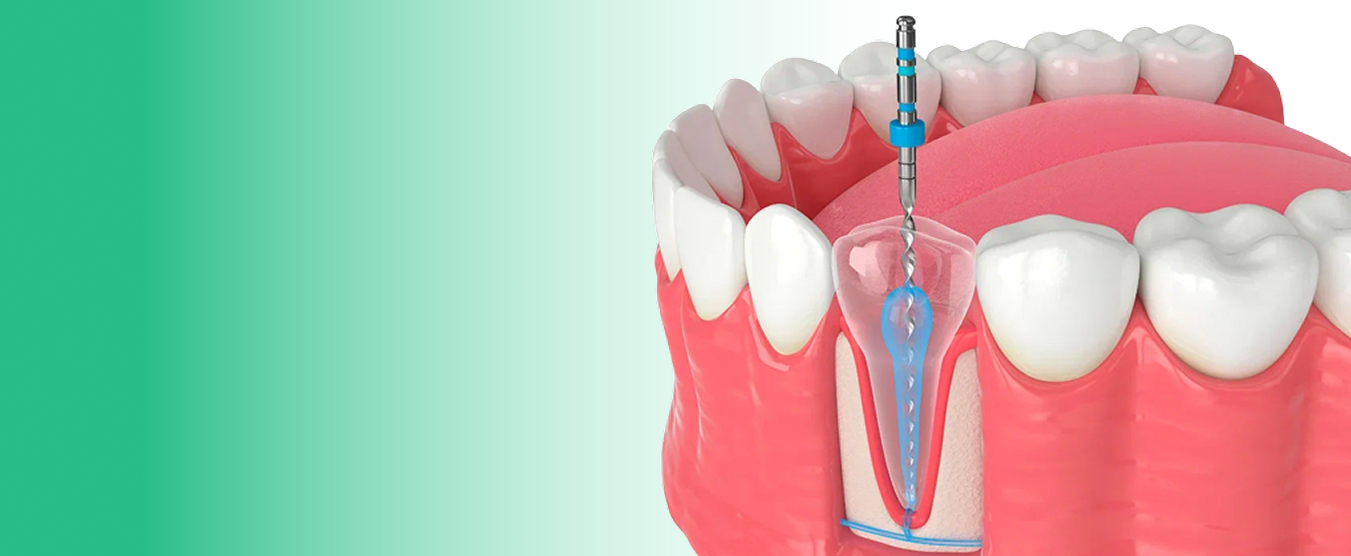
How Long Does a Root Canal Actually Take And Does It Really Hurt?

The reputation of root canal treatment is based almost entirely on what it was like before modern anaesthesia, rotary instrumentation, and single-visit protocols. Here is what it is actually like now.
The Most Feared Dental Procedure — and Why the Fear Is Outdated
Ask almost anyone what they dread most about dental treatment and root canal treatment, or RCT as dentists call it, is near the top of every list. The phrase itself has become cultural shorthand for an experience that is prolonged, painful, and something to be avoided at almost any cost.
Patients frequently delay seeking treatment for teeth that are already causing significant pain because they fear the root canal they believe is inevitable.
The irony is that the root canal’s reputation is based on an experience that largely no longer exists in modern dentistry.
The painful, multi-session ordeal that many people imagine comes from an earlier era:
- Before reliable local anaesthesia
- Before rotary nickel-titanium instrumentation
- Before digital imaging
- Before modern single-visit protocols
Many of the horror stories patients hear today come from treatments performed decades ago or from situations where adequate pain control was not achieved. That represents a failure of technique, not an inherent characteristic of root canal treatment itself.
This guide explains:
- What a root canal actually is
- Why it becomes necessary
- How long it takes
- Whether it hurts
- What happens during the procedure
- What recovery looks like
- Why modern root canal treatment is very different from its reputation
Key Takeaways
- A root canal removes infected or dying pulp tissue from inside a tooth, disinfects the root canal system, and seals it to preserve the natural tooth rather than extracting it.
- Under adequate local anaesthesia, root canal treatment should not be painful during the procedure. The tooth is fully numb before treatment begins. If sensation is present, additional anaesthesia is administered before continuing.
- Most root canals on front teeth and premolars can be completed in a single appointment lasting approximately 60 to 90 minutes. Molars typically require 90 minutes to two hours and occasionally require two appointments.
- Modern rotary nickel-titanium instruments have dramatically reduced treatment time compared with older manual techniques.
- Mild soreness for several days after treatment is normal and generally managed with standard pain-relief medication.
- A root canal-treated tooth typically requires a dental crown afterward to protect it from fracture.
What a Root Canal Is — and Why It Is Needed
The Anatomy Behind the Procedure
Every tooth contains a soft tissue core called the pulp.
The pulp extends from the crown of the tooth through the roots and contains:
- Nerves
- Blood vessels
- Connective tissue
These structures are essential during tooth development.
Once a tooth is fully developed, however, the pulp is no longer required for day-to-day function. The tooth can remain healthy and functional without it because surrounding tissues continue to provide support and nourishment.
The root canal system consists of:
- The pulp chamber inside the crown
- The canals running through each root
Tooth anatomy varies considerably:
| Tooth Type | Typical Anatomy |
|---|---|
| Incisors & Canines | One root, one canal |
| Premolars | One or two roots, one or two canals |
| Molars | Two to four roots, three to five canals |
This complexity is why molar root canals generally take longer than root canals performed on front teeth.
When the Pulp Becomes a Problem
The pulp becomes problematic when bacteria gain access to it.
This typically occurs through:
- Deep tooth decay
- Cracked teeth
- Trauma
- Leaking restorations
Once bacteria enter the pulp chamber, inflammation develops.
Because the pulp is trapped inside a rigid tooth structure with no room to expand, pressure builds rapidly. This pressure is responsible for the severe throbbing pain that patients often associate with advanced tooth infections.
If left untreated, the infection progresses beyond the tooth and into the surrounding bone.
This can result in:
- Periapical infection
- Dental abscess formation
- Facial swelling
- Jawbone involvement
- Spread into deeper facial spaces
As discussed in Nova Dental Hospital’s guide on tooth pain and when to see a dentist, facial swelling associated with a dental infection should be treated as a same-day dental emergency.
Root Canal vs Extraction — The Choice
When a pulp is irreversibly infected or dying, there are generally two treatment options:
Option 1: Root Canal Treatment
This involves:
- Removing the infected pulp
- Cleaning and disinfecting the canals
- Sealing the root canal system
- Restoring the tooth
The natural tooth remains in place and continues functioning normally.
Option 2: Extraction
This removes:
- The infection
- The tooth itself
While extraction eliminates the immediate infection, it creates a new problem: a missing tooth.
A missing tooth can lead to:
- Tooth drifting
- Bite changes
- Bone loss
- Additional restorative treatment later
As discussed in Nova Dental Hospital’s article on jawbone loss after tooth extraction, preserving a natural tooth whenever possible is generally the preferred clinical outcome.
For most patients with a restorable tooth, root canal treatment followed by a crown provides the best long-term result.
Does Root Canal Treatment Hurt? The Honest Answer
The Pain Patients Fear vs The Pain They Actually Experience
The most important distinction to understand is the difference between:
- Pain before treatment
- Pain during treatment
Most patients presenting for root canal treatment are already experiencing pain.
In many cases:
- The pulp is severely inflamed
- Infection is present
- The tooth hurts spontaneously
- Sleeping is difficult
- Hot or cold temperatures trigger significant discomfort
The purpose of root canal treatment is to remove the source of that pain.
Modern studies consistently show that patients rate root canal treatment as significantly more comfortable than they expected.
In fact, many patients report that a root canal feels no more uncomfortable than receiving a routine filling.
Local Anaesthesia — How the Tooth Is Made Numb
Root canal treatment is performed under local anaesthesia.
The anaesthetic is administered in the same way dentists numb teeth for:
- Fillings
- Crowns
- Extractions
- Other restorative procedures
Modern protocols focus heavily on patient comfort.
At Nova Dental Hospital, treatment typically includes:
- Topical anaesthetic before injection
- Careful administration techniques
- Confirmation of complete numbness before treatment begins
- Additional anaesthesia whenever necessary
The treatment does not proceed until the tooth is fully numb.
How Long Does a Root Canal Actually Take?
One of the biggest misconceptions about root canal treatment is that it requires numerous lengthy appointments spread over weeks or months.
While that was sometimes true in the past, modern endodontic techniques have dramatically reduced treatment time.
For most patients, the answer is surprisingly straightforward.
Front Teeth and Canines
Root canals on front teeth are usually the fastest procedures because these teeth generally have:
- One root
- One canal
- Straight anatomy
- Easy access
Most can be completed in approximately:
60 to 90 minutes in a single appointment.
Premolars
Premolars may have:
- One or two roots
- One or two canals
- Moderate anatomical complexity
Most premolar root canals are completed in:
60 to 90 minutes in one visit.
Molars
Molars are more complex.
They commonly contain:
- Three to five canals
- Multiple roots
- Curved anatomy
- More difficult access
As a result, treatment usually takes:
90 minutes to two hours.
Many molar root canals can still be completed in one appointment.
However, particularly complex cases may require a second visit.
Why Some Root Canals Need Two Appointments
While single-visit treatment is increasingly common, certain situations justify dividing treatment into two visits.
Examples include:
Severe Infection
When extensive infection is present, the dentist may:
- Clean the canals
- Place antibacterial medication
- Allow healing before final sealing
Complex Anatomy
Some teeth contain:
- Unusually curved canals
- Additional hidden canals
- Calcified canals
These cases require more treatment time and precision.
Persistent Symptoms
If the tooth remains unusually symptomatic despite cleaning, a second appointment may improve treatment outcomes.
Importantly, requiring two visits does not indicate failure.
It simply reflects the biological complexity of the case.
What Happens During a Root Canal?
Many patients fear root canal treatment because they do not understand what actually happens.
Modern root canal treatment follows a highly structured sequence.
Step 1: Diagnosis and Imaging
Before treatment begins, the dentist must confirm that root canal therapy is necessary.
This may involve:
- Clinical examination
- Cold testing
- Percussion testing
- Digital X-rays
For more complex cases, advanced imaging may be required.
At Nova Dental Hospital’s CBCT & OPG Imaging Facility, three-dimensional imaging can reveal:
- Hidden canals
- Root fractures
- Complex anatomy
- Extent of infection
This improves both diagnosis and treatment planning.
Step 2: Local Anaesthesia
Once treatment is confirmed, local anaesthesia is administered.
Modern protocols typically include:
- Topical numbing gel
- Precise injection techniques
- Adequate time for anaesthetic onset
Before proceeding, the dentist confirms complete numbness.
If the tooth remains sensitive, additional anaesthesia is provided.
The goal is simple:
Treatment begins only after the tooth is comfortably numb.
Step 3: Rubber Dam Isolation
One of the most important safety measures in modern endodontics is rubber dam isolation.
A thin protective sheet is placed around the tooth being treated.
This serves several critical functions:
- Keeps saliva away from the treatment area
- Reduces bacterial contamination
- Improves visibility
- Prevents accidental swallowing of instruments
Rubber dam use is considered a standard of care in modern root canal treatment.
Step 4: Accessing the Pulp Chamber
A small opening is created through the top of the tooth.
This allows access to:
- The pulp chamber
- The root canals
The opening is carefully designed to preserve as much healthy tooth structure as possible.
Step 5: Removing the Infected Pulp
The damaged pulp tissue is removed from:
- The pulp chamber
- Each root canal
This eliminates the infected or dying tissue responsible for pain and inflammation.
At this stage, many patients already experience significant relief because the source of pressure inside the tooth is being removed.
Step 6: Cleaning and Shaping the Canals
After pulp removal, the canals must be cleaned thoroughly.
Modern dentistry typically uses:
Rotary Nickel-Titanium Instruments
These flexible instruments:
- Follow natural canal curvature
- Reduce treatment time
- Improve cleaning efficiency
- Enhance treatment precision
Compared with older hand-file systems, rotary instrumentation has transformed root canal therapy dramatically.
Irrigation and Disinfection
Mechanical cleaning alone is not enough.
Special disinfecting solutions are used to:
- Eliminate bacteria
- Dissolve tissue remnants
- Flush debris from the canals
Effective irrigation is one of the most important predictors of long-term success.
Step 7: Filling the Root Canal System
Once the canals are cleaned and disinfected, they are sealed.
This process is called:
Obturation
The canals are filled with a specialised biocompatible material that:
- Prevents bacterial re-entry
- Seals the canal system
- Supports long-term healing
A properly sealed root canal significantly reduces the risk of future reinfection.
Step 8: Temporary or Permanent Restoration
After the root canal is completed, the access opening must be restored.
Depending on the case, this may involve:
- A temporary filling
- A permanent filling
- Preparation for a crown
The restoration protects the treated tooth until definitive treatment is completed.
Why a Crown Is Usually Needed After Root Canal Treatment
Many patients assume the root canal itself is the final treatment.
In reality, the root canal saves the tooth biologically.
The crown protects it structurally.
Root canal-treated teeth are often:
- Heavily restored
- Previously decayed
- More brittle than healthy teeth
Without protection, they become more vulnerable to fracture.
For this reason, dentists frequently recommend a dental crown after root canal treatment.
The crown:
- Protects remaining tooth structure
- Restores strength
- Improves longevity
- Allows normal chewing function
Studies consistently show better long-term survival rates when appropriate teeth receive crowns after root canal therapy.

Related posts



Write a Comment
Recent Posts


