


Digital Smile Design: How Technology Plans Your Perfect Smile Before Treatment Begins
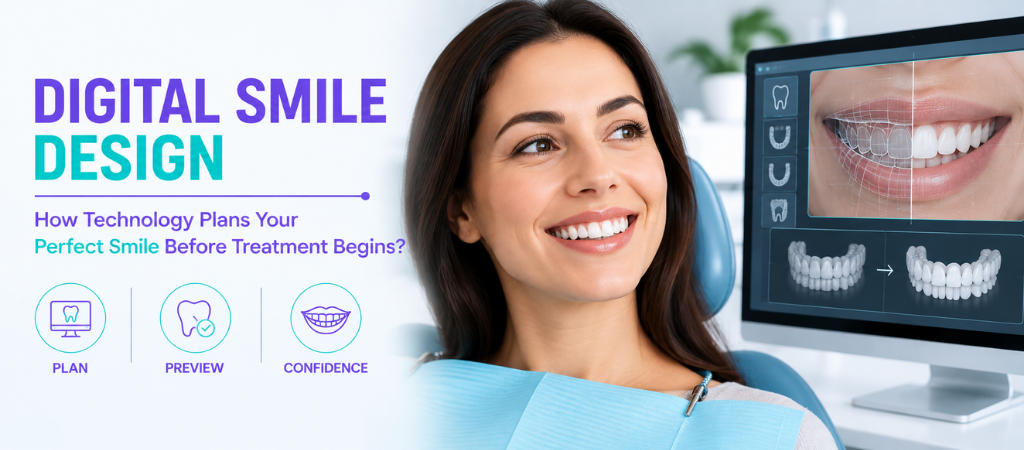
Digital Smile Design: How Technology Plans Your Perfect Smile Before Treatment Begins

Quick Answer
Digital Smile Design (DSD) is a technology-driven planning process that lets dentists digitally preview, design, and adjust your new smile — using photos, videos, and 3D scans — before any drilling, veneer, or implant work begins. It helps patients see and approve their result in advance, reducing uncertainty and improving treatment accuracy.
Quick Summary
- Digital Smile Design combines facial photography, video, and intraoral scanning to plan smile makeovers digitally.
- It is used for veneers, crowns, orthodontics, implants, and full smile makeovers.
- Patients can preview their new smile before any permanent treatment starts.
- DSD improves communication between the dentist, dental lab, and patient.
- It reduces the chances of unexpected or unsatisfactory results.
- The process typically adds one consultation visit but saves chair-time later.
- DSD is suitable for most patients considering cosmetic or restorative treatment.
- It does not replace clinical examination — it supports it.
Introduction
Many patients considering a smile makeover share the same worry: “What if I don’t like the result?” This concern is especially common among parents helping teenagers choose orthodontic options, or adults weighing cosmetic changes for the first time. Digital Smile Design was developed to answer exactly this concern — by shifting smile planning from guesswork to a visual, evidence-based process that happens before any tooth structure is touched.
What Is Digital Smile Design?
Digital Smile Design is a structured, technology-assisted protocol dentists use to analyze a patient’s facial features, lip line, gum contour, and tooth proportions, then digitally design a smile that suits their face — before treatment begins. It typically involves standardized facial photographs, a short video of the patient speaking and smiling naturally, and a digital or 3D-printed model of the teeth.
Expert Insight:
“A smile that looks beautiful on a screen must also function correctly when the patient bites, speaks, and smiles naturally. This is why we always combine digital planning with a hands-on clinical evaluation,” is the guiding principle behind responsible DSD use — the digital model informs the plan, but the dentist’s clinical judgment finalizes it.
How Digital Smile Design Works: Step-by-Step
- Facial and Smile Analysis: Standardized photos and video capture how the patient’s lips, gums, and teeth move when speaking and smiling.
- Digital Scanning: An intraoral scanner records the exact shape of the existing teeth and bite, replacing traditional dental impressions.
- Smile Simulation: Software overlays a proposed new tooth shape, size, and alignment onto the patient’s own face and smile.
- Patient Review: The patient reviews the simulated smile with the dentist and requests adjustments — width, shade, symmetry, or gum line.
- Treatment Planning: Once approved, the design guides the lab-fabricated veneers, crowns, aligners, or implant restorations.
- Trial Smile (Mock-Up): A temporary, removable version of the design can be placed in the mouth so the patient can “test drive” the new smile.
Comparison: Digital Smile Design vs Traditional Smile Planning
| Aspect | Traditional Planning | Digital Smile Design |
| Visualization | Verbal description, occasional sketches | Photo/video-based digital simulation on patient’s own face |
| Impressions | Physical putty impressions | Digital intraoral scanning |
| Patient Involvement | Limited feedback before treatment | Patient reviews and requests changes before treatment |
| Lab Communication | Written prescription, some ambiguity | Shared digital design file, fewer miscommunications |
| Trial Option | Rarely available | Trial smile / mock-up often possible |
Who Can Benefit From Digital Smile Design
- Adults considering veneers, crowns, or a full smile makeover
- Patients evaluating orthodontic or aligner treatment outcomes in advance
- Patients planning multiple dental implants who want a predictable final appearance
- Anyone anxious about cosmetic treatment who wants visual reassurance first
- Patients undergoing full-mouth rehabilitation where bite and appearance must be coordinated
Real-Life Scenario: A working professional in Ahmedabad wanted whiter, straighter front teeth before an important family event but was unsure how much change she wanted. A DSD consultation let her compare two design options side-by-side and choose a more natural-looking version before any veneers were prepared — avoiding a redo later.
Expert Insight Sections
On Accuracy
Digital previews are highly reliable for shape, proportion, and shade planning, but very fine details — such as exact translucency of a veneer — can vary slightly once the material is fabricated and fitted. Patients should view the digital preview as a close, dependable guide rather than a pixel-perfect guarantee.
On Communication
One of the most underrated benefits of DSD is that it gives the dentist, the dental laboratory technician, and the patient a shared visual reference. This reduces miscommunication that can otherwise lead to remakes, delays, or dissatisfaction.
On Case Selection
DSD adds the most value in cosmetic and multi-tooth restorative cases. For a single small filling or a routine cleaning, this level of digital planning is unnecessary — good clinical judgment means matching the tool to the case.
Common Mistakes Patients Make
- Assuming the digital preview is the final, guaranteed outcome rather than a close planning guide
- Skipping the trial smile (mock-up) step when it is available and useful
- Choosing a design based only on how it looks in photos, without considering how it will feel while speaking or chewing
- Not asking whether the proposed design requires reversible or irreversible changes to natural teeth
Myths vs Facts
| Myth | Fact |
| Digital Smile Design guarantees an identical final result. | It is a close, reliable guide — final results depend on material and clinical execution as well. |
| DSD is only for celebrities or purely cosmetic cases. | It is used across cosmetic, restorative, implant, and orthodontic planning for everyday patients. |
| Digital planning replaces the need for a dentist’s clinical exam. | DSD supports, but never replaces, hands-on clinical evaluation of bite, gums, and oral health. |
| The process is time-consuming and delays treatment. | It usually adds one planning visit but reduces revisions and chair-time later. |
Questions Patients Forget to Ask
- Will this design require removing healthy tooth structure, or is it reversible?
- How closely will the final result match the digital preview, based on the material chosen?
- Can I try a temporary version of this smile before committing?
- How will this design hold up with my bite and daily habits, such as grinding?
- What maintenance will the finished result need over time?
Practical Action Plan
- Book a consultation and mention you are interested in a digitally planned smile design.
- Bring reference photos of smiles you like (and dislike) to guide the design discussion.
- Ask to see your simulated smile and request at least one alternative version for comparison.
- If offered, try the temporary mock-up before finalizing material and shade choices.
- Confirm the treatment timeline and any reversible vs irreversible steps before approving the final plan.
Nova Dental Expert Summary Box
Digital Smile Design works best as a collaborative planning step, not a substitute for clinical evaluation. A well-run process combines facial and smile analysis, digital scanning, and open discussion with the patient, so the final treatment plan reflects both aesthetic goals and long-term oral health. Patients are encouraged to ask questions, review alternatives, and use any trial-smile option available before committing to permanent treatment.
How Nova Dental Hospital Can Help
Nova Dental Hospital supports patients across Gandhinagar and Ahmedabad with personalized treatment planning that combines clinical expertise with modern digital tools. For families, this means growth monitoring and early diagnosis for children, alongside child-friendly care that keeps young patients comfortable. For adults and seniors, it means a smile-planning process built around individual facial features, oral health, and long-term function, delivered with family-focused, educational guidance rather than pressure toward any single treatment path.
Key Takeaways
- Digital Smile Design lets patients preview their new smile before treatment begins.
- It combines photography, video, and 3D scanning for accurate planning.
- DSD supports veneers, crowns, implants, and orthodontic treatment planning.
- The digital preview is a close guide, not a pixel-perfect guarantee.
- A trial smile (mock-up), where available, helps confirm the design before final treatment.
- Clinical evaluation of bite, gum health, and function remains essential alongside digital planning.
- Patients should feel free to request design alternatives before approving a plan.
Frequently Asked Questions
1. What is Digital Smile Design?
It is a technology-assisted process that digitally previews and plans a patient’s new smile using photos, video, and 3D scans, before permanent treatment begins.
2. How is Digital Smile Design different from a regular consultation?
A regular consultation is largely verbal and visual estimation; DSD adds a data-driven digital simulation the patient can actually see and discuss before deciding.
3. Is Digital Smile Design painful or invasive?
No. The analysis stage uses photos, video, and a digital scan — it does not involve drilling or any invasive procedure.
4. How long does a Digital Smile Design consultation take?
Most initial digital planning sessions take about 45–60 minutes, depending on how many design options are reviewed.
5. Can Digital Smile Design be used for orthodontic or braces treatment?
Yes, it is often used alongside orthodontic and aligner planning to visualize how the smile will look once alignment is complete.
6. Will my final smile look exactly like the digital preview?
It will be very close, since the design directly guides the lab work, though minor differences can occur based on material properties and the mouth’s natural response.
7. Is Digital Smile Design suitable for teenagers?
Yes, particularly for teenagers considering orthodontic treatment or minor cosmetic correction, since it helps them and parents visualize outcomes together.
8. Does Digital Smile Design cost extra?
It may involve an additional planning fee depending on the complexity of the case; this is best confirmed during the consultation.
9. Can I request changes after seeing my digital smile preview?
Yes — requesting adjustments to shape, shade, or symmetry before finalizing the plan is a normal and encouraged part of the process.
10. Where can I get Digital Smile Design in Gandhinagar or Ahmedabad?
Nova Dental Hospital, with locations in Gandhinagar and Ahmedabad, offers digitally guided smile planning as part of its cosmetic and family dentistry services.

Related posts
Recent Posts


