


Orthodontic Relapse: Why Teeth Shift Back and How to Prevent It
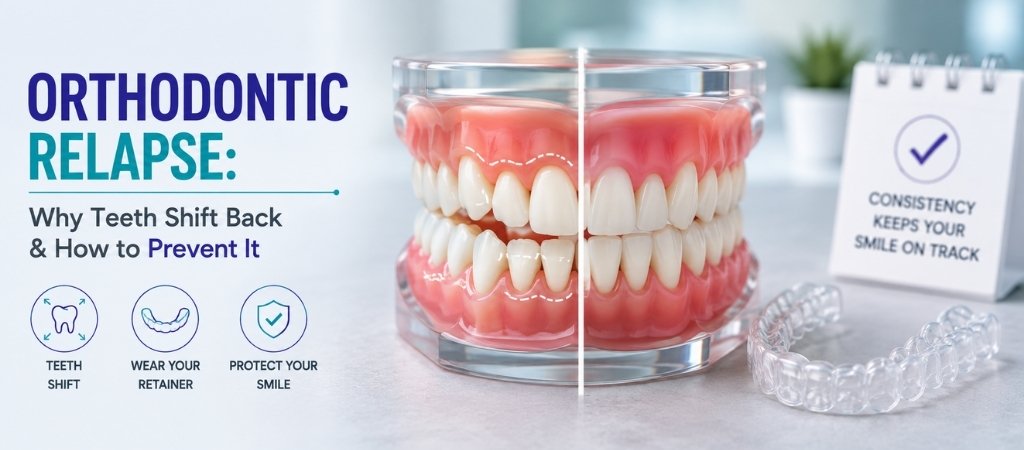
Orthodontic Relapse: Why Teeth Shift Back and How to Prevent It

Quick Answer
Orthodontic relapse happens when teeth gradually move back toward their pre-treatment positions after braces or aligners are removed. It is usually caused by inconsistent retainer wear, incomplete stabilisation of the bone and gum tissue, or natural changes that continue throughout life. Wearing a retainer as prescribed, attending regular check-ups, and addressing early signs of shifting are the most effective ways to prevent it.
Quick Summary
- Orthodontic relapse means teeth drifting back after braces or aligner treatment.
- The single biggest cause is inconsistent or discontinued retainer wear.
- Bone and gum tissue take months to years to fully stabilise around new tooth positions.
- Lower front teeth relapse first and most often.
- Wisdom teeth and natural ageing can contribute even in compliant patients.
- Prevention relies on long-term retainer wear plus periodic dental check-ups.
- Mild relapse is often correctable with a new retainer or short aligner course.
- Ignoring early signs makes correction more involved later.
Introduction
A few years after braces come off, many patients notice something unsettling: a front tooth looks slightly crooked again, or a retainer that used to fit perfectly suddenly feels tight. This is orthodontic relapse — the gradual return of teeth toward their original, less aligned position. It is one of the most common concerns raised at post-treatment reviews at Nova Dental Hospital in Gandhinagar and Ahmedabad, and it does not usually mean the original treatment failed. In most cases, it means the retention phase — the quieter, longer half of orthodontic care — was not followed as closely as the active treatment with braces or aligners was. Understanding why relapse happens, who is more likely to experience it, and what genuinely prevents it can help protect years of orthodontic investment and avoid the need for a second course of treatment.
What Is Orthodontic Relapse?
Orthodontic relapse refers to the tendency of teeth to drift back toward their pre-treatment alignment after braces or clear aligners are removed. When teeth are moved during orthodontic treatment, the surrounding periodontal ligament fibers and jawbone are reshaped to hold them in their new position. This remodeling process is slow — it can take many months, and for some fibers, well over a year, to fully stabilise. Until that stabilisation is complete, teeth have a natural tendency to “remember” their earlier position and drift toward it whenever the supporting retainer is not worn consistently.
Why Do Teeth Shift Back After Braces?
Several overlapping factors contribute to relapse, and it is rarely caused by just one of them:
- Inconsistent retainer wear — the most common and most preventable cause.
- Incomplete bone and fiber remodeling, particularly around teeth that were significantly rotated or crowded before treatment.
- Natural ageing changes — teeth continue to shift slightly throughout life, even in people who never had braces.
- Pressure from erupting or impacted wisdom teeth, which can push front teeth into crowding over time.
- Habits such as tongue thrusting, mouth breathing, nail biting, or teeth grinding, which apply ongoing pressure on tooth position.
- Underlying bite or jaw growth patterns that were only partially addressed during initial treatment.
- Gum disease that weakens the bone supporting the teeth, making them more mobile.
Expert Insight: Relapse is rarely about willpower alone. Even highly diligent patients can see minor shifting from wisdom teeth or natural ageing. The goal of retention is to manage this ongoing process, not to “finish” it after a fixed number of years.
Who Is Most at Risk?
Some patients are more prone to relapse than others. Teenagers who are still growing, patients who had significant rotations or crowding before treatment, and anyone without a clear, personalised retention plan are at higher risk. Patients whose wisdom teeth have not yet been evaluated or removed, and those with untreated tongue-thrust or mouth-breathing habits, also tend to see more noticeable shifting over time.
Signs Your Teeth May Be Relapsing
- Your retainer feels tight or no longer seats fully.
- A gap that was closed during treatment is reopening.
- Front teeth are gradually becoming crowded again.
- Your bite feels different when chewing.
- Mild changes in speech or comfort when the tongue rests against the teeth.
Retainers: Your Best Defence Against Relapse
Retainers exist specifically to hold teeth still while the surrounding bone and fibers stabilise, and then to manage the ongoing natural movement that continues for life. The right type depends on the original bite, lifestyle, and the orthodontist’s assessment.
| Retainer Type | How It Works | Best Suited For |
| Fixed (bonded) retainer | A thin wire bonded behind the front teeth, worn permanently until removed by a dentist | Patients who want no daily removal and had significant lower-front crowding |
| Hawley retainer | Removable acrylic and wire appliance, adjustable by the orthodontist | Patients needing minor fine-tuning alongside retention |
| Clear (removable) retainer | Custom-fitted transparent tray, similar to a clear aligner | Patients who prefer a discreet, easily removable option and are consistent with wear |
Patient Scenario: A patient who finished braces at sixteen and stopped wearing her retainer within a year noticed, by her mid-twenties, that her lower front teeth had crowded again. This is one of the most common scenarios seen at post-orthodontic reviews — the original treatment worked, but retention stopped too early for the fibers to fully stabilise.
How to Prevent Orthodontic Relapse
- Wear your retainer exactly as prescribed — usually full-time initially, then reducing to nights only, often indefinitely.
- Attend retention check-ups every six to twelve months so any early shifting is caught and managed quickly.
- Replace a lost, cracked, or ill-fitting retainer within days rather than going without one.
- Have wisdom teeth evaluated so any pressure on front teeth is identified early.
- Address habits such as tongue thrusting or grinding, which can undo retention progress over time.
- Maintain good gum health, since healthy bone support is essential for teeth to stay stable.
Expert Insight: Retention is best understood as a lifelong, low-effort habit rather than a finite phase. Most orthodontists now recommend some form of night-time retainer wear indefinitely, precisely because natural tooth movement never fully stops — with or without a history of braces.
What to Do If Relapse Has Already Happened
Not all relapse requires starting over. Mild shifting can often be corrected with a new, properly fitted retainer or a short course of clear aligners that gently guides teeth back into alignment. More significant relapse — where crowding or bite changes are pronounced — may need a fuller course of aligners or braces. It is worth avoiding the temptation to force an old, ill-fitting retainer back into place, as this can cause discomfort or uneven pressure rather than correcting the shift. The most reliable first step is a professional evaluation to assess how much movement has occurred and which option best matches the situation.
Common Mistakes Patients Make
- Stopping retainer wear too soon, assuming the teeth are permanently “set.”
- Ignoring a lost, cracked, or loose retainer instead of getting it replaced promptly.
- Skipping post-treatment follow-up visits once the braces come off.
- Assuming any shifting means the original treatment failed, and avoiding seeking early correction out of frustration.
Myths vs Facts
| Myth | Fact |
| Once braces come off, teeth stay straight forever. | Teeth continue to shift gradually throughout life; retainers manage this ongoing process. |
| Only patients who skip retainer wear experience relapse. | Even consistent wearers can see minor shifting from ageing or wisdom teeth. |
| A retainer is only needed for a year or two. | Most orthodontists recommend some form of retainer wear indefinitely. |
| Any visible change means treatment failed. | Minor natural settling is different from problematic relapse, and both are manageable. |
Questions Patients Forget to Ask
- Which type of retainer suits my specific bite pattern?
- How long should I wear my retainer full-time before moving to nights only?
- What should I do if I lose or break my retainer?
- Could my wisdom teeth affect my results later on?
- How often should I schedule a retention check-up?
Practical Action Plan
- Confirm a clear, written retention plan with your orthodontist before treatment ends.
- Wear your retainer exactly as instructed, especially during the first two years.
- Book retention check-ups every six to twelve months.
- Replace a damaged or lost retainer within days, not weeks.
- Discuss wisdom teeth timing with your dentist.
- Report any tightness, gaps, or bite changes as soon as you notice them.
Visiting Family in India? Plan a Retention Check-Up
For NRI and overseas patients who completed orthodontic treatment before moving abroad, periodic retention check-ups are easy to miss simply because of distance. Many families use an annual visit to India to combine a general dental check-up with a retainer review, and previous orthodontic records can often be shared for an initial online review before an in-person appointment. This is not a substitute for follow-up in the patient’s country of residence, but it can help catch early shifting during a trip home rather than after it has progressed further.
Nova Dental Expert Summary
Nova Dental Hospital: Orthodontic relapse is a normal part of how teeth behave over a lifetime, not a sign that braces or aligner treatment has failed. The bone and tissue that hold teeth in place take time to stabilise, and natural movement continues indefinitely afterward. Consistent retainer wear, timely replacement of damaged retainers, and regular retention check-ups remain the most dependable way to protect the results of orthodontic treatment for the long term.
Key Takeaways
- Orthodontic relapse is the natural tendency of teeth to shift back after braces or aligners are removed.
- It results from a combination of retainer non-compliance, incomplete tissue stabilisation, and ongoing natural changes.
- Lower front teeth are the most commonly affected area.
- Retainers — fixed, Hawley, or clear removable — are the primary tool for prevention.
- Long-term, reduced-frequency retainer wear is generally recommended indefinitely.
- Wisdom teeth, habits, and gum health can all influence how much relapse occurs.
- Mild relapse is often correctable with a new retainer or short aligner course.
- Regular retention check-ups catch shifting early, before it becomes significant.
FAQ Section & Schema
Why do teeth shift back after braces?
Teeth shift back mainly because the fibers and bone that hold them in a new position take time to stabilise, and because retainer wear is often reduced too soon after treatment.
How soon after braces can relapse happen?
Relapse most often begins within the first one to two years after treatment, which is why retention is closely monitored during this period.
Can a retainer fix relapse once it has started?
Mild relapse can often be corrected with a new, properly fitted retainer or a short course of clear aligners; more significant shifting may need fuller re-treatment.
Do I really need to wear a retainer forever?
Most orthodontists recommend some form of night-time retainer wear indefinitely, since natural tooth movement continues throughout life.
Which teeth are most likely to relapse?
Lower front teeth relapse most often, largely due to constant pressure from the tongue and lower lip.
Is orthodontic relapse a sign that my treatment failed?
No. Relapse is a common, manageable part of how teeth behave over time and does not usually indicate the original treatment was unsuccessful.
What happens if I lose my retainer and don’t replace it right away?
Even a short gap without a retainer can allow noticeable shifting to begin, so a lost or broken retainer should be replaced within days.
Can wisdom teeth cause orthodontic relapse?
Erupting or impacted wisdom teeth can add pressure toward the front of the jaw, contributing to crowding in some patients.
Can I complete a retainer check-up during a short visit to India?
A retention review can often be combined with a general dental check-up during a visit, and previous orthodontic records can be shared in advance for an initial assessment.
Will I need follow-up care after returning abroad if relapse is found during my visit?
If shifting is identified, your dentist can recommend next steps and coordinate with a provider closer to home for ongoing follow-up where needed.

Related posts
Write a Comment
Recent Posts


