


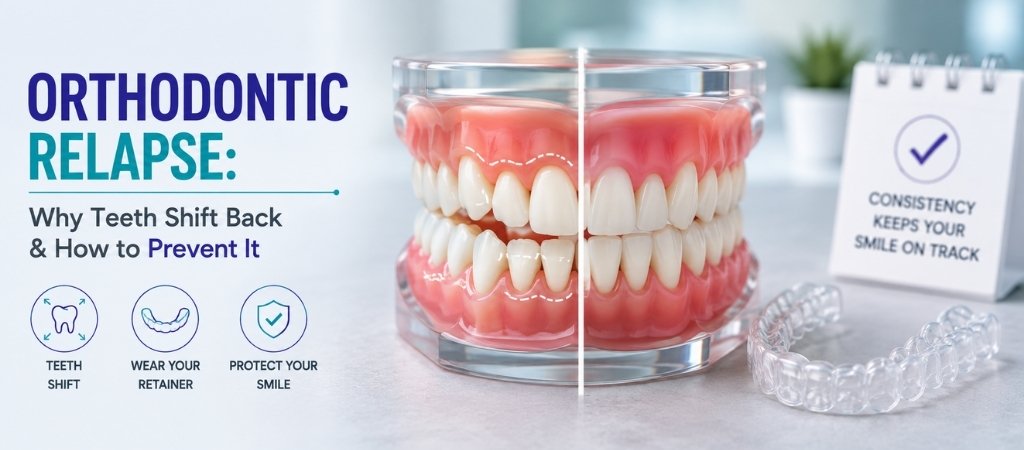
Orthodontic Relapse: Why Teeth Shift Back and How to Prevent It

Quick Answer Orthodontic relapse happens when teeth gradually move back toward their pre-treatment positions after braces or aligners are removed. It is usually caused by inconsistent retainer wear, incomplete stabilisation of the bone and gum tissue, or natural changes that continue throughout life. Wearing a retainer as prescribed, attending regular check-ups, and addressing early signs …
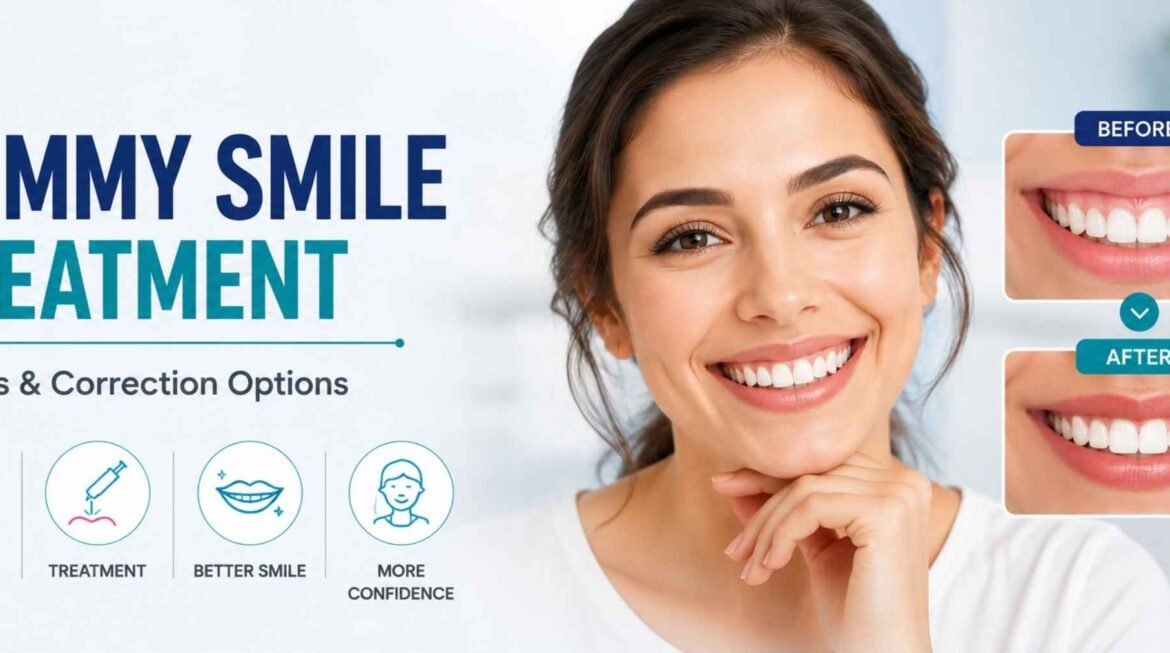
Gummy Smile Treatment: Causes and Correction Options
Quick Answer A gummy smile happens when too much gum tissue shows above the upper teeth when you smile, usually because of a short upper lip, an overactive lip muscle, extra gum tissue covering the teeth, or the way the upper jaw has grown. Correction options range from simple, non-surgical Botox injections and orthodontic treatment …
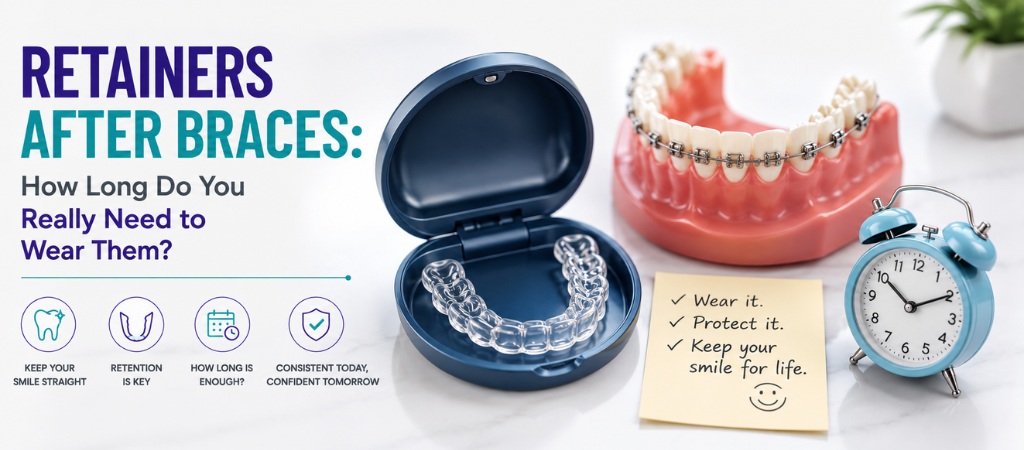
Retainers After Braces: How Long Do You Really Need to Wear Them?
Quick Answer Most patients need to wear a retainer full-time (20–22 hours a day) for the first 4–6 months after braces are removed, then shift to night-only wear for at least 1–2 years. After that, most orthodontists recommend continued night-time wear indefinitely, because teeth can shift at any age. There is no fixed “finish line” …
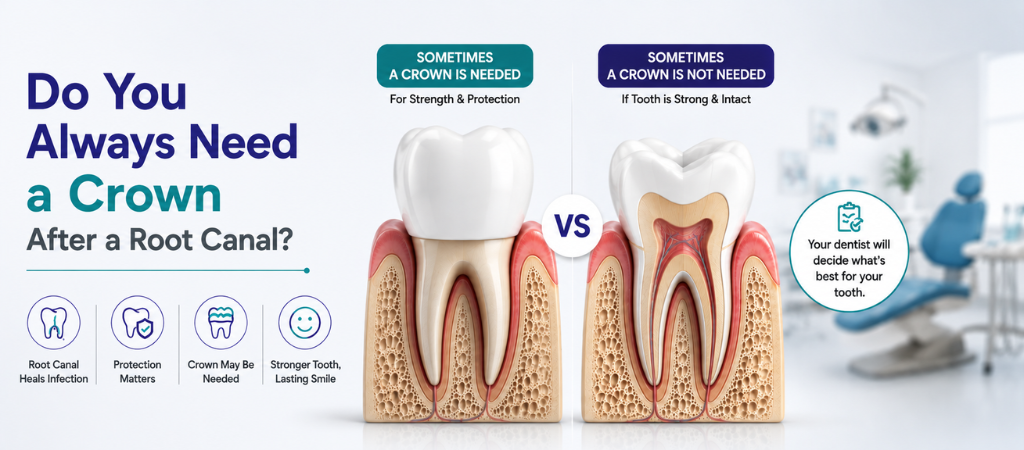
Do You Always Need a Crown After a Root Canal?
Quick Answer No — a crown is not always required after a root canal. Most back teeth (molars and premolars) need one because they bear heavy chewing pressure and lose significant structure during treatment. Front teeth (incisors and canines) with minimal damage can often be restored with just a filling. The right choice depends on …
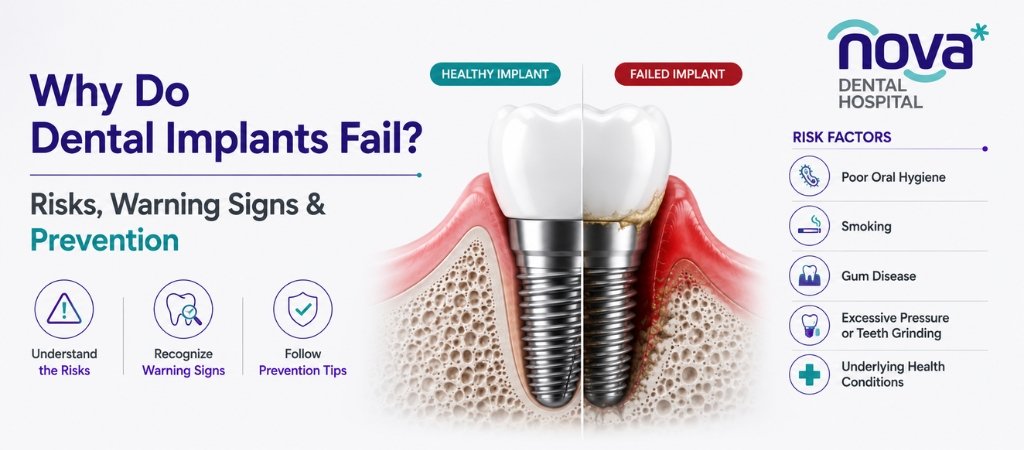
Why Do Dental Implants Fail? Risks, Warning Signs & Prevention
Quick Answer Dental implants fail in roughly 5–10% of cases, most often due to peri-implantitis (gum and bone infection around the implant), insufficient bone density, smoking, uncontrolled diabetes, poor surgical placement, or excessive bite force. Most failures happen either in the first year (during healing) or after several years (from gum disease around the implant). …
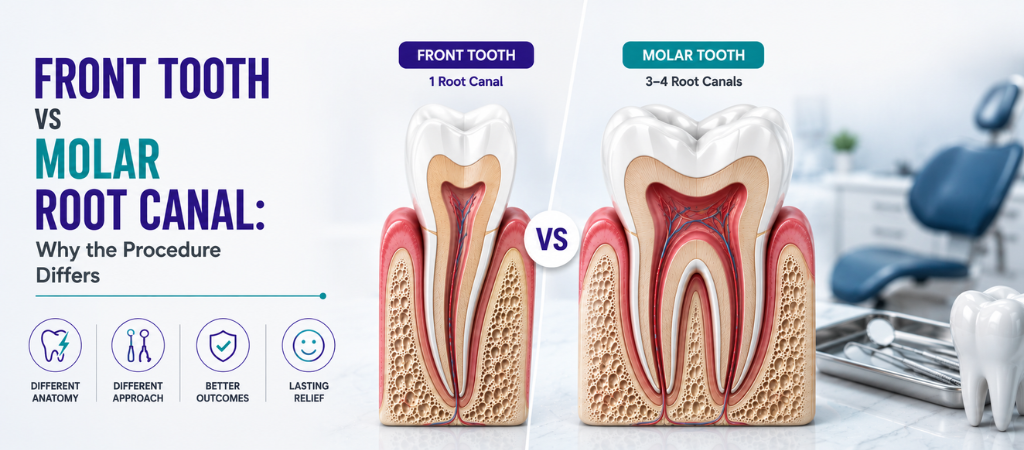
Front Tooth vs Molar Root Canal: Why the Procedure Differs
Quick Answer A root canal differs on a front tooth versus a molar mainly because of tooth anatomy. Front teeth (incisors and canines) usually have a single, straight canal, so treatment is quicker and more predictable. Molars have two to four curved canals and absorb heavy chewing pressure, so the procedure takes longer, demands more …
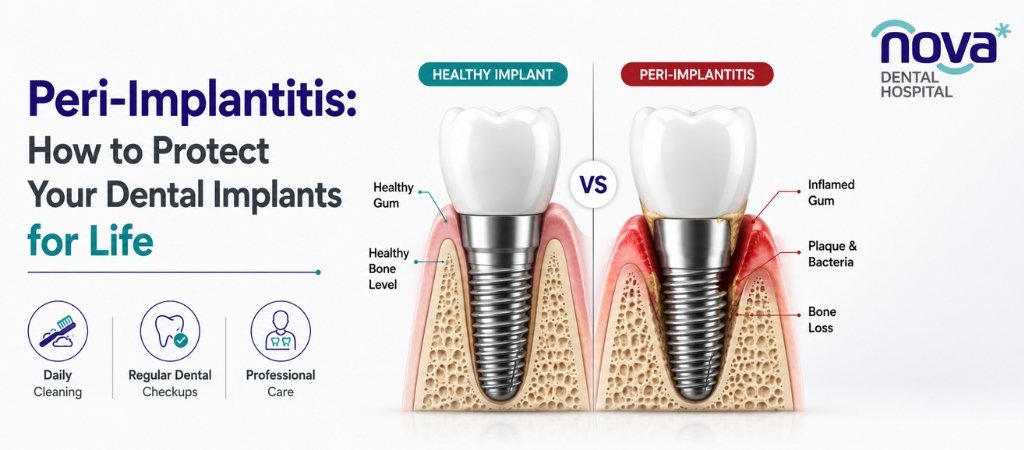
Peri-Implantitis: How to Protect Your Dental Implants for Life
Quick Answer Peri-implantitis is an inflammatory condition that damages the gum and bone supporting a dental implant, and if untreated, can lead to implant loss. It begins as peri-implant mucositis (reversible gum inflammation) and progresses to bone loss when plaque bacteria are left uncontrolled. It is largely preventable with consistent daily cleaning, regular professional maintenance …
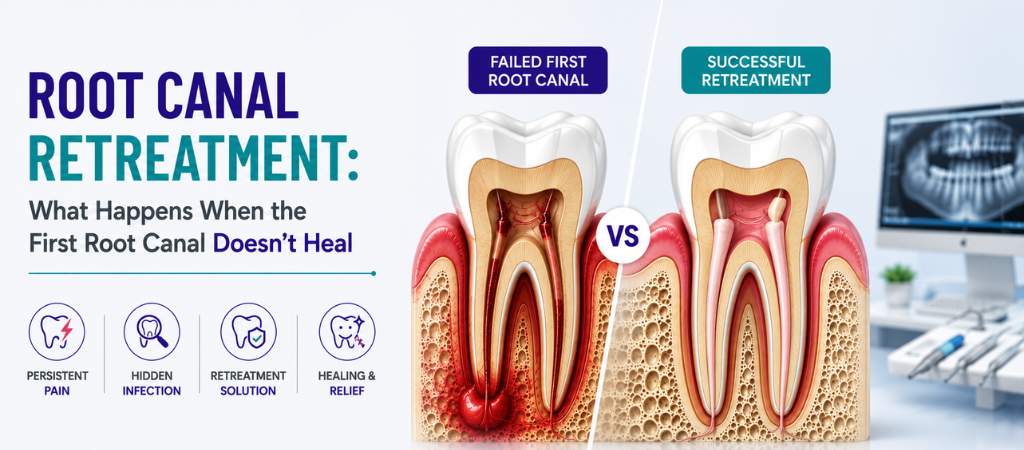
Root Canal Retreatment: What Happens When the First Root Canal Doesn’t Heal
Quick Answer A root canal is said to have “failed” when bacteria re-enter the tooth or the infection was never fully resolved, causing pain, swelling, or a visible bump on the gum. Root canal retreatment reopens the tooth, removes the old filling material, cleans the canals thoroughly, and reseals them — offering a second chance …
Recent Posts

Dry Socket After Tooth Extraction: Symptoms, Prevention & Treatment


