Dental Veneers: Are They Permanent, and What Happens to Your Natural Teeth?
Dental Veneers: Are They Permanent, and What Happens to Your Natural Teeth?

The Hesitation That Holds Most Patients Back
Veneers consistently appear at the top of the list of cosmetic dental treatments patients are interested in and hesitant about in equal measure. The interest is easy to understand — a veneer can transform the colour, shape, and apparent alignment of a tooth in a way that whitening cannot achieve and that orthodontics would take months to approximate. The hesitation is equally understandable: the most common thing patients have heard about veneers is that they are irreversible, and that the teeth underneath have to be filed down. That combination — permanent commitment, natural tooth reduction — gives most people pause before they proceed.
The pause is appropriate. Veneers are a significant cosmetic investment and, in most cases, a lifelong commitment to maintaining ceramic restorations on the prepared teeth. Patients who proceed without fully understanding what that commitment involves sometimes feel differently about their decision years later. Patients who proceed with a clear understanding of what the procedure involves, what alternatives exist, and what a veneer life cycle looks like make better-informed decisions and tend to have better outcomes.
This guide provides that complete picture — what veneers are, what preparation actually involves and why, the difference between traditional and minimal-prep options, how long veneers last, what happens when they need to be replaced, and what the alternatives are for patients who want aesthetic improvement without the irreversibility. The goal is to give you everything you need to know before you commit — not after.
🔑 Key Takeaways
- A dental veneer is a thin ceramic or composite shell bonded to the front surface of a tooth to change its colour, shape, size, or texture. It covers the visible surface of the tooth, leaving the back and root untouched.
- Traditional porcelain veneers require the removal of a thin layer of enamel from the tooth surface before the veneer is bonded. This preparation is irreversible — the enamel does not grow back, and the tooth requires a veneer or crown for the rest of its life.
- Minimal-prep and no-prep veneers exist for specific cases — teeth that are smaller than ideal, have sufficient space, or where very thin veneers can be bonded without any tooth reduction. These are not appropriate for every case, and attempting them in the wrong situation produces poor aesthetics.
- Well-made porcelain veneers last ten to twenty years with proper care before replacement is considered. Composite resin veneers last three to seven years. Neither is permanent — both need to be replaced eventually, and the replacement cycle continues for the patient’s lifetime.
- The most common alternatives to traditional veneers — composite bonding, orthodontic treatment, and teeth whitening — each address specific aesthetic concerns without the irreversibility of enamel preparation. Understanding which concern is driving the interest in veneers helps identify whether an alternative is appropriate.
- Veneers are not suitable for patients with active gum disease, significant decay, bruxism that is not managed, or insufficient enamel on the teeth to be prepared. A thorough clinical assessment before treatment is essential.
What a Dental Veneer Is — and What It Is Not
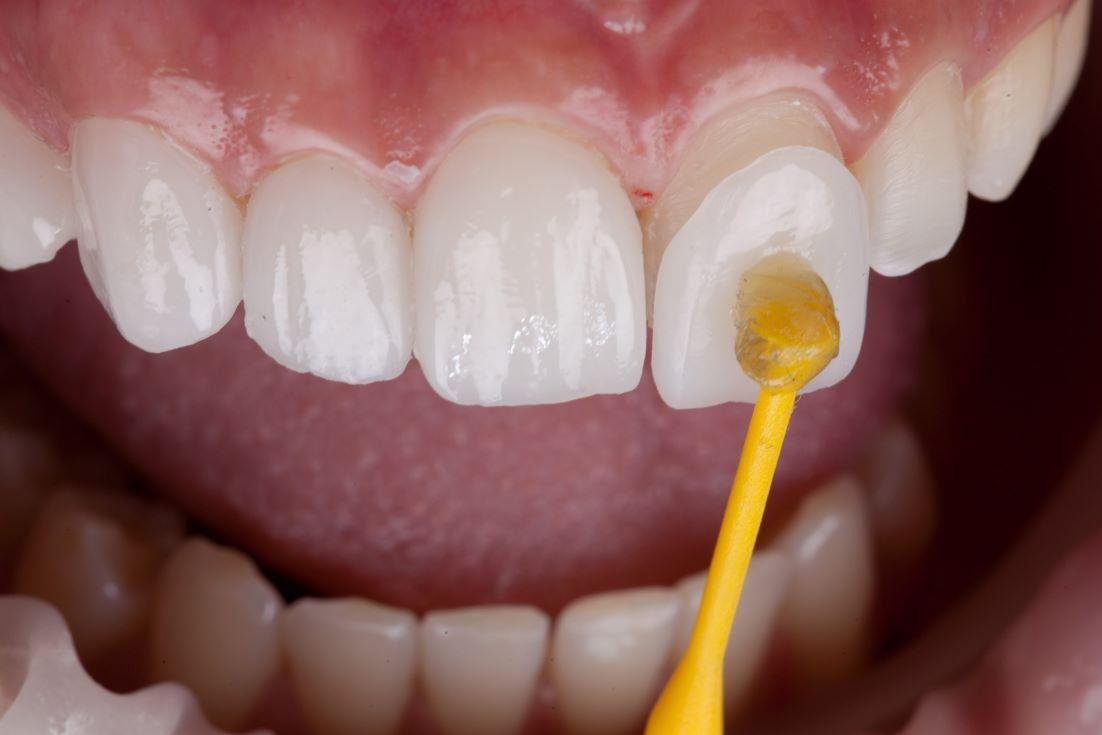
A dental veneer is a thin, custom-made shell — typically made from porcelain (ceramic) or composite resin — that is bonded to the front (labial) surface of a tooth. It covers the visible face of the tooth, changing its colour, shape, length, or texture. It does not cover the back of the tooth, the chewing surface, or the root. It is not a crown, which encircles the entire tooth — a veneer is a facing, applied only to the surface that shows when you smile and speak.
Veneers are used to address a range of aesthetic concerns: teeth that are severely discoloured and do not respond to whitening, teeth with surface defects (chips, cracks, worn edges), teeth that are slightly misaligned and where orthodontics is not the patient’s preferred route, teeth that are proportionally too small, and cases where the entire smile is being redesigned for aesthetic coherence. A single veneer on one discoloured tooth can make it match its neighbours; six to ten veneers across the visible smile can completely transform its appearance.
Veneers do not move teeth — they change how teeth look. This distinction matters: a veneer applied to a crooked tooth creates the appearance of a straight tooth, but the underlying tooth and its root remain in the same position. Patients should understand what they are changing — the visible surface — and what remains unchanged: the tooth’s position in the jaw, its health, its root, and its function.
Tooth Preparation: What Actually Happens and Why
The question patients most want answered about veneers — do my teeth have to be filed down? — deserves a direct, complete answer. For traditional porcelain veneers: yes, in most cases, a thin layer of enamel is removed from the front surface of the tooth before the veneer is bonded. Understanding why this is necessary, and how much enamel is actually removed, makes the decision more concrete.
Why Preparation Is Necessary for Most Veneers
A veneer has a physical thickness — typically 0.5 to 0.7 millimetres for a porcelain veneer. If this thickness is simply added to the existing tooth surface without any reduction, the treated tooth will project further forward than the adjacent untreated teeth, appearing bulky and unnatural. Removing a corresponding thickness of enamel from the tooth surface before the veneer is bonded allows the veneer to sit in approximately the same plane as the original tooth surface, producing a natural appearance.
There is a second reason: adhesive bonding to enamel is significantly stronger and more durable than bonding to dentine. Enamel — the outer layer of the tooth — provides the ideal bonding substrate for dental ceramics. If preparation removes only enamel (not the dentine beneath it), the veneer has an excellent bonding surface. This is why the amount of preparation matters clinically: over-preparation that removes enamel and exposes dentine compromises both the bond strength and the long-term sensitivity of the tooth.
How Much Tooth Is Actually Removed
The standard preparation depth for a porcelain veneer is approximately 0.3 to 0.7 millimetres — roughly the thickness of a fingernail. In real terms, this is a fraction of the tooth’s total thickness. The average enamel thickness on the labial (front) surface of an upper central incisor is approximately 1.0 to 1.5 millimetres at the middle third of the tooth. A standard veneer preparation removes, at most, about half of the enamel depth in that area — the dentine remains covered, the tooth root is untouched, and the structural integrity of the tooth is not materially compromised by the preparation alone.
However — and this is the clinically important point — the enamel that is removed does not regenerate. The tooth will always have less enamel than it started with. If the veneer ever needs to be removed without being replaced, the prepared tooth surface is exposed — and it is rougher, thinner, and more sensitive than the original tooth surface. This is the irreversibility that patients hear about, and it is real. A tooth that has been prepared for a veneer requires a veneer or crown from that point forward.
Where Preparation Happens and Where It Does Not
Preparation for a veneer is confined to the front surface and, in most cases, extends just slightly over the edges of the tooth at the sides and along the biting edge. The back of the tooth, the chewing surface, and the root are not prepared. This contrasts with crown preparation, which removes structure from all surfaces of the tooth — front, back, sides, and top — reducing the tooth to a stub that is entirely covered by the crown. A veneer preparation is substantially more conservative than a crown preparation in terms of total tooth structure removed.
Minimal-Prep and No-Prep Veneers: When They Are a Genuine Option
Not all veneers require significant enamel removal. For specific cases, minimal-prep veneers (requiring only light surface etching or minimal reduction) and no-prep veneers (bonded directly to the existing tooth surface without any removal) are clinically viable options. Understanding when these are appropriate — and when they are not — prevents patients from seeking a no-prep veneer in a situation where it will produce a poor result.
When Minimal-Prep or No-Prep Veneers Work
- Teeth that are smaller than average: A tooth that is proportionally small (microdontic) or that has been worn short can accommodate a thin veneer without any preparation, because the veneer is restoring lost or missing volume rather than adding to existing tooth bulk.
- Teeth with spacing: A diastema (gap) or generalised spacing between teeth can be closed by slightly widening the veneered teeth — a thin veneer on each side of the gap closes it visually without any need for reduction.
- Teeth that are already slightly receded or worn: If the labial surface has been worn by toothbrush abrasion or erosion, a veneer can replace the lost surface without the overall tooth becoming too prominent.
- Specific composite veneer applications: Composite resin veneers — applied chairside by the clinician rather than fabricated in a laboratory — are frequently placed with minimal or no preparation because composite can be applied in very thin increments and adjusted precisely at the bonding appointment.
When No-Prep Veneers Are Not Appropriate
- Teeth with existing discolouration showing through: A very thin no-prep veneer may not fully mask a dark underlying tooth colour. In this situation, a thicker veneer requiring some preparation is needed to achieve adequate opacity and shade masking.
- Cases requiring significant shape change: If the existing tooth shape needs substantial alteration — the tooth is too long, too wide, or angled significantly — a no-prep veneer cannot achieve the required change without becoming too bulky.
- Cases where space is limited: If there is insufficient inter-tooth space to add even the minimal thickness of a veneer without the tooth appearing over-contoured, some reduction is needed.
The key clinical principle is that the preparation depth should be determined by the clinical requirements of the case — not by a blanket preference for no preparation or maximum preservation. A clinician who recommends no-prep veneers for every case without assessing the specific anatomy is not making case-specific decisions; similarly, a clinician who prepares every tooth aggressively without considering whether minimal prep would suffice is not being conservative. The right approach is what the specific tooth geometry and aesthetic goal require.
Veneer Materials: Porcelain vs. Composite
Porcelain (Ceramic) Veneers
Porcelain veneers are laboratory-fabricated custom restorations — made from a ceramic block or pressed ceramic by a dental technician, based on an impression or digital scan of the prepared teeth. The material can be made in layered form (feldspathic porcelain, built up by hand in the laboratory) for maximum aesthetic translucency, or from high-strength pressed ceramic (lithium disilicate, such as IPS e.max) for a combination of excellent aesthetics and greater fracture resistance.
Porcelain veneers are the standard for comprehensive smile makeovers and high-aesthetic single-tooth cases. The material closely replicates the optical properties of natural enamel — light transmittance, translucency, surface texture — in ways that composite resin cannot fully match. With proper care and in the right case, a well-made porcelain veneer lasts ten to twenty years before replacement is considered.
- Advantages: Superior aesthetics; stain resistance; longevity (10–20 years); lifelike optical properties.
- Considerations: Requires at least two appointments (preparation + fit); laboratory fabrication adds time and cost; irreversible preparation in most cases.
Composite Resin Veneers
Composite resin veneers — also called composite bonding — are applied chairside by the clinician using tooth-coloured composite resin, shaped and polished directly on the tooth in a single appointment. No laboratory is involved, and in many cases no preparation is required. The material is the same resin composite used for tooth-coloured fillings, applied in thin layers and sculpted to the desired shape.
Composite bonding is often the most appropriate first step for patients who want aesthetic improvement but are not ready to commit to irreversible porcelain veneers. It is also the standard approach for minor reshaping — closing a small gap, repairing a chip, evening an irregular edge. As discussed in our blog on dental insurance and cosmetic coverage, composite bonding is sometimes partially covered by insurance when it addresses a structural issue rather than a purely cosmetic one.
- Advantages: Single appointment; reversible in many cases; lower cost; suitable for minor corrections; no laboratory time.
- Considerations: Less stain-resistant than porcelain; lifespan of 3–7 years; less precise control of final appearance than laboratory-fabricated porcelain; subject to chipping.
| Porcelain Veneer | Composite Veneer (Bonding) | |
| Material | Ceramic (feldspathic, e.max, or zirconia-based) | Tooth-coloured composite resin |
| Fabrication | Laboratory (2+ appointments) | Chairside (single appointment) |
| Preparation required | Usually yes — 0.3 to 0.7mm enamel removal | Often minimal or none |
| Reversibility | No — prepared tooth requires veneer or crown for life | Often reversible — composite can be removed |
| Aesthetics | Excellent — closest to natural enamel optically | Very good — some limitations in translucency |
| Stain resistance | High — ceramic does not absorb stains | Moderate — composite can stain over time |
| Lifespan | 10–20 years with proper care | 3–7 years; polishing and repair possible |
| Chipping risk | Low — brittle but well-supported | Moderate — composite can chip or fracture |
| Best for | Comprehensive smile makeovers; severe discolouration; long-term commitment | Minor corrections; first-step improvement; reversibility preferred |
| Replacement cycle | Every 10–20 years | Every 3–7 years; ongoing maintenance |
How Long Do Veneers Last — and What Happens When They Need Replacing?
The Lifespan of a Porcelain Veneer
Clinical studies on porcelain veneer longevity consistently report ten-year survival rates of 90 to 95 percent for well-placed veneers in appropriate cases. Twenty-year studies show survival rates of around 70 to 80 percent — meaning most patients will have at least some veneers that need attention by the twenty-year mark. The most common reasons for veneer failure are fracture, debonding (the veneer coming away from the tooth), and secondary decay at the margin where the veneer meets the tooth.
Longevity is significantly influenced by patient behaviour. Veneers in patients with untreated bruxism (teeth grinding) fail significantly earlier than in non-grinding patients — the high lateral forces of grinding crack and debond ceramic. Patients who bite their nails, chew ice, or habitually use their teeth to open packaging are at elevated risk of veneer fracture. Diet does not directly affect porcelain veneers (unlike composite, which is susceptible to staining), but very hard foods can fracture the ceramic if force is applied to the edge of the veneer.
What Happens When a Veneer Needs to Be Replaced
When a porcelain veneer reaches the end of its lifespan — whether from fracture, debonding, recurrent decay, or aesthetic deterioration — it needs to be replaced. The replacement process involves removing the old veneer (using a dental bur to carefully reduce and remove the ceramic), assessing the underlying tooth structure, and fabricating and bonding a new veneer to the same prepared surface. Because the tooth was already prepared at the original procedure, replacement does not require removing additional significant tooth structure in most cases — the preparation is already there.
This replacement cycle continues for the patient’s lifetime. A patient who has veneers placed in their late twenties and lives to eighty will likely have two to four generations of veneers on those teeth over their lifetime. This is not a problem — it is the expected maintenance pattern for ceramic restorations — but it is information every patient should have before making the initial decision.
What Happens if a Veneer Debonds
If a veneer debonds — comes away cleanly from the tooth surface — it should be kept carefully and brought to the dental clinic as soon as possible. In many cases, a debonded veneer can be re-bonded to the same tooth if the ceramic is intact and the bonding surfaces are undamaged. Do not attempt to glue the veneer back yourself — superglue and over-the-counter adhesives will contaminate the bonding surfaces and prevent professional re-bonding. Contact Nova Dental Hospital promptly for assessment.
Who Is a Good Candidate for Veneers — and Who Is Not
Good Candidates
- Patients with severe tooth discolouration: Intrinsic staining from tetracycline, fluorosis, or internal discolouration that does not respond to professional whitening is one of the strongest clinical indications for veneers. The veneer masks the discolouration completely and maintains the result indefinitely, unlike whitening which works only on the natural tooth surface.
- Patients with chipped, worn, or misshapen teeth: Surface defects that affect the appearance but not the structural integrity of the tooth are ideally addressed with veneers — the ceramic restoration covers the defect and restores the desired shape.
- Patients with mild spacing or minor alignment issues where orthodontics is not preferred: Veneers can create the appearance of straighter, more evenly spaced teeth without tooth movement. The limitation is that this is an aesthetic solution — the underlying bite is unchanged.
- Patients with healthy gums, adequate enamel, and no active decay: The foundations of successful veneers are clinical — healthy gum tissue, sufficient enamel for preparation and bonding, and no active disease that would compromise the restoration.
Patients for Whom Veneers Are Contraindicated or Require Careful Assessment
- Active, uncontrolled bruxism: Unmanaged grinding is the most consistent predictor of premature veneer failure. If a patient grinds, a night guard must be in place and worn consistently before and after veneer placement. Veneers placed without addressing bruxism will fail early.
- Insufficient enamel: Patients whose enamel is thin from erosion, previous preparations, or congenital factors may not have sufficient enamel remaining for adequate bonding. In these cases, a crown may be more appropriate than a veneer.
- Active gum disease or decay: Any active disease must be treated and stabilised before cosmetic treatment begins. Placing veneers over compromised gum tissue or adjacent to untreated decay produces restorations that fail prematurely and masks clinical problems that need management.
- Patients who bite their nails or habitually bite hard objects: These habits place eccentric forces on veneers that fracture the ceramic. Habits need to be addressed before or alongside treatment.
- Patients who want reversibility: If a patient is not comfortable with the irreversibility of traditional enamel preparation, composite bonding or no-prep veneers (where appropriate) are better starting points. A patient who proceeds with porcelain veneers under the assumption they can be removed if they change their mind will be disappointed — the prepared tooth will need a replacement restoration.
⚠️ Before You Commit to Veneers — Ask These Questions
- Do I have active gum disease, decay, or any dental problems that need addressing first?
- Do I grind my teeth — and if so, is that being managed with a night guard?
- Have I tried whitening, and have I had a clear explanation of why veneers are recommended over whitening for my specific discolouration?
- Am I comfortable with the fact that once the teeth are prepared, they will need a veneer or crown for the rest of my life?
- Has the clinician explained both the minimal-prep and traditional prep options and which is appropriate for my case?
- Have I seen before-and-after photographs of similar cases done at this clinic?
Alternatives to Veneers: When Something Less Permanent Is the Right Call
Professional Teeth Whitening
For patients whose primary concern is tooth colour — yellowing, light staining, or general darkening from aging — professional whitening is the most conservative and reversible first option. As covered in our blog on professional teeth whitening vs at-home kits, in-chair whitening can achieve significant shade improvement in a single appointment without any tooth preparation. Whitening does not work on ceramic restorations, root-treated teeth, or intrinsic staining — these are the cases where veneers address what whitening cannot.
Composite Bonding
As described above, composite bonding is the most appropriate first step for patients who want aesthetic improvement but are not ready for an irreversible commitment. For minor chips, small gaps, slightly irregular edges, or colour correction of individual teeth, composite bonding achieves a good aesthetic result in a single appointment at a fraction of the cost of porcelain veneers, without preparation of the natural tooth. The tradeoff is longevity — composite requires more maintenance and earlier replacement than porcelain.
Orthodontic Treatment
For patients whose primary concern is tooth alignment rather than colour or shape, orthodontic treatment — whether with clear aligners or braces — addresses the underlying position of the teeth rather than masking it with ceramic. A patient who straightens their teeth with Invisalign and then whitens has achieved a result without any tooth preparation at all. This is the most conservative pathway for patients whose primary aesthetic concern is alignment, and it is worth discussing explicitly at consultation before proceeding with veneers.
Crown as an Alternative to Veneer
For teeth that are severely broken down, heavily restored, root-canal-treated, or have insufficient enamel for veneer bonding, a dental crown — which covers the entire tooth — may be more appropriate than a veneer. Crowns involve more tooth preparation than veneers but provide greater structural protection and are not contraindicated by insufficient enamel. The aesthetic result of a modern zirconia or e.max crown is equivalent to a veneer for most patients.
What the Veneer Procedure Involves — Step by Step
Consultation and Assessment
A cosmetic dentistry consultation for veneers begins with a thorough clinical assessment — examination of gum health, tooth structure, enamel quality, bite, and any existing restorations. Photographs are taken, and in some cases digital smile design software is used to show the patient a preview of the proposed outcome before any preparation is done. This is also the appointment where the clinician assesses whether veneers are appropriate, what preparation will be required, and whether alternatives should be considered first.
Trial Smile / Wax-Up
For comprehensive smile makeovers involving multiple veneers, a diagnostic wax-up — a physical or digital model of the proposed veneer shapes — is produced and presented to the patient before any tooth preparation. A trial smile or mock-up (temporary composite applied over the existing teeth to simulate the final result) allows the patient to evaluate the proposed shape, size, and length before committing. Adjustments are easy at this stage; they are not easy after final restorations are in place.
Tooth Preparation and Temporaries
At the preparation appointment, local anaesthesia is administered, and the calculated amount of enamel is removed from the tooth surfaces. An impression or digital scan is taken of the prepared teeth. Temporary veneers — made from composite resin at the chairside — are bonded to the prepared teeth to protect them and maintain appearance while the laboratory fabricates the permanent veneers. The temporary phase typically lasts one to two weeks and is an opportunity to trial the final shape before committing.
Fit and Bonding
At the fit appointment, the temporary veneers are removed, the teeth are cleaned, and the permanent veneers are tried in without bonding agent to assess colour, shape, and fit. Once both patient and clinician are satisfied, the veneers are permanently bonded using a dual-cure adhesive resin that sets hard and durable under both light and chemical curing. Bite adjustments are made, the surface is polished, and the patient sees the final result.
✅ How to Make Your Veneers Last as Long as Possible
- Wear a night guard if you grind — bruxism is the most consistent predictor of early veneer failure. A custom-fitted night guard protects the ceramic from the high forces of grinding.
- Avoid biting into very hard foods with your front teeth — biting directly into hard objects (crusty bread, raw carrots, hard sweets) applies eccentric force to the veneer edges and risks chipping.
- Do not use your teeth as tools — opening packaging, biting nails, or holding objects between the teeth places unpredictable lateral forces on veneers.
- Maintain regular professional cleaning appointments — tartar and staining at the veneer margins should be professionally cleaned; aggressive scaling directly on the veneer surface should be avoided.
- Use a non-abrasive toothpaste — highly abrasive toothpastes can scratch the glaze on composite veneers over time; porcelain is more resistant but non-abrasive paste is still preferable.
- Keep up with regular dental check-ups — veneer margins, the gum tissue around them, and the bite should be checked regularly to identify any early issues before they become significant problems.
Frequently Asked Questions
FAQ 1: Do veneers look natural?
Yes — in experienced hands and with the right material, porcelain veneers are designed to be indistinguishable from natural teeth. The shade, translucency, and surface texture are matched to the adjacent teeth through careful shade selection and laboratory communication. As covered in our blog on natural-looking dental crowns, the same principles of shade matching and optical naturalness apply to veneers — the material is chosen for its ability to replicate natural enamel, and the result is evaluated by the patient at the try-in appointment before permanent cementation. A veneer that does not look natural at the try-in is adjusted or remade before bonding.
FAQ 2: Can I get veneers on just one tooth?
Yes — veneers can be placed on a single tooth when the concern is localised to that tooth specifically. A single veneer on a discoloured or chipped tooth is a common and straightforward treatment. The main consideration is shade matching — ensuring the veneer matches the colour and character of the adjacent natural teeth precisely. This is technically more demanding than matching veneers to other veneers in a full set, because the adjacent natural teeth have individual character (translucency, colour gradients, surface texture) that the veneer needs to replicate exactly. Good photographic communication with the laboratory and a careful try-in are essential for single-tooth veneer cases.
FAQ 3: Can veneers be placed over teeth that have had root canal treatment?
Yes, with a consideration. Root-canal-treated teeth can darken over time as breakdown products from the removed pulp tissue diffuse into the dentine — a process that occurs over months to years after the procedure. A very dark underlying tooth can affect the final shade of even an opaque veneer. In such cases, internal bleaching of the root-treated tooth before veneer placement may lighten the underlying tooth sufficiently to allow a less opaque, more natural-looking veneer. The alternative is a more opaque veneer that fully masks the underlying colour, at some sacrifice of translucency. Your clinician will assess the degree of discolouration and advise on the best approach. For a full explanation of the root canal procedure itself, see our blog on painless root canal treatment.
FAQ 4: Will veneers change the way my teeth feel when I bite?
For most patients, veneers produce no noticeable change in how the teeth feel in normal function once the bite has been properly adjusted at the fit appointment. Veneers change the labial (front) surface of the teeth — not the palatal (back) surface or the biting edges in most cases — so the bite contacts remain at the same points as before treatment. In cases where the veneers change the tooth length or the incisal edge position, the bite relationship is assessed carefully and adjusted. Some patients notice a brief adaptation period of a few days where the teeth feel slightly different; this typically resolves quickly as the sensory perception adapts to the new surface.
FAQ 5: How do I know if veneers are right for me versus another treatment?
The starting point is a clear understanding of what specifically you want to change — colour, shape, alignment, size, or a combination. Colour concerns are often best addressed first with whitening, which is reversible and significantly less expensive. Shape and surface concerns are often addressable with composite bonding for a trial result before committing to porcelain. Alignment concerns may be better addressed with orthodontic treatment that moves the teeth rather than masks their position. If all of these have been considered and veneers are still the most appropriate solution for your specific concern and anatomy, a cosmetic consultation at Nova Dental Hospital will give you a complete clinical assessment and honest comparison of all options before any decision is made. Patients are welcome to read about others’ experiences on our Google Business Profile.
🔑 Key Takeaways
- Traditional porcelain veneers require irreversible enamel preparation in most cases. The enamel removed does not grow back, and the prepared tooth requires a veneer or crown for life. This is the most important fact to understand before committing.
- Minimal-prep and no-prep veneers are appropriate for specific cases — teeth that are already reduced in size or where the geometry allows a thin veneer without over-contouring. They are not universally applicable, and applying them in the wrong case produces poor results.
- Porcelain veneers last ten to twenty years with proper care; composite bonding lasts three to seven years. Neither is permanent — both require ongoing maintenance and eventual replacement.
- The best candidates for veneers have specific aesthetic concerns that whitening, composite bonding, or orthodontics cannot adequately address, have healthy gums and sufficient enamel, and are comfortable with a long-term commitment to ceramic maintenance.
- Alternatives — whitening, composite bonding, orthodontics — should always be discussed at consultation before proceeding to veneers. The most conservative solution that achieves the patient’s aesthetic goal is the most appropriate one.
- A thorough pre-treatment consultation including clinical assessment, photographic records, digital smile design, and a trial smile for multiple veneer cases is the standard that allows patients to make an informed decision and reduces the likelihood of post-treatment dissatisfaction.
Conclusion: Veneers Are an Excellent Option — for the Right Patient, With the Right Information
Dental veneers have transformed the aesthetic outcome available to patients whose teeth cannot be adequately improved with whitening or simple bonding. When they are placed in the right clinical situation, with proper preparation, good laboratory work, and accurate shade matching, they produce results that are natural-looking, durable, and genuinely life-changing for the patients who choose them.
The key to being one of those patients — rather than one who feels differently about the decision five years later — is understanding what you are committing to before you commit. The preparation is irreversible. The maintenance cycle is lifelong. The results, in the right case, are excellent. All three of these things are true simultaneously, and a good consultation should make all three clear.
At Nova Dental Hospital, veneer consultations include a full clinical assessment, a comparison of all relevant treatment options, digital smile design for comprehensive cases, and a trial smile before any preparation is made. If you are considering veneers — or trying to decide whether veneers are the right option at all — a consultation is the right starting point.

Related posts
Write a Comment
Recent Posts