


Why Do I Need a Deep Cleaning If I Already Brush Every Day?
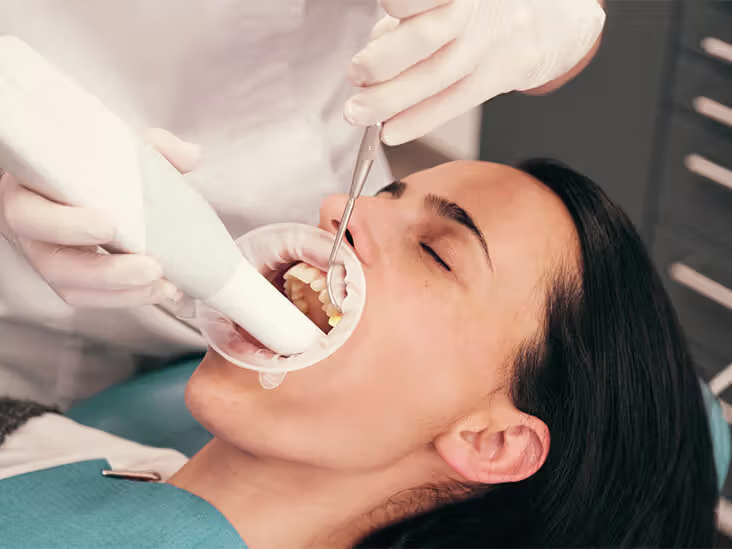
Why Do I Need a Deep Cleaning If I Already Brush Every Day?

The Question That Deserves a Better Answer Than ‘Just Trust Us’
It is one of the most common points of confusion in dental care. A patient is told at their check-up that they need a deep cleaning — scaling and root planing — and their first reaction is resistance. They brush twice a day. They may even floss. Their teeth do not hurt. They had a regular scale and polish not that long ago. Why, exactly, do they need something more?
The question is entirely reasonable. Dentists sometimes answer it with variations of ‘you have tartar below the gum line’ or ‘you have some pocketing’ — which is accurate but not particularly illuminating if the patient does not understand what those things mean or why they matter. This guide provides the complete explanation: what the difference is between a regular cleaning and a deep cleaning, why brushing and regular scaling cannot address what deep cleaning targets, what the procedure actually involves, what to expect during recovery, and what happens if the recommendation is ignored.
The short answer is that deep cleaning addresses a problem in a location that no other treatment reaches — and that the problem, if left unaddressed, progresses steadily and silently towards the kind of bone loss that eventually results in loose teeth and tooth loss. The longer answer follows.
🔑 Key Takeaways
- A regular scale and polish cleans the tooth surfaces above and just at the gum line. Deep cleaning — scaling and root planing — cleans the root surfaces below the gum line, inside periodontal pockets that a toothbrush and regular scaler cannot reach.
- Plaque hardens into calculus (tartar) within 24 to 72 hours if not removed. Subgingival calculus — calculus below the gum line — cannot be removed by brushing, flossing, or regular scaling. It can only be removed with fine instruments designed to work inside periodontal pockets under local anaesthesia.
- Subgingival calculus harbours bacteria that trigger the immune response responsible for periodontal bone loss. Leaving it in place means the bone destruction continues regardless of how well the patient brushes above the gum line.
- Deep cleaning is both a diagnostic and a therapeutic procedure. The pocket depths measured at reassessment six to eight weeks after treatment tell the clinician how the tissue has responded and whether further intervention is needed.
- The procedure is carried out under local anaesthesia and should not be painful during treatment. Post-treatment soreness and sensitivity lasting two to five days is normal and expected.
- Deep cleaning is not a one-time fix. The bacteria that cause periodontal disease re-colonise treated sites within weeks if home hygiene is inadequate. Regular professional maintenance — every three to four months initially — is the ongoing commitment that sustains the benefit of the treatment.
Regular Cleaning vs. Deep Cleaning: What Is Actually Different
The distinction between a regular professional clean and a deep cleaning is not one of intensity or thoroughness applied to the same area. They address different anatomical zones, using different instruments, targeting different problems, and achieving different clinical outcomes. Understanding this distinction resolves most of the confusion patients have when deep cleaning is recommended.
What a Regular Scale and Polish Does
A regular professional clean — scale and polish — removes plaque, calculus (tartar), and staining from the supragingival and shallow subgingival surfaces of the teeth: the visible parts of the teeth, the areas between them just at the gum line, and the immediate subgingival area down to a depth of approximately one to two millimetres. This is performed with an ultrasonic scaler and hand instruments, typically without local anaesthesia, and is comfortable for patients with healthy or mildly inflamed gum tissue.
For patients with healthy gums and minimal pocket depths — one to three millimetres — a regular scale and polish is entirely appropriate and sufficient for maintaining gum health alongside good home hygiene. The procedure removes the deposits that regular brushing cannot reach, polishes the surfaces to slow future plaque accumulation, and gives the clinician the visibility to assess the gum tissue and probe the pocket depths.
What it does not do — and what it is not designed to do — is instrument root surfaces deep within periodontal pockets. When pockets have deepened to four millimetres or more, the critical bacterial deposits are further below the gum line than a regular scale and polish can safely or effectively reach. Attempting to scale deeply into inflamed four- to seven-millimetre pockets without local anaesthesia would be uncomfortable for the patient and would not achieve adequate root surface debridement.
What Deep Cleaning (Scaling and Root Planing) Does
Deep cleaning — formally called scaling and root planing or root surface debridement — is the instrumentation of the root surfaces within periodontal pockets, under local anaesthesia, to remove subgingival calculus, plaque biofilm, and the layer of calculus-contaminated cementum from the root surface. It is a significantly more detailed procedure than a regular clean, working in a zone that the patient and a regular scaler cannot access.
The root surface debridement aims to create a smooth, biologically clean root surface that the gum tissue can re-attach to — or at minimum, recontour against — reducing the pocket depth and removing the subgingival environment that sustains the disease. It is the primary non-surgical treatment for periodontitis and is the standard of care before any consideration of periodontal surgery.
| Regular Scale and Polish | Deep Cleaning (Scaling and Root Planing) | |
| Area treated | Above and just at gum line (supragingival and shallow subgingival) | Root surfaces within periodontal pockets (subgingival) |
| Anaesthesia | Not usually required | Local anaesthesia — essential for patient comfort and access |
| Instruments | Ultrasonic scaler, hand scalers, polishing cup | Fine periodontal curettes, ultrasonic tips designed for subgingival access |
| Pocket depth addressed | 1–3 mm (healthy to mildly inflamed) | 4 mm and above (moderate to severe periodontitis) |
| Target deposits | Supragingival calculus, plaque, staining | Subgingival calculus, bacterial biofilm, contaminated cementum |
| Number of appointments | Single appointment (full mouth) | Typically 2–4 appointments (one or two quadrants per visit) |
| Post-treatment discomfort | Minimal to none | Soreness and sensitivity for 2–5 days — normal and expected |
| Outcome measured | Clinical appearance, reduced bleeding | Pocket depth reduction at 6–8 week reassessment |
| Appropriate for | Gingivitis, maintenance, healthy patients | Periodontitis — any stage with pocket depths ≥4 mm |
Why Brushing — Even Perfect Brushing — Is Not Enough
This is the point that most patients find counterintuitive, because the message they have always received about dental health is that brushing and flossing are the foundation of everything. They are — but only for the surfaces that brushing and flossing can physically reach. Below the gum line, inside a periodontal pocket, brushing does not go.
The Anatomy of a Periodontal Pocket
In a healthy mouth, the gum tissue fits snugly around each tooth, with a shallow groove — the gingival sulcus — running around the base of the crown where the gum meets the tooth surface. The depth of this sulcus in health is one to three millimetres. A toothbrush bristle, even with a good angle and good technique, penetrates approximately one millimetre into this sulcus. Floss can be guided two to three millimetres below the gum contact point.
In a patient with periodontitis, this sulcus has deepened into a periodontal pocket — typically four to eight millimetres, and in severe cases deeper. The deepening happens because the gum tissue detaches from the root surface as bone loss progresses beneath it. The result is a space between the root surface and the gum that is warm, moist, oxygen-poor, and inaccessible — the ideal environment for the anaerobic bacteria that drive periodontal bone destruction.
A toothbrush cannot reach the base of a five-millimetre pocket. Floss cannot reach it. Regular scaling instruments used without anaesthesia cannot comfortably or effectively debride it. The bacteria and calculus at the base of the pocket simply remain — continuing to trigger the immune response that destroys the surrounding bone — regardless of how conscientiously the patient brushes the surfaces above the gum line.
How Calculus Forms and Why It Cannot Be Brushed Away
Dental plaque — the soft, sticky bacterial biofilm that forms continuously on tooth surfaces — begins to mineralise into calculus (tartar) within 24 to 72 hours of forming, as calcium and phosphate ions from saliva are incorporated into the plaque matrix. Once calculus has formed, it is hard, adherent, and impossible to remove by brushing — its mineral structure bonds it firmly to the tooth surface. Only professional instrumentation with scalers designed to fracture and remove it can address calculus.
Subgingival calculus — calculus that forms on the root surface below the gum line — is typically denser and more firmly attached than supragingival calculus. It forms in the mineral-rich environment of crevicular fluid (the fluid that seeps from the gum tissue into the pocket) and appears dark brown or black rather than the yellow or cream of supragingival deposits. It is particularly problematic because it creates a rough, contaminated root surface that the gum tissue cannot attach to, perpetuating the pocket and the bacterial environment within it.
As described in more detail in our blog on gum disease symptoms and stages, the plaque-calculus-pocket cycle is self-reinforcing: calculus roughens the root surface and maintains the pocket, the pocket protects the bacteria from cleaning, and the bacteria drive the bone loss that deepens the pocket further. Breaking this cycle is what scaling and root planing achieves — and it is a cycle that brushing alone cannot interrupt.
What Happens If Deep Cleaning Is Not Done
The recommendation for deep cleaning is not precautionary in the way that some dental treatment recommendations can appear to be. When a dentist recommends scaling and root planing based on pocket depths of four millimetres or more, active bleeding on probing, and radiographic evidence of bone loss, the disease is already present and already progressing. Declining the treatment does not pause the disease — it allows it to continue.
Progressive and Permanent Bone Loss
The bone destruction caused by untreated periodontitis is permanent. Unlike the soft tissue inflammation of gingivitis — which resolves completely with cleaning — the bone that is lost to periodontitis does not regenerate without surgical intervention. A patient who declines deep cleaning when it is clinically indicated and returns twelve months later will have more bone loss than they had at the original appointment. The pockets will be deeper. The disease will be further advanced. The treatment required will be more extensive.
From Non-Surgical to Surgical
Early to moderate periodontitis — the stage at which most deep cleaning recommendations are made — is manageable with non-surgical scaling and root planing alone in the majority of cases. Pocket depths that respond well to root planing reduce to clinically acceptable levels and can be maintained with regular professional cleaning. If the disease is allowed to progress to severe periodontitis — deep pockets, furcation involvement, significant bone defects — non-surgical treatment alone may no longer be sufficient, and periodontal surgery becomes the treatment pathway.
The difference between needing a standard periodontal deep cleaning and needing periodontal surgery is largely a function of how long the disease has been left unaddressed. Early treatment is significantly less invasive, less expensive, and more effective than late treatment.
Tooth Loss
At its endpoint, untreated severe periodontitis results in tooth loss. A tooth with insufficient bone support becomes progressively mobile — and a mobile tooth under biting load accelerates its own bone loss through trauma to the already compromised support. Teeth that might have been maintained for decades with treatment at the moderate stage are extracted at the severe stage because the remaining bone cannot support them. As discussed in our blog on implants vs dentures vs bridges, replacing extracted teeth is significantly more complex and expensive than maintaining the original teeth — and bone lost to periodontitis may reduce the options available for implant placement later.
⚠️ Signs That Deep Cleaning May Already Be Overdue
- Gums that bleed consistently when brushing or flossing — not just occasionally
- Gum recession making teeth appear longer than they used to
- Persistent bad breath that does not resolve with normal oral hygiene
- Teeth that feel slightly sensitive to cold without obvious decay
- A gap appearing between front teeth that was not there before
- Any tooth that feels the slightest bit loose
- More than twelve months since your last professional dental assessment
What Deep Cleaning Actually Involves — Appointment by Appointment
The Assessment Appointment
Before deep cleaning is recommended, the dentist carries out a periodontal assessment — probing every tooth at six points around its circumference to measure pocket depths, recording which sites bleed on probing, taking radiographs to assess bone levels, and evaluating mobility and furcation involvement. This data maps the disease precisely and determines which teeth and which quadrants of the mouth need treatment. At Nova Dental Hospital, this assessment is recorded on a periodontal chart that becomes the baseline against which the treatment response is measured at reassessment.
The Treatment Appointments
Scaling and root planing is typically performed one or two quadrants at a time — the mouth divided into four quadrants — allowing one side of the mouth to be numb and recovering while the other side is functional. Patients with moderate periodontitis affecting the full mouth usually require two to four appointments of approximately 45 to 90 minutes each, spaced one to two weeks apart.
At each appointment, local anaesthesia is administered to the quadrant being treated. Once the area is fully numb, the clinician uses a combination of ultrasonic scalers (which vibrate at high frequency to fracture calculus deposits) and fine hand instruments — specifically shaped periodontal curettes — to access the root surface within each pocket. The root surface is instrumented systematically from the gum margin to the base of the pocket, removing calculus and smoothing the cementum surface to remove the contaminated layer that harbours bacteria.
The gum tissue, which has been inflamed and swollen, is held gently aside with the instruments during the procedure. Once the root surfaces are clean and smooth, the tissue is allowed to recontour and, over the following weeks, will tighten against the cleaned root surface as the inflammation resolves.
What to Expect During the Procedure
With adequate local anaesthesia, the procedure should be pain-free. Patients feel pressure and movement — the instruments are working inside the pockets and against the root surface — but should not feel sharp pain. If any sensation becomes uncomfortable, more anaesthesia is administered. Patients who have previously experienced discomfort during deep cleaning without adequate anaesthesia have typically had under-anaesthetised treatment; the procedure itself, properly anaesthetised, is well tolerated.
After the Appointment — What to Expect
- Soreness: The gum tissue that was inflamed and instrumented will be tender for two to five days after treatment. This is normal and expected — the tissue has been worked in detail, and some post-procedural inflammation is part of the healing process.
- Sensitivity: Teeth may be noticeably more sensitive to cold for one to two weeks after root planing — particularly for teeth that had significant recession or calculus covering exposed root surfaces. This settles as the tissue heals and, in most cases, resolves completely.
- Bleeding: Some bleeding when brushing the treated area for the first few days is normal. It reduces progressively as the inflammation resolves.
- Pain management: Over-the-counter ibuprofen or paracetamol is typically adequate for post-procedure discomfort. Avoid very hot or very cold food and drinks on the treated side for the first day or two.
- Oral hygiene: Continue brushing and interdental cleaning gently in the treated area — stopping home hygiene during recovery allows plaque to re-accumulate on the freshly cleaned root surfaces, which defeats the purpose of the treatment.
The Reassessment — Six to Eight Weeks Later
Six to eight weeks after the final scaling and root planing appointment, the full mouth is reassessed with a repeat periodontal chart. Pocket depths are re-probed at the same six points per tooth, bleeding scores are recorded, and the response to treatment is evaluated. This is the most important appointment in the treatment sequence — it tells the clinician whether the non-surgical approach has been sufficient or whether surgical periodontal treatment is indicated for specific sites that have not responded adequately.
In most cases of early to moderate periodontitis, significant pocket depth reduction is achieved — pockets that were five to six millimetres at baseline reduce to three to four millimetres post-treatment, which is clinically manageable and maintainable with regular professional cleaning. Cases with deeper pockets, furcation involvement, or specific anatomical challenges may require further intervention.
After Deep Cleaning: The Ongoing Maintenance Phase
Deep cleaning treats the disease that is present at the time of treatment. It does not immunise the patient against future disease. The bacteria that cause periodontitis re-colonise treated root surfaces within weeks if plaque control is inadequate. Supportive periodontal therapy — regular professional cleaning at intervals calibrated to the patient’s disease risk — is the ongoing phase of care that sustains the benefit of the initial treatment.
For patients who have completed active periodontal treatment, maintenance appointments are typically scheduled every three to four months for the first year, then reassessed based on clinical stability. Patients who maintain stable pocket depths, minimal bleeding, and good home hygiene over time may be stepped down to less frequent recall. Patients who show signs of reactivation are treated promptly before significant re-attachment loss occurs.
The home hygiene component is as important as the professional maintenance. The combination of twice-daily brushing with correct technique, daily interdental cleaning with floss or interdental brushes, and regular professional cleaning provides the multi-layered plaque control that periodontal patients need to maintain their results. A single professional clean every six months with inadequate home hygiene in between is significantly less effective than the same professional clean combined with consistent daily interdental cleaning. Our blog on bleeding gums when flossing covers the home hygiene component in detail, including why gums that bleed with flossing need more flossing, not less.
✅ What to Do at Home After Deep Cleaning
- Keep brushing the treated area — gently, with a soft brush, from day one. Do not avoid the treated teeth to spare discomfort; the root surfaces need to be kept clean.
- Use warm salt water rinses — gentle rinsing with warm salt water (half a teaspoon in a glass of warm water) two to three times daily for the first three to five days reduces bacterial load and supports soft tissue healing.
- Continue interdental cleaning — floss or interdental brushes, gently, from day two or three onwards. The interdental spaces are where the residual bacteria are highest in density.
- Avoid smoking — smoking impairs gum tissue healing significantly and reduces the response to periodontal treatment. The period immediately following deep cleaning is clinically the best moment to stop if cessation is being considered.
- Attend the reassessment appointment — the six-to-eight-week reassessment is essential clinical data. Skipping it means the treatment response is unknown and the maintenance plan cannot be correctly calibrated.
Frequently Asked Questions
FAQ 1: My dentist said I need deep cleaning but I have no pain. Do I really need it?
Yes — the absence of pain is a characteristic feature of periodontal disease, not a reassurance that the disease is absent or not serious. As discussed in our blog on why gum disease gets worse without you realising, bone destruction from periodontitis is a chronic, low-grade process that does not produce acute pain in the way that decay or a cracked tooth does. Pocket depths, bleeding on probing, and bone levels on radiographs are the clinical indicators of disease severity — and they can show significant disease in a patient who reports no discomfort. Declining deep cleaning because the teeth feel fine leaves the disease in place and allows it to progress.
FAQ 2: Can deep cleaning damage my teeth?
Scaling and root planing, performed by a trained clinician, does not damage healthy tooth structure. The instruments are designed to remove calculus and contaminated cementum from the root surface — not to remove healthy dentine or disrupt the underlying root anatomy. Patients sometimes notice increased sensitivity after treatment, which is caused by the removal of calculus that was covering exposed root surfaces and the temporary inflammatory response in the gum tissue. This settles within one to two weeks in most cases. The very small amount of cementum removed during root planing is clinically insignificant relative to the harm caused by leaving the subgingival bacterial deposits in place.
FAQ 3: How is deep cleaning different from the regular cleaning I get every six months?
The primary difference is the anatomical zone being treated. A regular clean addresses the tooth surfaces above and just at the gum line — supragingival and shallow subgingival areas — without local anaesthesia, in a single appointment. Deep cleaning addresses the root surfaces inside periodontal pockets, under local anaesthesia, over multiple appointments. They are not more or less thorough versions of the same procedure — they target different problems in different locations. For patients with healthy gums and shallow pockets, a regular clean is entirely appropriate. For patients with pocket depths of four millimetres or more and active periodontal disease, a regular clean leaves the primary source of the problem untouched. Book a consultation at Nova Dental Hospital to have your pocket depths assessed and to understand which type of treatment your gum health currently requires.
FAQ 4: Will my gums go back to normal after deep cleaning?
The gum tissue responds to deep cleaning by reducing its inflammation — swelling decreases, bleeding on probing reduces, and the tissue often becomes firmer and slightly lighter in colour as the bacterial load in the pockets is removed. Pocket depths typically reduce as the tissue tightens against the cleaned root surface. What does not return to its original level is the bone that was lost before treatment — as covered in our blog on gum disease stages, periodontal bone loss is permanent without surgical intervention. ‘Going back to normal’ means achieving clinical stability — pocket depths that are maintainable, minimal bleeding, no further bone loss — rather than restoration of the original bone architecture. For most patients who comply with treatment and maintenance, this stability is entirely achievable and sustainable.
FAQ 5: How do I know if my gum infection needs more than deep cleaning?
Some gum infections — acute periodontal abscesses or necrotising periodontal conditions — require urgent treatment including drainage and, in some cases, systemic antibiotics alongside the local debridement. These present with acute pain, visible swelling, and sometimes systemic symptoms such as fever. For gum infection treatment, same-day or urgent assessment is appropriate. Chronic periodontitis — the typical indication for routine deep cleaning — does not present acutely but requires its own thorough treatment pathway. The reassessment at six to eight weeks after deep cleaning determines whether the disease has responded to non-surgical treatment or whether further intervention is needed. You are welcome to review patient experiences with our periodontal treatment on our Google Business Profile.
🔑 Key Takeaways
- Deep cleaning and regular cleaning are not the same procedure applied with different intensity — they address different anatomical zones, different deposits, and different stages of disease.
- Brushing, no matter how thorough, cannot reach the base of periodontal pockets. Subgingival calculus and bacterial biofilm below the gum line can only be removed by professional scaling and root planing.
- The absence of pain when deep cleaning is recommended does not mean the disease is absent or mild. Periodontal bone destruction is largely asymptomatic — clinical probing and radiographs are the indicators of disease severity, not patient-reported pain.
- Declining deep cleaning when it is clinically indicated allows the disease to progress — deeper pockets, more bone loss, and increasingly complex treatment requirements over time.
- The procedure is carried out under local anaesthesia and should be pain-free during treatment. Post-procedure soreness and sensitivity for two to five days is normal and resolves as the tissue heals.
- The six-to-eight-week reassessment is not optional — it is the clinical measurement that determines whether non-surgical treatment has been sufficient and what the ongoing maintenance plan should be.
Conclusion: Brushing Gets the Surfaces Your Brush Can Reach — Deep Cleaning Gets the Rest
The gap between what brushing can achieve and what deep cleaning achieves is not a matter of effort or technique. It is a matter of anatomy. A toothbrush reaches the surfaces of the teeth above the gum line. Periodontal disease lives in the spaces below it — in pockets that are warm, inaccessible, and full of the bacteria that destroy the bone your teeth depend on.
When deep cleaning is recommended, it is because clinical measurement has established that those spaces exist, that they contain deposits and bacteria that cannot be removed any other way, and that the bone is already responding to the infection. Treating it promptly — before pockets deepen further and more bone is lost — is the difference between a manageable condition and a complex one.
At Nova Dental Hospital, deep cleaning appointments begin with a full periodontal chart so patients can see their own pocket depths and understand what the numbers mean. Treatment is explained before it begins, carried out under local anaesthesia, and followed up with a reassessment appointment that measures the clinical response. If you have been recommended deep cleaning and want to understand exactly what is involved before you proceed, a consultation at Nova Dental Hospital is the right starting point.

Related posts


Write a Comment
Recent Posts


